Firefighters see people at their worst moments. Now, so does everyone else
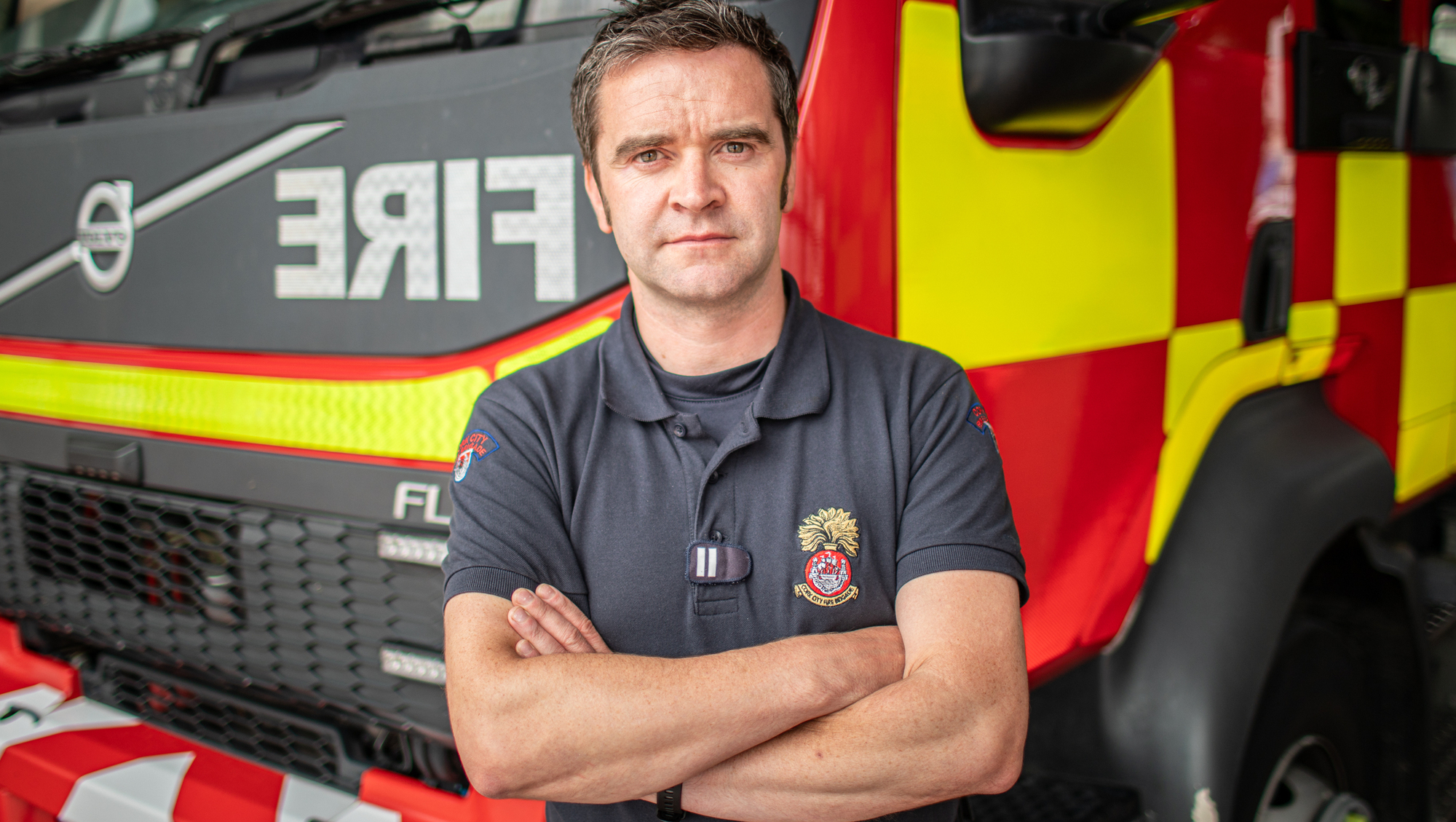
Kevin Higgins. Picture: Neil Michael
The woman had been down for five minutes before we arrived. A paramedic from the National Ambulance Service got there at the same time as us, and together we made our way into the bar, laden down with medical bags and defibrillators.
A pale-faced young barman ushered us towards a corner of the bar. I checked for breathing. Nothing. The firefighters with me had already gotten the airways and defibrillator set up and we immediately began chest compressions.
It’s important that these are delivered as soon as possible — 120 per minute, 5cm-6cm deep. I finished my first set of 30 and a colleague squeezed the bag to deliver oxygen. It was during this five second window that I noticed him first.
Our eyes locked as I was about to restart my next set. His pint slowly rose to his mouth, and he took a long, slow gulp. After my second set, I called out to the bar staff: "Can we get this area cleared please!"
To my right, a group of revellers screamed along to Tina Turner’s ‘Simply the Best’, oblivious to the unfolding tragedy. After 20 minutes of CPR, the paramedic called it. No good.
As a firefighter, you get to see people in the worst moments of their life. Obviously, we see it at fires, but people are still surprised when they realise we attend cardiac arrests and river rescues. In Cork City last year, we responded to over 300 cardiac arrests alongside the ambulance service. Some people are successfully resuscitated, most are not.
The incident described above happened one New Year’s Day, late at night in a suburban bar. Another one that comes to mind happened on the South Ring Road. This time, the pint was replaced by a phone — held out the windows of passing cars to record us at work.
Again, I spotted it while trying in vain to save a person’s life. The morbid attraction that this brings out in people will never fail to surprise me. It has become part of our training.
We teach new officers to handle the public interfering with incidents, by having actors walk into the training scenario taking photos and videos. This distracts the officer from what they should be focused on — managing the firefighters operating under them and dealing with the incident at hand.
Where does the freedom to record whatever you like in public meet common decency? It’s a grey area, to say the least. You just assume that people will know the boundaries. Many sadly don’t.
Last week, in Cork we saw a new low. While a young man tragically lost his life in the Lee, dozens of people thought of their social media. There was little to no attempt to throw in a lifebuoy.
Likes. Shares. Maybe go a bit viral. Again, it’s not the first time this has happened. I’ve been in the water myself struggling to get someone out and looked up to see people recording the scene. Dozens of them.
It’s difficult enough to get someone out of the water safely, without the added pressure that your — and the victim’s — every move is being recorded. People have to be asked to move back and give us some space to work.
They don’t think that they’re doing anything wrong. I once saw a woman with two small children cross the road over to the quayside to see what was happening. I had to ask her to move back and stop staring. Who brings their children to witness somebody’s last breaths?
The video quickly spread around messaging groups and gardaí had to appeal to people not to forward them.
I often wondered if the person's family had maybe been sent them. There was condemnation in the media, with a range of politicians calling it out. There was talk of regulations and legislation, but surely it comes down to basic cop-on?
The media are obliged to maintain a high standard of ethics and moral standards, but the public is not held to the same values. Surely it’s time that everyone in society starts to apply their own moral compass, and call out others who don’t.
- Kevin Higgins is third fire officer at Cork City Fire Brigade
CONNECT WITH US TODAY



Be the first to know the latest news and updates