100 days into Trump's presidency, he's causing global chaos
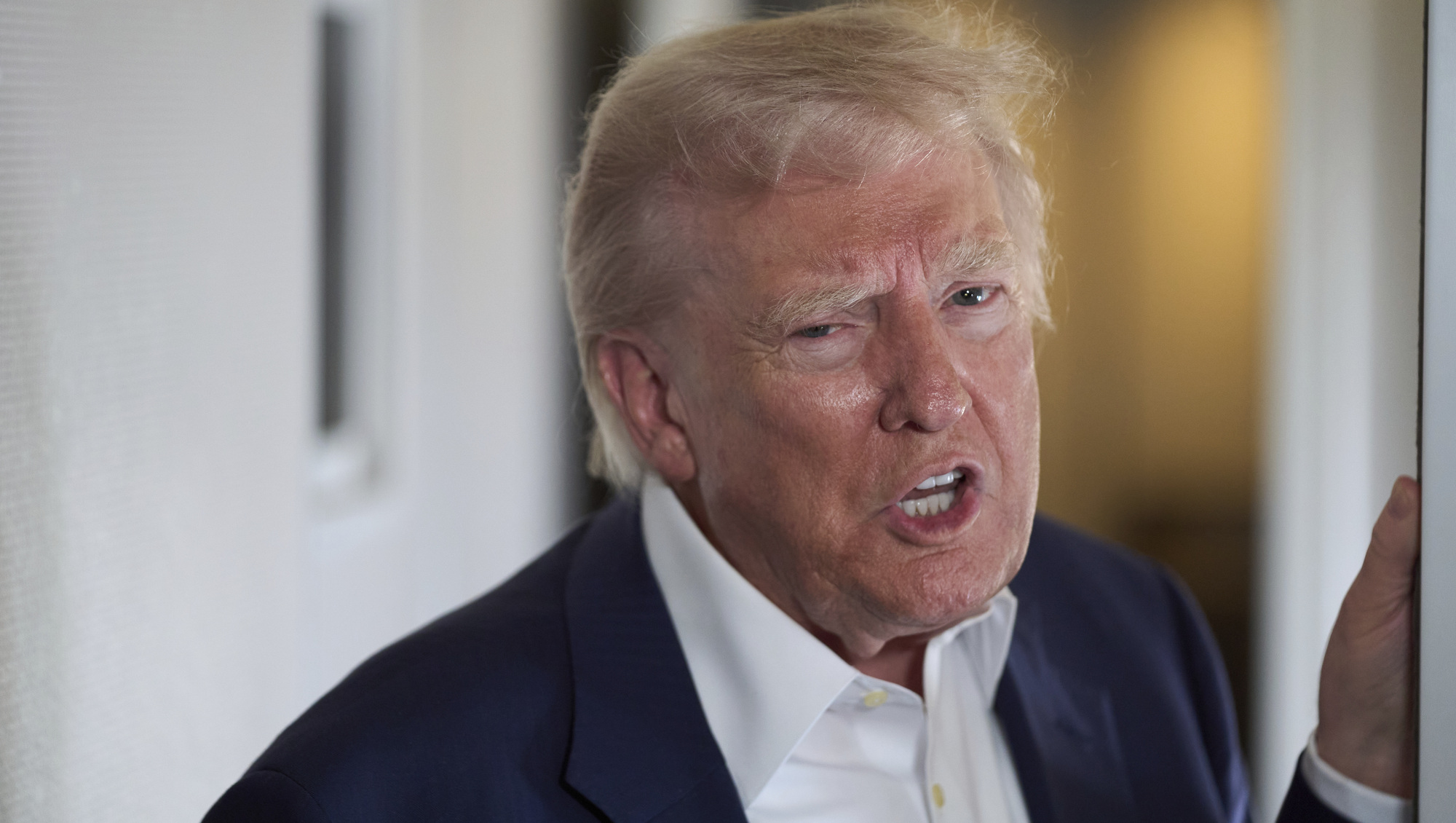
President Donald Trump. In just 100 days we have witnessed the rise of ultra-protectionism, a wanton desire to increase America’s landmass, disdain for allies, contempt for Ukraine, indifference to Palestine, derision of science, climate, education and media, along with an ongoing disregard for the rule of law. Photo: AP/Evan Vucci
In the 100 days that Donald Trump has been back in the White House, gold has risen to its highest value since the mid-1980s.
Long considered the ultimate safe haven asset, it is the go-to commodity in times of crisis or extreme uncertainty. By any measure, the world, or our part of it at least, is currently in that zone.
Trump Term Two already seems a lot longer than 100 days. By most measures it is difficult to remember the world prior to January 20 BC (before chaos.) No leader in modern US history has torn up the rule book and simultaneously commanded the narrative in the way that the 47th president has, and that includes his earlier stint as the 45th incumbent.
Those that voted for him (both times) were eager for change. Some particularly wanted a ‘Disruptor in Chief’ who would challenge the stale, self-interested political status quo and implement and further a Make America Great Again (MAGA) agenda. The loyal MAGA base will be high-fiving themselves as the former reality television star has blown the doors off every convention, norm and boundary associated with the most powerful job in the world.
The 100-day benchmark of presidential achievement dates back to the era of Franklin D. Roosevelt, when the US was gripped by the 1930s Great Depression. The nation was in a state of deep fear and insecurity, and observers were desperate for any sign of progress or improvement on FDR’s watch.
Hence, the 100-day touch-point, arbitrary as it is, remains a significantly symbolic moment. In the case of Trump the Sequel, the substance has matched the style.
Firstly, consider the international arena. In April 2025, Ursula von der Leyen, not known for her dramatic hyperbole, declared that the "world order is becoming a world disorder". Clearly, not all responsibility for this can be landed at Trump’s feet.
However, what is categorically undeniable is that the Transatlantic Alliance as we have known it for nigh on 80 years is no longer intact, for the foreseeable future at least.
Listening to JD Vance’s speech at the February Munich Security Conference informed us of the stark reality that the US, in its current incarnation, is not a reliable defence partner. Such a development significantly undermines the NATO alliance ‘Musketeer’ clause that is Article 5, which guarantees that an attack on one member is an attack on all.
The long-standing US security pledge looks shakier by the day. We are used to rogue actors such as Vladimir Putin disregarding the international order and the sovereignty of smaller nations.
When the Commander in Chief of the world’s largest arsenal extols the virtues of Manifest Destiny, a 19th century vision of an expansionist US acquiring new hemispheric territories, those words carry a heavy weight. Residents of Panama, Greenland and Canada listen with concern. Ukrainians and Gazans can take no comfort in the president’s words or deeds.
Then there is Trump-onomics, a realm which merges the domestic and international. Many Americans will be breathing a sigh of relief that their nation is no longer inclined to act as the world’s policeman and foot the enormous associated defence bills.
International trade wars, however, can have a nasty impact on voters’ pockets. Again, there is a domestic political divide with regard to support for Trump’s ultra-protectionist ‘Liberation Day’ tariff bonanza. His actions have weakened the US economy, and with that comes political and reputational damage.
It is a truly odd state of affairs when the markets rein in the executive, as was the case in recent weeks. The administration’s drastic tactics of imposing the largest single round of tariffs in over 70 years have upended trade relations, not least with Beijing, and wiped $8.27 trillion from the stock market over a four-day period.
Yale University’s Budget Lab estimates that the tariffs (which are a tax on US imports) could cost the average American family $3800 per year.
And so, beyond the MAGA-whooping, liberal hand-wringing and Democrat Party radio silence, what has the 47th president achieved to date via legislative and executive means?
The more conventional route of governance is perhaps surprisingly the least utilised. With a Republican majority in both Houses of Congress, the potential exists to make legislative hay, but to date Trump has only signed five bills into law. For comparison, he signed 124 during the same period of his first administration.
In the presidential realm, however, there has been much action. According to the US Federal Register, by late April Trump had signed 137 executive orders. These are directives signed by the president ordering the federal government to act, without the involvement of Congress.
At times these actions have brought a sense of Term One déjà vu as the US withdrew (again) from the World Health Organization and the Paris Climate Agreement.
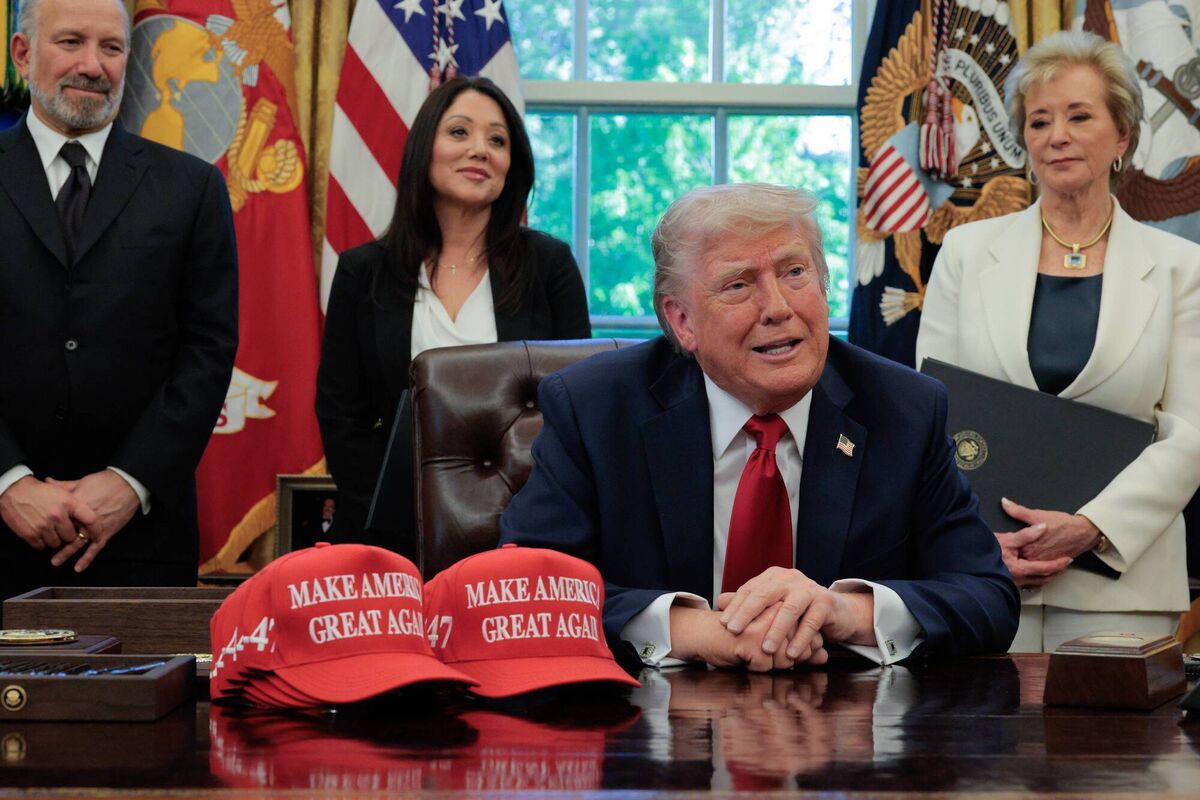
Then there were the more 2025-centered priorities, negatively impacting among others government employees, immigrants, teachers, students, international aid recipients and transgender Americans. None of this is surprising as the mandate was set out both in the Heritage Foundation’s Project 2025 and Trump’s own Agenda 47 plan.
The chaos of Trump Term One and then lack of any prepared transition was replaced this time round by a group of experienced and motivated MAGA faithfuls. The scope for error and delay was therefore vastly reduced.
Meanwhile, Elon Musk’s Department of Government Efficiency (DOGE) task force was established, with a remit to gut the ‘Deep State’. Using a cudgel rather than a scalpel, the maverick billionaire’s aggressive approach has seen thousands of US government workers fired, laid off or encouraged to resign from their posts.
If planning for distant risk (say, a pandemic or economic crash) requires high levels of government expertise, the Trump administration has taken extraordinary steps to hollow out institutional knowledge and memory to ensure that there is little capacity to proactively manage any crisis.
Here, we see an inversion of the FDR presidency, which took a radical approach to leadership almost a century ago and increased the scope and purpose of the US government to unprecedented levels.
In just 100 days we have witnessed the rise of ultra-protectionism, a wanton desire to increase America’s landmass, disdain for allies, contempt for Ukraine, indifference to Palestine, derision of science, climate, education and media, along with an ongoing disregard for the rule of law.
Amongst the tumult, America’s adversaries watch and wait. China, we are told, thinks in centuries and continents. Constitutional constraints withstanding, Trump will be gone in 1360 days.
Potential for irreparable damage to the once ‘indispensable’ nation is vast, pending and laden with consequence. So, buckle up. And buy gold.
- Clodagh Harrington is a lecturer in US History and Politics at University College Cork. She is co-presenter of the monthly US politics podcast .

BLACK FRIDAY
Already a subscriber? Sign in

CONNECT WITH US TODAY



Be the first to know the latest news and updates