Collapse of USAID leaves a gap in our huge fight against malaria
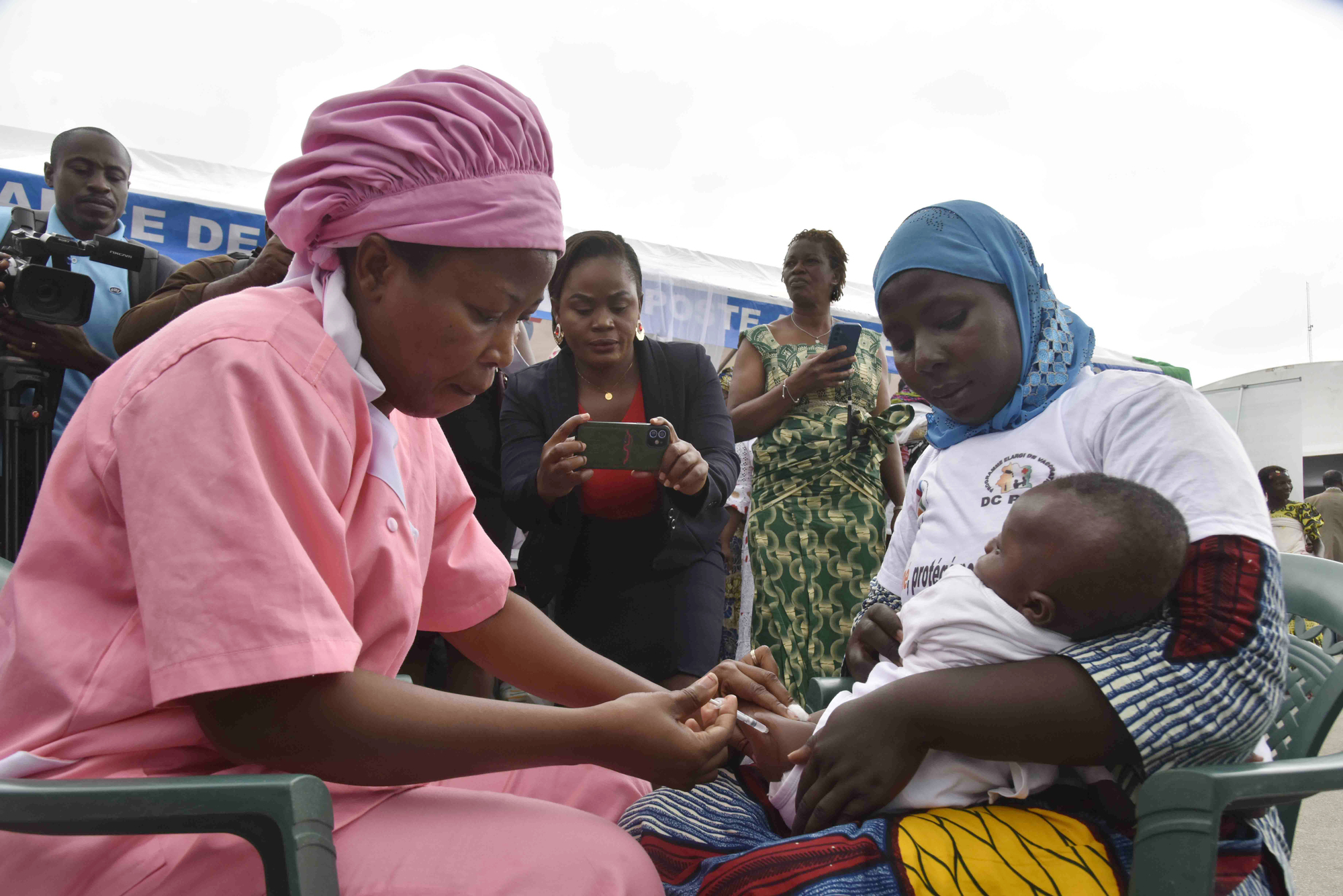
A health worker administers a malaria vaccine to a child in Abidjan, Ivory Coast. File photo: AP/Diomande Ble Blonde
Today is a World Malaria Day like no other. After 25 years of unprecedented progress, which has prevented 2.2 billion cases of malaria and saved 12.7 million lives, one of the two key funding agencies that underpinned that collective global effort has suddenly disappeared.
Over recent weeks, the United States Agency for International Development (USAID) has been assimilated into the US State Department, most of its funding programmes terminated and most of its staff sacked.
My expert African colleagues who relied on USAID to fund their programmes to deliver life-saving malaria prevention, diagnosis and treatment services, now find themselves stranded, with programmes they spent years building suddenly ended or severely curtailed. The consequences for longstanding projects will be devastating.
One African colleague has just finished analysing 17 years of data from a carefully monitored rural district, showing how his team steadily reduced annual malaria hospitalization rates from one person in 20 to one person in 200. He and his colleagues would normally be starting their planning cycle to get every house sprayed before the rains.
In 2025, that won’t happen, so malaria will be back with a score to settle.
Now that we in Ireland have been through a recent pandemic, it’s easier to explain what a rebound of malaria across Africa will look like: Think back to the grimmest days across Europe in 2020, when a surge of illness overwhelmed our hospitals, and you get some idea of what every rainy season brought to rural Africa before we found ways to tackle malaria.
Beyond scaling up insecticidal bed nets and indoor spraying, several national control programmes across Africa have delivered rapid access to testing and treatment at grass roots level through Community Health Workers.
When I’ve had malaria, I’ve had my own test kit and drugs, which I keep on hand for instant use whenever required. Malaria can overwhelm you exceptionally fast, so I’ve found myself completely immobilized and debilitated within a few short hours. I can’t imagine what it’s like to be toiling away in a muddy rice field to feed the family when the symptoms strike out of the blue.
That’s where the Community Health Worker comes in: with enough basic training and equipment to deal with routine cases, Community Health Workers tackle common illnesses even in the most isolated villages that lack nurses or doctors. That takes pressure off health centres and hospitals, freeing them up to deal with complex illnesses.
I have one colleague whose team had established a network of 20,000 Community Health Workers across his entire country. I wonder now how many thousands of them have already been made redundant? That’s a lot of hard-working African mums and dads who won’t have anyone to turn to locally when malaria visits them at home or in the fields.
And that’s a lot of people with malaria who will avoidably deteriorate en route to hospitals and clinics, which they will increasingly find besieged when they get there, drowning in the kind of demands for care that they haven’t seen for at least a decade.
Fortunately, a tried and tested mechanism already exists through which those of us from high-income countries can fill this sudden gap in control funding. In fact, we can do it for the price of one pint of stout each.
The Global Fund to Fight AIDS, Tuberculosis and Malaria offers the best value for money in public health history. Established over 20 years ago, it has saved an estimated 65 million lives through robust governance, management and procurement systems that have proven effective even in countries afflicted by conflict, corruption and extreme climate.
Notably, its current contribution to the Global Fund is one of the few commitments the new US administration has retained. However, the Global Fund has been grossly underfunded for many years and the sudden loss of complementary USAID support hits hard in 2025.
In 2023, total investments in malaria control reached US$4 billion, less than half of the US$8.3 billion required. Here in Ireland, that’s about the same amount as our increase in tax receipts for 2023 relative to 2022.
Currently Ireland contributes €65 million per three year cycle to the Global Fund. While that would be a lot of money for one person to have in their pocket, that’s only about €13 per person in Ireland over that three-year period. So less than the price of one pint of stout in an Irish pub per person per year.
With the next Global Fund replenishment cycle coming up fast, I would ask our government to consider at least doubling our contribution, ideally tripling it. While we’re a small country and our financial muscle is very modest, we can co-ordinate with the dozens of other small countries in Europe and set an example to larger countries.
For the price of an extra pint of stout per person each year, we could help avert an imminent catastrophe in Africa and help create a far brighter future for everyone on the continent.
- Professor Ger Killeen is AXA Research Chair in Applied Pathogen Ecology, School of Biological, Earth & Environmental Sciences, University College Cork. He has spent 28 years working on malaria transmission including 19 years in east Africa
CONNECT WITH US TODAY



Be the first to know the latest news and updates