Brexit-style approach needed to confront ‘America First’ agenda
Lessons from the Brexit era can inform ways and means of approaching the current period of intense international turbulence.
As US president Donald Trump’s assault on the global economy intensifies, the need to communicate and advocate for Irish interests in the US has never been more urgent or more pressing.
Previous experience of the Brexit negotiating period provides some useful pointers about how Irish influence might be wielded in a highly challenging and hostile US setting.
Trump’s ‘America First’ policy is being pursued with vigour and at speed, and the risks this poses for Ireland are substantial and comparable to the Brexit period.
Lessons from the Brexit era, however, can inform ways and means of approaching the current period of intense international turbulence.
Such an approach essentially rests on ensuring that Irish interests are effectively communicated with as wide an American audience as possible. As the effects of Trump's trade war play out, the opportunity to engage with impacted stakeholders, industries, and interests forms a critical means of securing allies and creating pushback.
To achieve this requires strategically resourcing Ireland’s diplomatic footprint in the US, proactively projecting a strong and clear national message, engaging in extensive ministerial networking across America, and encouraging civil society efforts which are supportive of Ireland’s key policy priorities.
However, this does not negate the vital importance of Ireland’s diplomatic and diasporic networks on the ground in the US.
During the Brexit period, the Irish diplomatic corps played a critically important role in persuading and pressurising the EU to position itself in support of Ireland. This was achieved on the back of strategic mobilization and increased diplomatic resources. Critically, these efforts produced a favorable outcome for core political and economic interests.
Ireland’s diplomatic corps are on the frontline in terms of confronting the risks posed by the new US administration.
The Irish embassy in Washington DC has 40 personnel. Its work is supported by a network of consulates spanning eight major US cities and employing an additional 90 staff. There are also a number of State agencies including Enterprise Ireland, the Industrial Development Agency (IDA), and Tourism Ireland with a presence in the US.
Although the number of personnel has increased in recent years, Ireland continues to lag behind in terms of its US staffing levels and its diplomatic footprint in the US remains considerably lower than its presence across Europe.
Taking heed from its experience of navigating Brexit, Ireland must now actively find new allies and cultivate new avenues of influence in the US. To do this, it needs a greater diplomatic presence in the US.
This means strategically increasing its staffing in Washington DC and across the US, and supplementing this move with a programme of targeted civil service secondment which can add additional detailed policy expertise to the diplomatic effort.
It requires targeting and lobbying — not just the Trump administration itself but also congress, the Republican Party, the Democratic Party, state legislatures, foreign policy circles, thinktanks, educational institutions, and the media.
The Trump era demands a replication, if not an escalation of the same approach.
The Brexit period also saw Irish government ministers proactively engage with their counterparts across Europe — an approach which paid dividends in terms of influencing other member states to rally in support of Ireland during the subsequent negotiations.
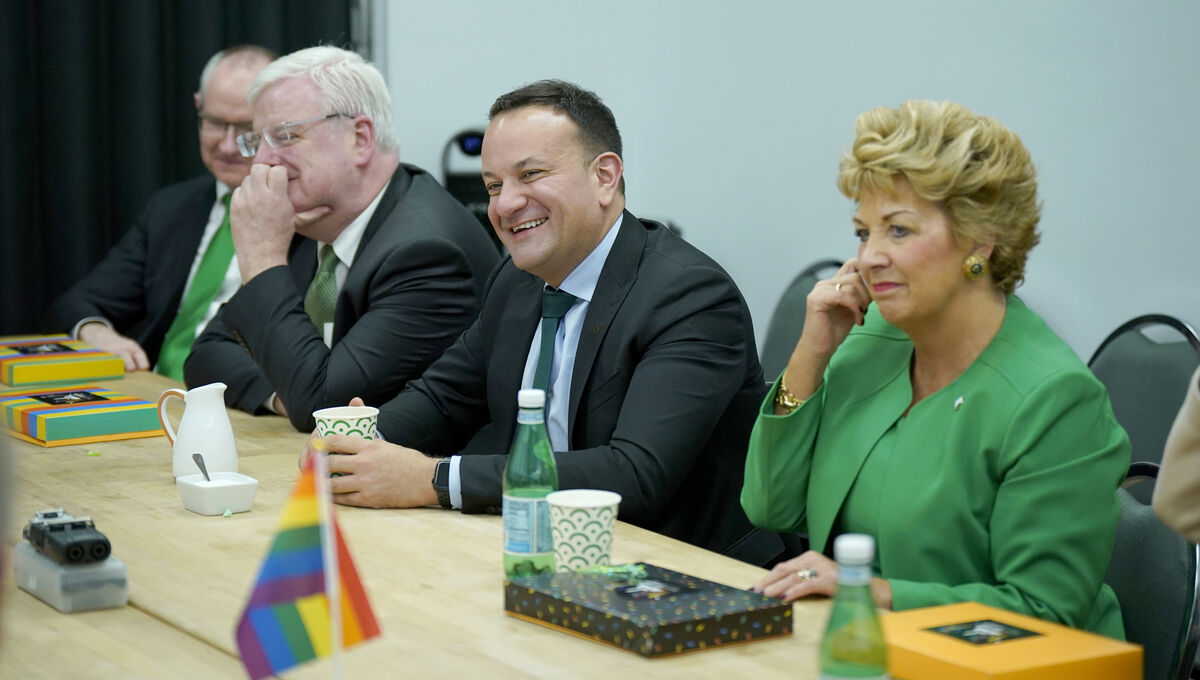
In the US setting, the St Patrick’s Day events provide Ireland with a unique opportunity for visibility and voice.
Ministerial engagement, however, must be sustained beyond this brief period via a longer-term program of strategic visits, extensive networking and targeted lobbying which connects with key political figures, outlets and audiences.
Much like the Brexit period, there is also an important opportunity for representatives of opposition parties, business, industry, trade and other interests to buttress the messaging of the Government through their own networking, lobbying efforts, and targeted engagement with influential figures and groups in the US.
This was done to positive effect by the wider Irish body politic and by leading Irish interest groups, who engaged with key debates and figures in Brussels and elsewhere during the Brexit negotiations.
Similarly, Irish-American organisations across the US form an important part of this effort. Although this sector is becoming more generationally distant from Ireland, its promotion of key Irish interests and constituencies remains significant. Offering endorsement and support (financial and figurative) to those representing Ireland and Irish-American interests can help in broadening the network of Ireland’s influence across the US.
As the Trump administration implements its ‘America First’ agenda and as serious trade disruption beckons, Tánaiste Simon Harris is right to suggest that an "all-out diplomatic offensive" is warranted.
Brexit demonstrated how a small state like Ireland can approach and navigate a highly complex international political, economic, and diplomatic situation. The Trump presidency may not be a ready comparator, but it nevertheless demands a similarly targeted and multi-pronged diplomatic blitz which mobilises arguments and allies supportive of core Irish interests.
- Mary C Murphy is a professor and the director of the Irish Institute at Boston College


CONNECT WITH US TODAY



Be the first to know the latest news and updates