Mick O'Dwyer: remembering the GAA revolutionary who reshaped Gaelic football across generations
Kerry County Council has paid tribute to the sporting achievements of former Kerry footballer and manager, Mick O’Dwyer, by hosting a Civic Reception in his honour at County Buildings today. Picture: Domnick Walsh
FEW MEN are known by a moniker. But then, few were ever as revered as Mick O’Dwyer was — a man known the length and breadth of the country simply as ‘Micko’ — a leader for whom greatness was never a measure of a players ability, but of their character.
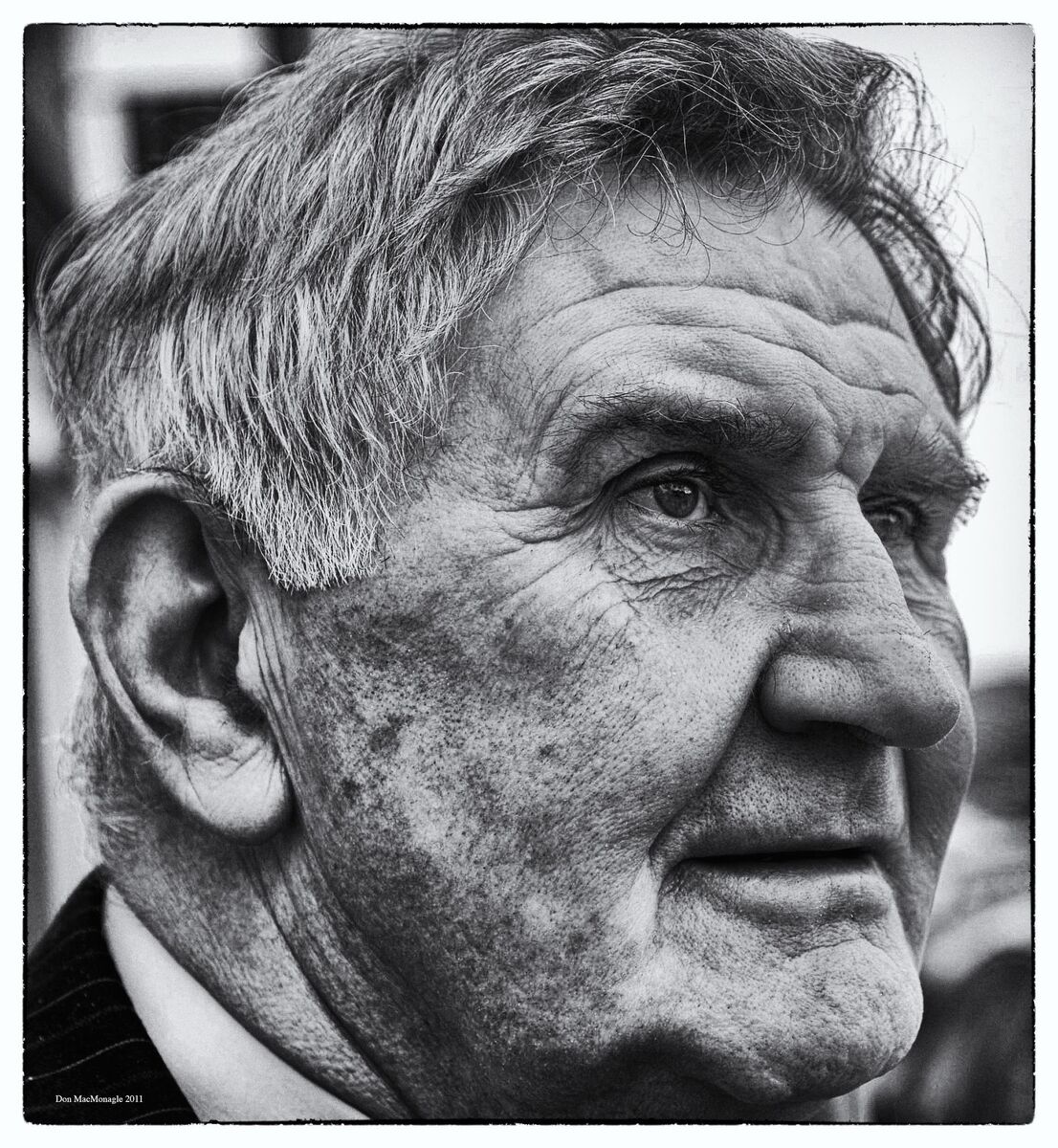
His legacy as a player, coach, and manager spans decades, and his influence on the sport of Gaelic football is immeasurable. Known for his tactical innovation, his capacity for reinvention, and his self-confessed obsession with the game he mastered, O’Dwyer’s contributions have cemented his place as one of the sport’s all-time greats.
He transcended partisan affiliations and became a master of metamorphosis, returning to the sideline long after the sepia tint of his golden Kerry years had faded, to inspire counties that — before his intervention — had rarely seen August. His second coming as Kildare supremo in the mid-1990s confirmed what few doubted — his successes as manager were as much to do with his leadership and strength of personality as they were the quality of players at his
disposal.
Born and raised in Waterville in the rural heart of west Kerry, O’Dwyer grew up fanatical about motorsport, but like so many of his peers, the lure and legacy of the green and gold jersey proved much too strong. After being on the losing side in the 1954 All-Ireland minor final, he transitioned from junior to senior ranks, making an inauspicious debut during the 1957 season. Ironically, for one of the most successful individuals the sport ever produced, his debut for Kerry was one of the county’s most infamous losses in their storied contemporary history — a defeat to Waterford in a Munster semi-final.
In terms of achievements, it was arguably the lowest point of his career, as O’Dwyer went on to win four celtic crosses with the Kerry footballers, losing in another five finals during an era defined by great teams in Kerry, Down, Galway, Dublin, and Offaly. As a free scoring forward, O’Dwyer was a fixture on a team that was lead by the legendary Mick O’Connell, and he would go on to become Kerry’s all time leading scorer in the National Football League, winning seven league titles during his playing career.
Kerry hardly had it all their own way when O’Dwyer was in his pomp — Galway produced a three-in-a-row team that saw Sam Maguire stay West in the mid-sixties, the Tribesmen beating Kerry in two finals and a semi during that run. Down, too, bookended the decade by winning titles in 1960, ’61, and ’68. The heartache of those losses, however, only drove Kerry and O’Dwyer on. In all, the Waterville sharpshooter represented the Kingdom 48 times over a 16-year innings. His masterful free-taking style is beautifully captured on film in a preview to the 1969 All-Ireland final. It is unfiltered evidence of a master at work. In a team of leaders, Mick O’Dwyer was a beloved giant. Had he left it at that, he would’ve gone down as one of Kerry’s greatest ever footballers.

But, such was his ambition, ‘Dwyer’, as he was known in his native West Kerry, was only just beginning. After retiring in 1974, he was appointed Kerry senior football manager in 1975, and would remain in charge until 1989. Over the next 11 seasons, his Kerry team played in 10 All-Ireland finals, winning eight. Their rivalry with Dublin stands as the most memorable of the televised age of Gaelic football, with many of their epic battles regarded as some of the greatest games ever played.
While players of the calibre of Jack O’Shea, John Egan, Pat Spillane, Mikey Sheehy, Páidí Ó Sé, and Eoin “Bomber” Liston all contributed handsomely to a team that had a flair that made them the Brazil of Gaelic football, O’Dwyer was rightly regarded as their tactical mastermind and spiritual guru. He was also an entrepreneurial outlier who was ever willing to test the limits of the GAA’s socialist ethos. Kerry footballers, under his stewardship, were the first team to profit personally from brand advertising, as well as team sponsorship deal with German sportswear giant Adidas, a segue which drew much ire from Croke Park and briefly threatened to sully O’Dwyers standing in the game.
None of it bothered him. “Croke Park have never consulted me about anything,” he said years later. “They would be afraid because they consider me a bit of a radical.” A radical he was. Just as the Kerry teams he played on met their match in Galway, Dublin, and Offaly, the teams he managed never had it all their own way, either. Even if the heartache they suffered was relatively minor — if particularly memorable — compared to other counties. Seamus Darby’s late goal saw Offaly deprive Kerry an unprecedented five-in-a-row in 1982, a loss that haunted O’Dwyer long after the event: “I think of it at least once a week. We were so close, I felt sick. For two months after I never left Waterville. It was like a death in the family.”
No matter. Kerry took just a single season to recover, rebounding with another hat trick of titles in 1984, ’85, and ’86.
They would be O’Dwyer’s last with Kerry, a golden generation finally aging, and as O’Dwyer vacated the managers seat in 1989, the assumption was he would rest, his reputation secure. Ever the radical, he defied convention once again, and was revealed as manager of Kildare in late 1990. He brought the Lilywhites to league and Leinster finals, before taking a short sabbatical, once again wooing speculators into thinking he was finally taking an actual break. Instead, he returned to Kildare in the winter of 1996.
Just under two years later, O’Dwyer’s Kildare beat his native Kerry —
defending champions and managed by his former enforcer and captain, Páidí Ó Sé — in an All-Ireland semi-final that sent the county into a euphoric tailspin. Kerry’s most beloved son had returned to haunt them. Adding to the sweet satisfaction was the presence of his son Karl — snubbed by the Kingdom — on the Kildare team. While Kildare eventually lost the final to Galway, those weeks between matches will live long in the memory of anybody who survived them in Naas, Newbridge, Roundwood, and Maynooth. It was a mania not witnessed before nor since. Micko had done it again, only this time he had taken a county starved of success, and given it an identity.
Three years later, in the summer of 2000, O’Dwyer guided Kildare to its second Leinster title in three years, putting an end to the stranglehold Dublin, Meath, and Offaly had over football in the province for half a century. Although they fell once more to Galway, the Waterville man’s sainthood in the county was guaranteed.
Looking for more miracles to work, he turned his hand to Laois, and once more landed a Leinster title in 2003. As the recruitment of outsider intercounty managers become more commonplace, O’Dwyer remained the exception in that everywhere he went, the excitement that followed him was as unique as the man himself. After Laois, spells in Wicklow and Clare followed. While his enthusiasm never dimmed, his alchemy naturally waned. The spark in his eyes, however, flickered ever bright.
Remarkably given his obsession with Gaelic football, O’Dwyer was a successful businessman and hotelier outside of the sport, wisely putting his famous name to good use. How he found the time is anyone’s guess, as it was the football field where his mind seemed always to wander. It’s where he had his greatest days, and where he openly admitted he wished he’d spend his last.
“Wasn’t I lucky to be born in Kerry,” he told a documentary in 2020. It was a typically humble statement from a man who must have known how many lifes he’d touched for the better, and how many memories he had created from shadows and dust. He approached footballers the way a horse-whisperer might a foal. Micko looked for something special — anything — and sought to shine a light on it. A rare gift from the rarest of men.
The luck was never his, but ours.

Subscribe to access all of the Irish Examiner.
Try unlimited access from only €1.50 a week
Already a subscriber? Sign in
CONNECT WITH US TODAY
Be the first to know the latest news and updates