Sylvia Pankhurst and the suffragettes' support for the Irish cause
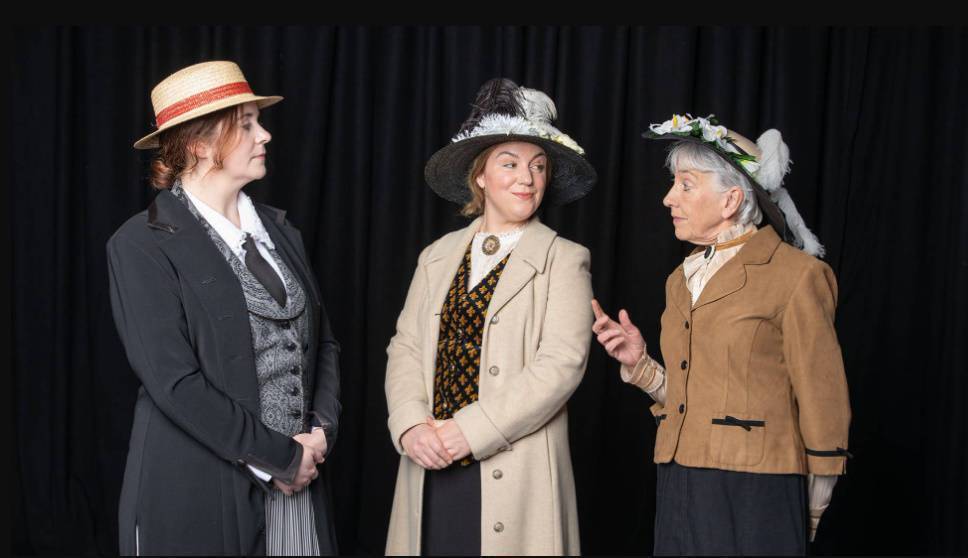
(Left to right) The cast of Sceptical Suffragette: Rebecca Farrell as Sylvia Pankhurst, Rachel Farrell as Christabel Pankhurst and Sheila O'Keeffe as Emmeline Pankhurst. Sylvia Pankhurst is buried in Addis Ababa in a churchyard which also hosts a mural of Eamon de Valera. Photo: Sploodar Theatre Company
“Justice can make but one reply to the Irish rebellion, and that is to demand that Ireland shall be allowed to govern herself.”
Who do you think might have written this in 1916?
The English suffragette Sylvia Pankhurst penned those words soon after the Easter Rising. While she is best known for her brave work earning votes for women, she also had a deep empathy for the Irish rebels.
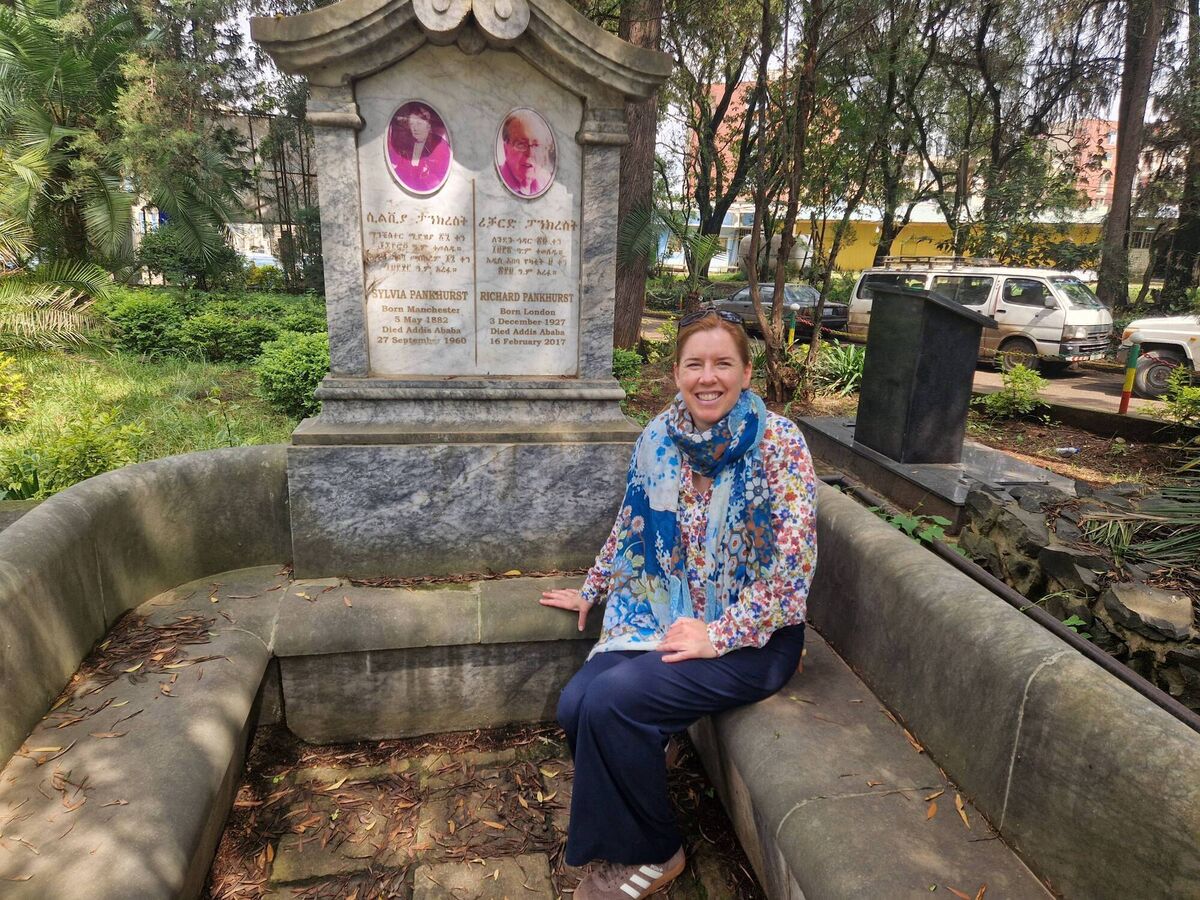
The suffragette now lies in the shady tree-lined graveyard of an Ethiopian cathedral. The headstone on her ornate grave is adorned with Sylvia’s photograph and that of her son Richard while seating stretches in front.
The design encourages you to sit and maybe think about how many lives this woman changed — which is exactly what I did when I was fortunate enough to visit.
In a strange twist former Irish president and 1916 rebel Éamon de Valera is commemorated in a striking mural inside the Holy Trinity cathedral, just metres away from her grave.
Supporting the Irish rebels from London was not a popular move at the time. This must have been especially so for a woman already fighting the establishment for voting rights.
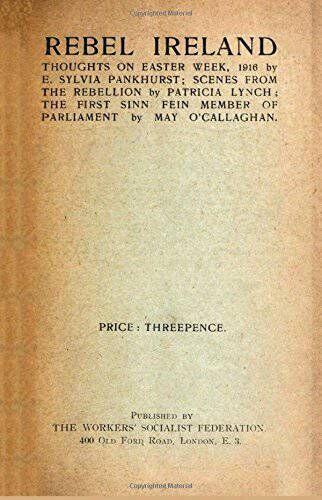
Her writings, however, make it clear she saw rights for women and workers as linked. She wrote as strongly of poverty in London’s east end or the west of Ireland as she did of the brutal tactics employed against suffragettes.
And it was a brutal time. Women were beaten on the streets by police, shoved in front of police horses, then imprisoned and force-fed by doctors, as she outlined in harrowing detail in her book on the Suffragette movement.
This forcible feeding involved “a tube which was passed through the mouth and into the stomach through which food was pumped”. She wrote of how doctors used wooden or steel gags to force the women’s mouths open before shoving in the tubes. She described imprisoned women stripped and locked into handcuffs continuously for days.
Sylvia also wrote of her own experiences with this in the in 1913, saying she “felt I would go mad with the outrage of the thing".
Unlike some in the suffragette movement, she also saw parallels with how poor people, whether male or female, were kept out of power structures. This is clear in an article she wrote on the Easter Rising in magazine.
It teased out positions taken by groups including Sinn Fein, James Connolly and Jim Larkin against the background of abject poverty in Ireland.
She wrote:
She described Dublin as “a city of decay” and said in the west of Ireland “the people live in hovels built by themselves”. This came after some years closely following Irish events, including visiting Dublin.
A collection of telegrams, letters and postcards between Sylvia and Irish suffragette and nationalist Hanna Sheehy-Skeffington at the National Library of Ireland indicates how closely she followed events.
Her strong support for Jim Larkin and workers affected by the 1913 Lockout, however, drove a final wedge into the complex relationship she had with her mother Emmeline and sister Christabel. President Micheal D Higgins acknowledged the cost of that support during a speech at Dublin Castle in 2018.
“Indeed, Sylvia Pankhurst would be expelled from the (Suffragette) movement that she had done so much to establish for organising a mass meeting in London in support of the workers of Dublin in November 1913,” he said.
Late last year, an Irish play — The Sceptical Suffragette — toured theatres and brought the extent of that support to new audiences. People rose to a standing ovation on the final night in Dublin’s Smock Alley Theatre, recalled Gerry Farrell, playwright with the Splódar Theatre Company.
His research revealed a “courageous” woman, he said. However, he feels she was “air-brushed” out of history to some extent compared to her more well-known mother.
“She was very politically astute,” he said.
He added: “She was brave and she was clever and principled. And she was very very sympathetic and supportive of both the Lockout and the Irish revolution. She described herself as a republican.”
He noted how Sylvia was friends with James Connolly. They shared the stage at that 1913 meeting in London.
“There’s no evidence of a meeting with de Valera. It’s a possibility I suppose but I wouldn’t able to say there was any direct evidence in what I saw,” he said. She would have met Larkin, she got Larkin to come over and speak in the Royal Albert Hall.”
Sylvia’s move to Ethiopia in her 70s followed years of support for that country’s efforts to avoid and then escape from colonisation by Mussolini’s Italy.
Her daughter-in-law wrote of how Sylvia continued her “relentless activity” there on the commemorative website sylviapankhurst.com.
It is clear too from the prominent placing of her grave at Holy Trinity Cathedral just how highly she was esteemed in her adopted country.
What would she make of Ireland today or modern feminism? Who can say really?
I would like to imagine though that she would urge all women to cast our ballot if we are lucky enough to live in a country where we can — to use the power she and the Suffragettes won for us with so much suffering.


CONNECT WITH US TODAY



Be the first to know the latest news and updates