Elaine Loughlin: Donald Trump's win pushes Ireland's economy centre stage in general election
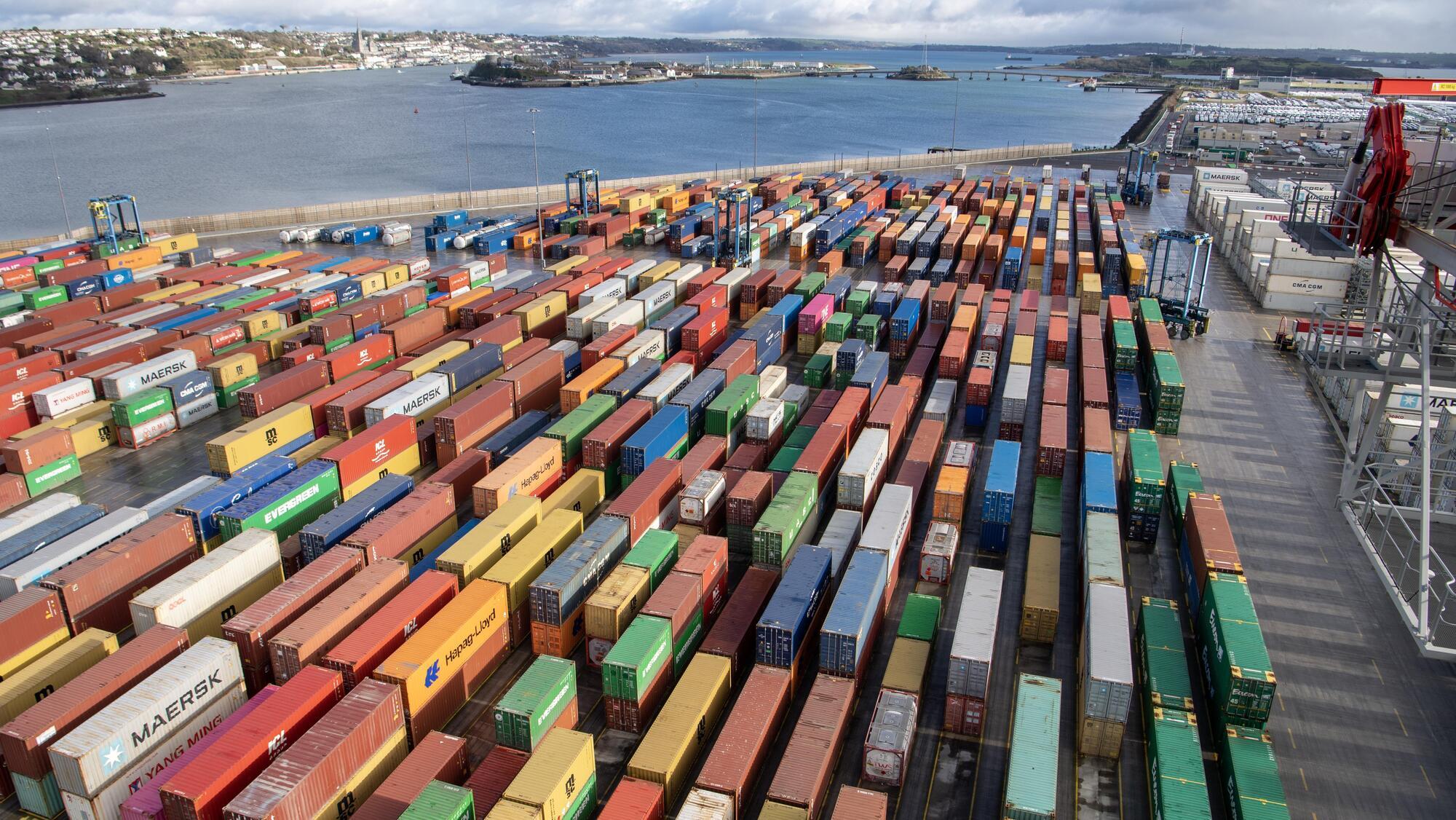
Much of Ireland's economic success is due to intangible exports but the Port of Cork Ringaskiddy container terminal remains a potent symbol of Ireland's booming multinational pharma and tech sectors — now under threat due to Donald Trump's promise to bring multinational companies home. Picture: Dan Linehan
Donald Trump’s win reframes the election on this side of the Atlantic with a new economic threat now suddenly on the horizon.
As the reality of what the next four years with Trump in power might look like began to set in, the refocusing of campaign messaging within Fine Gael had already begun.
Taoiseach Simon Harris, who will finally call the general election on Friday when he returns from an informal meeting of EU leaders in Budapest, signalled alarm bells in the Dáil, warning of “transatlantic trade shocks”.
Ireland’s reliance on the booming multinational tech and pharma sectors, which continue to bring in unprecedented levels of corporation tax, has put the country in a particularly vulnerable position now.
If Trump does progress his plan to bring these multinational firms home and successfully slashes the US rate of corporation tax, Ireland’s competitive edge could be decimated.
Scroll for results in your area
Fine Gael is now pivoting on the eve of a general election here in a bid to use the possible economic threat to its advantage. Referencing the unexpected level of support Trump received and the decisions that may be made once he enters the White House, one senior Fine Gael source said: “It’s fair to say this will all have to be factored into what we say in the coming weeks.
“Decisions have the potential to very severely impact us.”
The outgoing coalition has repeatedly sold itself on the basis of providing strong and stable leadership as the economy ticked along through a global pandemic, a cost-of-living crisis, and the European turmoil created by Russia’s invasion of Ukraine.
The feared chaos of Trump’s White House will now likely be used to convince voters that breaking away from the stability of tried and tested parties is not in the country’s interest.
“We are the most vulnerable to a trade shock,” another senior Cabinet source cautioned.
Fine Gael will now be tilting to focus on the economy, an area that really hasn’t received much attention during election cycles since 2011 when the public finances were going in the opposite direction following the financial crash and austerity measures were being raised on the doors.
In the Dáil, Harris sampled out of the type of messaging that his party will likely be pushing in the heat of an election campaign, emphasising the fact that this government’s handling of public finances means the country is running budget surpluses “where we have managed to put aside billions of euros to protect people from future economic shocks”.
Unprompted, he added: “That decision is even looking better today than it was yesterday in light of global issues.
“I look forward to debating this Government’s record in managing our economy and the public purse versus Sinn Féin’s policies and its ‘spend it all, and leave nothing for the buffer times or if there is any transatlantic trade shocks’, a policy that looks, quite frankly, utterly foolish and ridiculous today.”
In response to Social Democrats leader Holly Cairns, Harris again referenced his new talking point.
“Now that the risk of a transatlantic trade shock is rising we have managed to set aside resources to ensure my children never have to live through the austerity our generation did, so I am proud of much of the progress we made.”
Expect a renewed focus on protecting the economy as the election campaign gets into its stride in the coming days.