Donald Trump’s 'promises' raise risk of a global recession
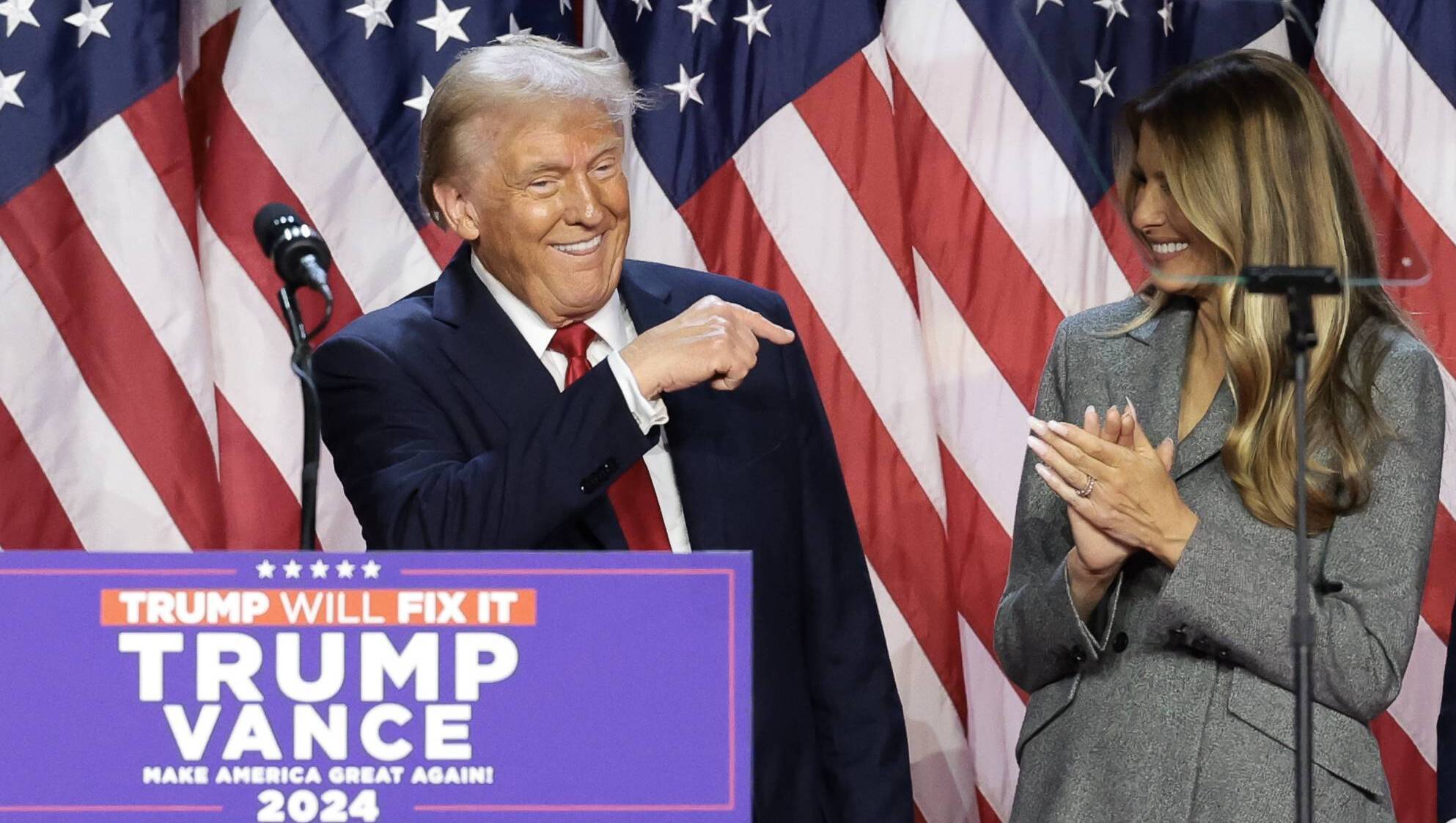
If Donald Trump follows through with his promises this time around, there will be a number of significant impacts for Ireland. Photo: Win McNamee/Getty Images
Notable in Donald Trump’s Mar-a-Lago victory speech was his commitment to “promises made, promises kept". This was a far more chilling intervention than the “America First” of his inauguration as 45th President.
If Trump follows through with his promises this time around, there will be a number of significant impacts for Ireland.
Firstly, a tax policy bringing 20% corporation tax, and 15% corporation tax for US-domiciled manufacturers will drastically reduce Ireland’s attractiveness as a manufacturing location relative to the US for new Foreign Direct Investment. The IDA is about to experience a few hard years as far as US companies are concerned.
Secondly, his promise on permissible deductibles for equipment and research will speed up longer-term investments by US multinationals, which are already highly productive compared to their Irish and European counterparts.
More damaging still is the promise to hit Chinese imports with a 60% tariff, and all other imports with a 10% or 20% tariff. This raises the risk of a US, and potentially a global recession, in two years or less. Retaliatory tariffs by the EU would potentially damage Irish exports to the US, Ireland’s largest single export market.
Climate change measures are effectively off the agenda until 2029 at the earliest. The promise to involve Elon Musk in review of federal activity means business regulation in the US will be feather-light for the foreseeable future.
The election of JD Vance as Vice President, and the Democrats’ failure to engage minorities and the US working class suggests these policies could far outlive the 47th presidency.
The prospect of an imminent recession in corporation tax revenues might (I stress might) provide the impetus for the Government to review indigenous enterprise policy.
While ultimately this might be the only welcome impact of a Trump presidency, the fact is that all the adult voices in the rooms, including ISME’s, have been calling on the Irish government to do this for years. It hasn’t happened, perhaps because the FDI goose has continued to lay golden tax eggs.
Ireland’s pro-FDI policies, while wildly lucrative in attracting corporation tax revenues, have been uniquely successful in annoying both our EU and US allies. But unlike more mature economies such as Norway, which have invested windfall earnings into the long-term development of their economy, Ireland has splurged its corporation tax windfalls on inefficient, ineffective current account spending.
Aside from this bounty of corporation tax income, we are also heavily dependent on FDI companies for PAYE, PRSI and USC income. 78% of our income taxes are paid by those earning over €60,000 per annum. 53% of income taxes are paid by those earning €100,000 or more.
This is less than 250,000 people among Ireland’s workforce of 2.7 million. Most of these people are likely to work for FDI firms. This is a dangerous degree of concentration in our national income, at a time when Irish politicians are about to go to the polls looking to further narrow the tax base. This is grossly politically immature.
The incoming administration in Dublin needs to think about its indigenous enterprise, foreign and defence policies as it simply has never done since the second world war.
- Neil McDonnell is chief executive of Irish SME association
CONNECT WITH US TODAY



Be the first to know the latest news and updates