Far-right political parties form alliance to contest general election
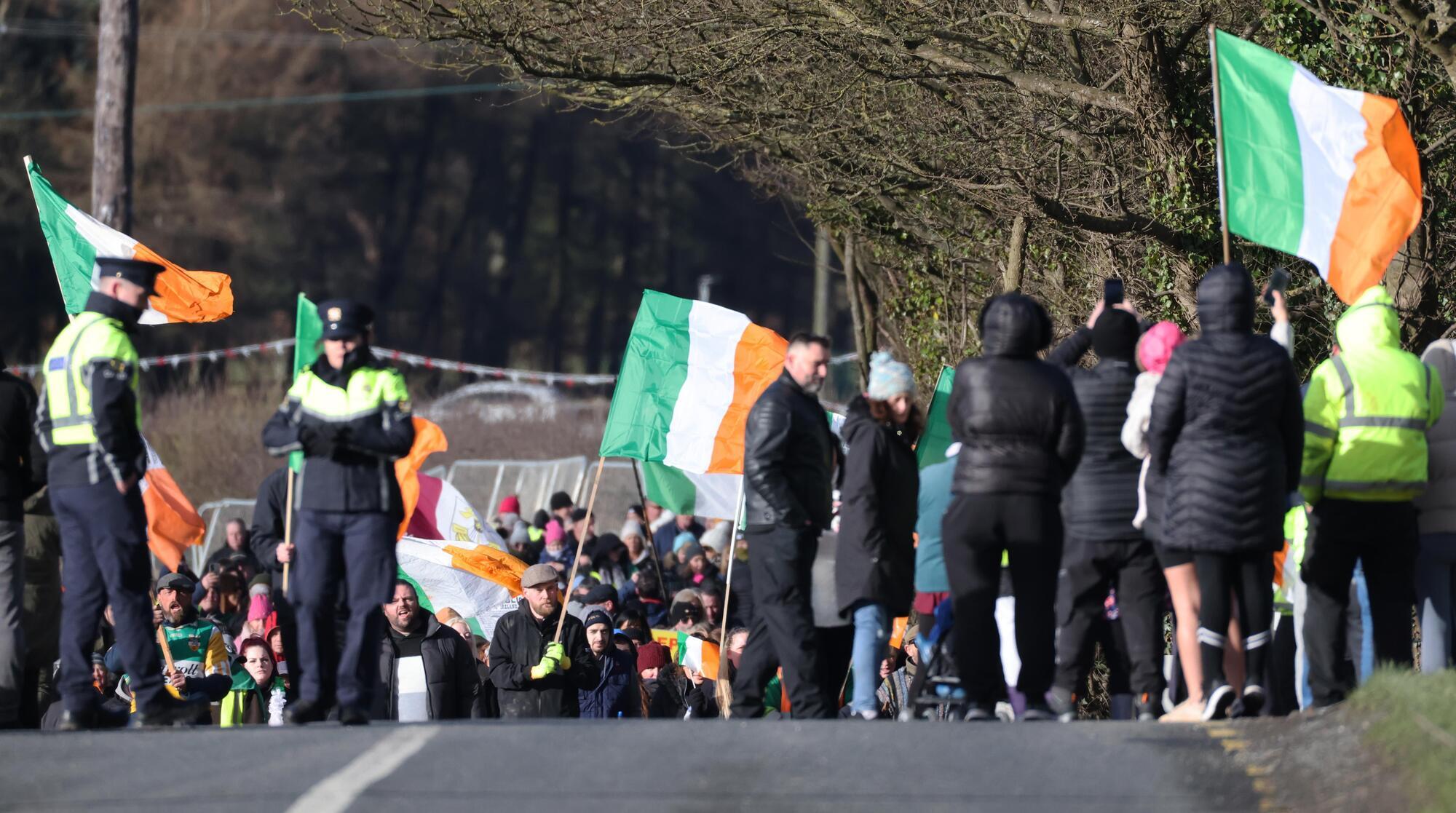
Gardaí watch as hundreds of anti migrant protesters arrive at the anti migrant camp outside a construction site of a large facility for Ukrainian refugees in Kildare earlier this year. File picture: Eamonn Farrell/© RollingNews.ie
The next election looms, and there is a new kid in town: the National Alliance.
This Alliance includes three nationalist parties: Ireland First, the National Party, and the Irish People, as well as some Independents.
They self-identify as centre-right, but that’s misleading advertising: the Alliance is a far-right movement, pure and simple.
This development in Irish politics was only to be expected.
The far-right is a global phenomenon, it has always existed, and Ireland is not an exception.
The far-right ideology offers an alternative to liberal democracy.
Equality is one of the pillars of liberal democracy: equal rights and human rights; equality before the law; equal opportunities; equal concern and respect for everyone.
A recurring theme of the Alliance shared programme is that the Irish come first, which implies that all the ‘others’ are second-class citizens.
On their website, the Alliance states “Ireland Belongs to the Irish”, and their entire housing policy is captured in one line: “House the Irish not the world.”
The word ‘equality’ does not appear anywhere on the Alliance programme because the far-right does not believe in the equal moral status of all individuals.
The rejection of equality is consistent with the far-right’s penchant towards authoritarianism, justified on spurious assumptions of social and political hierarchy.
Going back in history there was the belief that social and political inequalities reflected natural inequalities.
This belief in natural hierarchies has taken different forms over the centuries, but the prevalent ones infer racial, ethnic, religious, and gender supremacy.
Allowing for subtle differences, the far-right today still holds on to these widely discredited theories.
What unites all far-right political movements is their die-hard commitment to extreme nationalism and patriotism.
It sees itself as the last line of defence for ethnic purity against the polluting intrusions from outsiders.
This is reflected most clearly in the politics of Italy’s prime minister Giorgia Meloni.
In her autobiography, she claims to be pro-Europe, but only as long as Europe is defined as a white, Christian political union that ought to be defended from other ethnic and religious infiltrations that corrupt the pure essence of the European entity.
The Alliance defends a similar political project for Ireland.
There is a misogynistic twist to the nationalism embraced by the far-right.
They see it as the duty of Irish women to procreate and preserve the integrity of Irish pedigree, while true Irish men must respond to their call of duty by opposing immigration, since foreigners risk contaminating and spoiling the purity of Irish blood.
That, in part, explains why the far-right is against abortion.
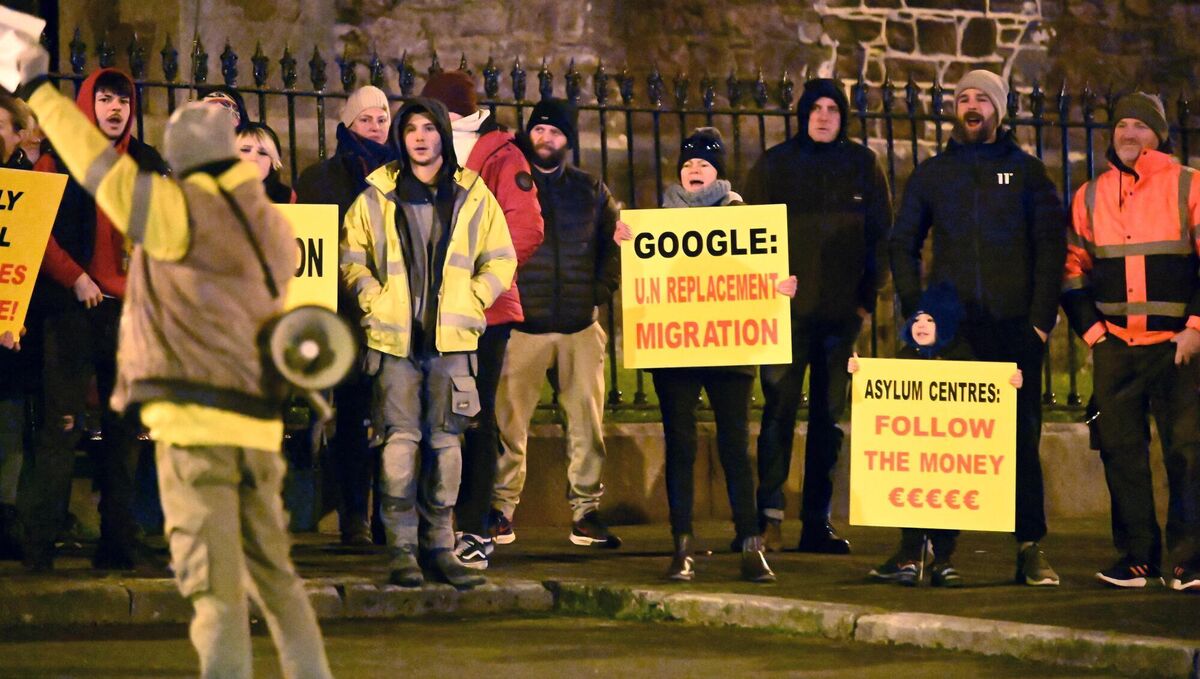
The Alliance is unambiguously pro-life, and on their webpage it states: “Life is Sacred, Life is a Gift. We are 100% Pro-Life.”
It is no surprise that the election committee of the Alliance is made up of three white men: Anthony Cahill, Patrick Quinlan, and Derek Blighe.
The Alliance is clearly a far-right political movement, but is it a fascist movement?
It’s complicated.
The far-right has had many incarnations over the centuries, fascism being one of them.
Fascism is a specific historical phenomenon that developed in Italy at the turn of the 20th century.
Italian fascist ideologues were admirers of the Roman Empire. The term ‘dictator’ goes back to Ancient Rome too.
What appealed to fascists in the 20th century was the idea of a strong man who could fix all the problems of society if only he wasn’t shackled by the annoying limitations distinctive of liberal democracy: a constitution based on a system of checks and balances; a parliament that allows adverse political views to be heard; and a free-press that publishes all sorts of political opinions.
Today, not all far-right people want to recreate the Roman empire.
That’s certainly not the case with the National Alliance in Ireland, so technically they are not fascists.
And yet, today, far-right movements around the world still have a few things in common with Mussolini’s Italian Fascism, and Julius Caesar’s dictatorship before him: first and foremost, the use of violence as a legitimate political method.
The term ‘fascism’ comes from the word ‘fascio’, a bundle of wooden rods with the emerging blade of an axe, an instrument used in Ancient Rome to punish political enemies.
The archetypical symbol of fascism is a symbol of violence.
Violence can take many forms. Rioting is violence, but so is intimidation.
The threat of violence is violence, as domestic violence survivors can attest.
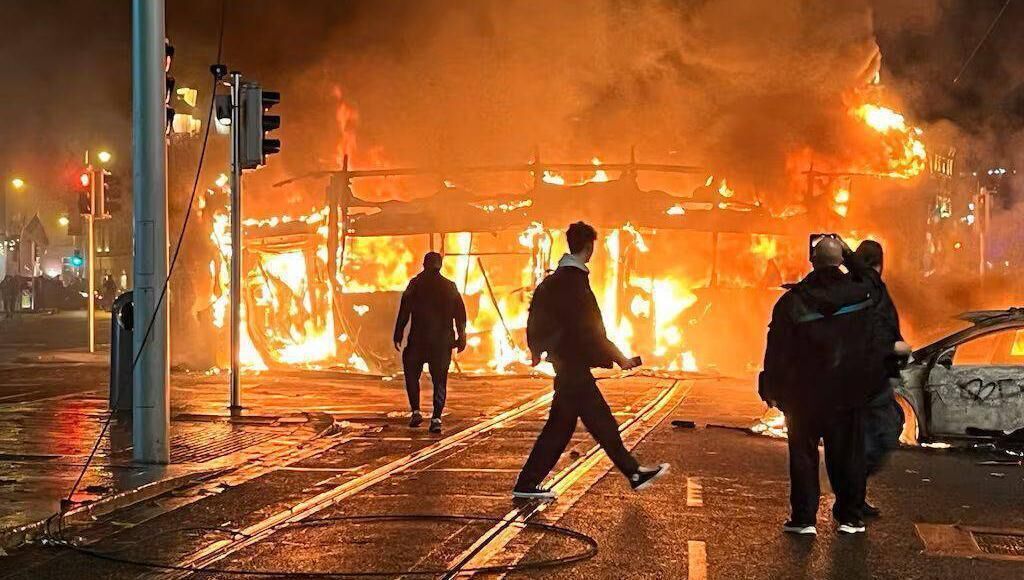
Offensive, abusive, menacing language is hate-crime, and hate-crime is violence.
A few weeks ago, when on the social media platform X, I expressed my disapproval for the government's decision to drop the hate speech legislation, I received this comment: “Bollocks, fuck off back to your own country if you don’t like it. C**t”.
That’s the language of the far-right.
On their webpage the Alliance points out that “we defend the right to free speech”.
What they defend is the right to verbally abuse, insult, offend, and threaten.
The fig leaf of the right to free speech does not hide the reality of the far-right: a movement that thrives on hostility, not cooperation; based on an ideology that values conflict, not tolerance; and a political method that is belligerent, not peaceful.
- Vittorio Bufacchi is a senior lecturer in the Department of Philosophy at University College Cork, and author of

CONNECT WITH US TODAY



Be the first to know the latest news and updates