A relic of our troubled past: time to abolish the Special Criminal Court

The current iteration of a non-jury court, the Special Criminal Court, was introduced in 1972 at a moment of deep crisis for the justice system and the State, with extraordinary levels of violence in Northern Ireland and paramilitary attacks targeting gardaí and judges in this jurisdiction. File picture
Opening the new legal year in the Four Courts this month, Chief Justice Donal O’Donnell reflected on the decision to reinstate the civil opening ceremony after a century of religious services.
These services, introduced as a temporary measure following the political turmoil of the 1920s, eventually became normalised as the ‘official’ opening ceremony.
In his reflection he rightly observed that “if there is to be a ceremony marking an important milestone in the justice system, then it should, in a Republic such as this, take place in a public building in circumstances which illustrate the essential equality of every person irrespective of their beliefs”.
While Ireland’s legal system prides itself on its republican values and respect for the rule of law throughout the century since its establishment, the Chief Justice’s reflection reminds us that precedent and practice can become embedded within a system to the point of incongruity.
A more contentious example of juridical carry-over from a different political period is the continuation in peacetime of the Special Criminal Court.
The Offences Against the State Act, which enables the establishment of non-jury courts in times of emergency, dates from 1939 and the ‘emergency’ of the threat to our national security during the Second World War.
The current iteration of a non-jury court, the Special Criminal Court, was introduced in 1972 at a moment of deep crisis for the justice system and the State, with extraordinary levels of violence in Northern Ireland and paramilitary attacks targeting gardaí and judges in this jurisdiction.
In fact, the vote on the legislation took place in the aftermath of car bombings in central Dublin which were subsequently linked to collusion between loyalists and British security agencies.
While states like Germany chose to deal with political violence in the 1970s through the ordinary justice system by focussing on police and intelligence resources, Ireland mirrored the UK and re-activated exceptional systems of justice.
In the North, this included internment alongside non-jury ‘Diplock’ courts which were abolished in 2007. In the South, we re-introduced the Special Criminal Court which continues today.
Over the years, the Special Criminal Court has become a normalised, albeit extraordinary, part of our court system. With the achievement of the Good Friday Agreement and the end of conflict in the North in 1998, the court has now operated longer in peacetime than it did during the Troubles.
The political and security context for the court’s introduction in 1972 has now, thankfully, been completely transformed, but over the past 25 years the State has grasped at different contexts and justifications to retain it.
The primary contemporary justification for its use is organised crime, which the Oireachtas annually declares the ordinary courts inadequate to deal with. We are left with an extraordinary situation whereby the State is using emergency legislation to declare on an annual basis that our sophisticated and modern criminal justice system is inadequate to deal with certain categories of criminal trial.
This apparent inadequacy is used as a carte blanche to deny the right to trial by jury for a whole category of accused persons, who also have no right to appeal a decision referring them to the Special Criminal Court.
The arbitrariness of the system is striking. Later this month the trial will begin in the Special Criminal Court of a minor, who has no prior criminal convictions and is accused of violent disorder in relation to an incident where a man was shot dead in Blanchardstown in December 2023. Why this specific case cannot be heard in the Central Criminal Court is unknown.
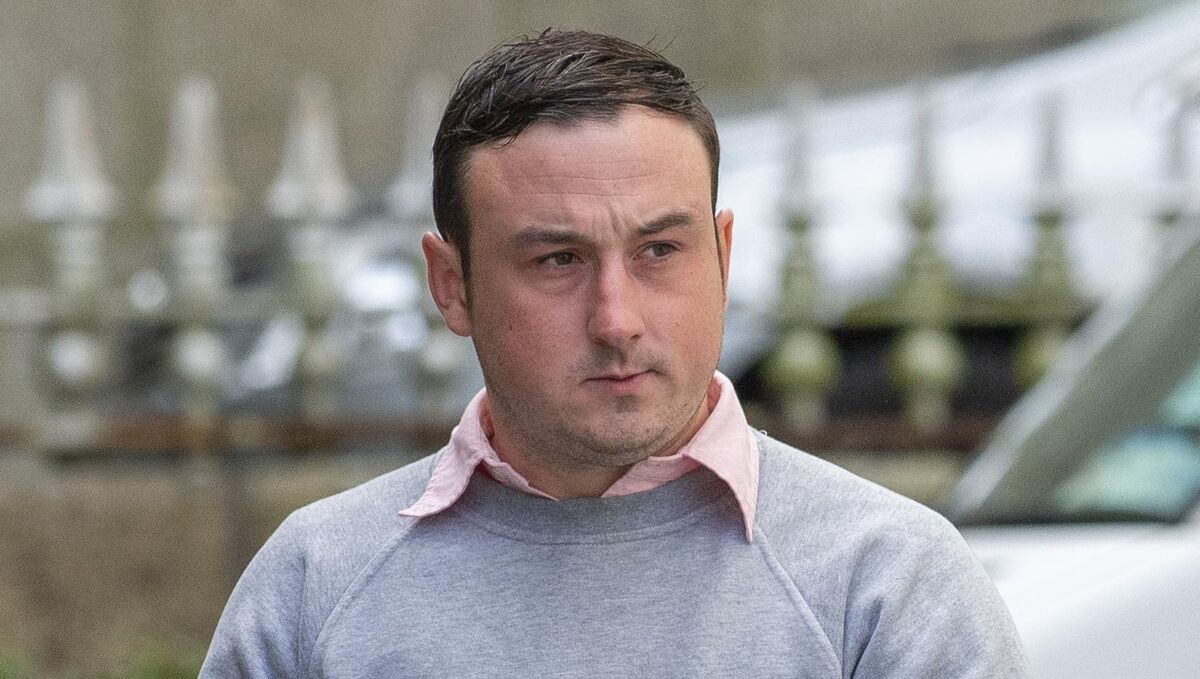
By contrast in 2020, the Central Criminal Court heard the jury trial of Aaron Brady for the capital murder of Garda Adrian Donohoe during a bank robbery in Lordship, Co. Louth. Despite allegations of witness intimidation, the ordinary courts were deemed adequate to hear the case.
A first independent review of the Special Criminal Court published in 2002 included a dissenting view from its judicial chair and from members of the group, but did not lead to substantive reform. A second independent review, established by Minister for Justice Helen McEntee in 2021, concluded last year.
While differing on what should replace the current law and court, the review’s Majority and Minority reports agreed on one fundamental issue: the Special Criminal Court and the Offences Against the State Acts upon which it stands must be replaced. To date, and despite urging from the Irish Council for Civil Liberties (ICCL) and human rights experts, no action has been taken by government.
In his superb recent history of counter-terrorism, , Conor Gearty traces the history of how repressive measures under the poorly defined umbrella of ‘counter-terrorism laws’ have expanded hugely in recent decades, enabling repressive regimes to circumvent human rights while applying increasingly aggressive security measures against political opponents.
Leading Irish human rights lawyer and former UN Special Rapporteur on Counter-terrorism and Human Rights, Fionnuala Ní Aoláin, has also repeatedly warned of the dangers of the creeping reach of emergency powers and called for the abolition of the Special Criminal Court, which she says “has extended far beyond where it started”.
Today, Ireland holds the office of EU Commissioner for the Rule of Law, Justice and Democracy (provided Michael McGrath successfully passes his European Parliament hearing next month) and is seeking a further term on the UN’s Human Rights Council.
At the same time as we are rightly seeking to defend the rule of law and human rights on the international stage, we retain a relic of the past in our own constitutional attic.
- Claire McEvoy is Head of Research and Policy with the Irish Council for Civil Liberties


CONNECT WITH US TODAY



Be the first to know the latest news and updates