Government's failure to act responsibly towards migrants must be resolved
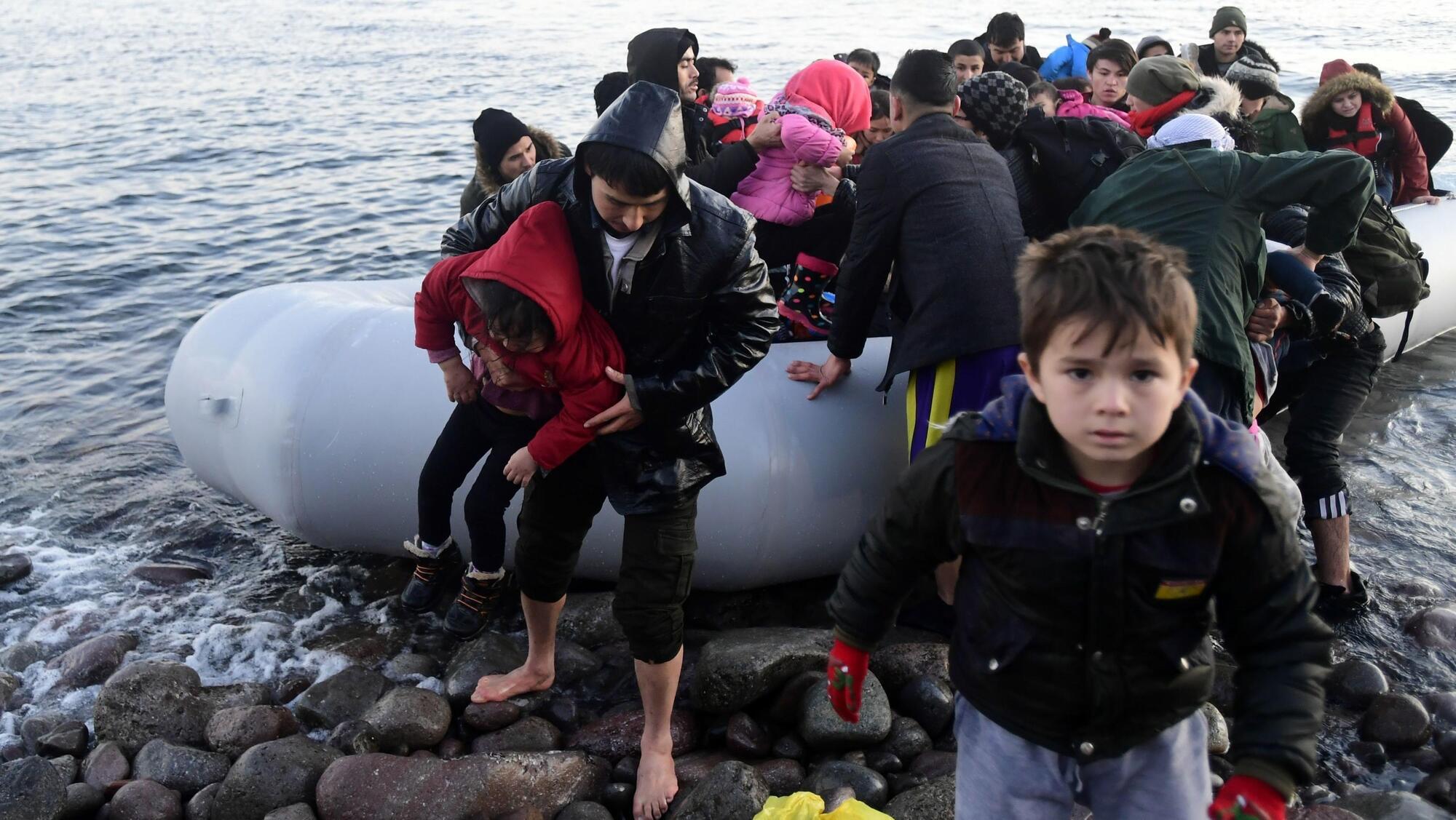
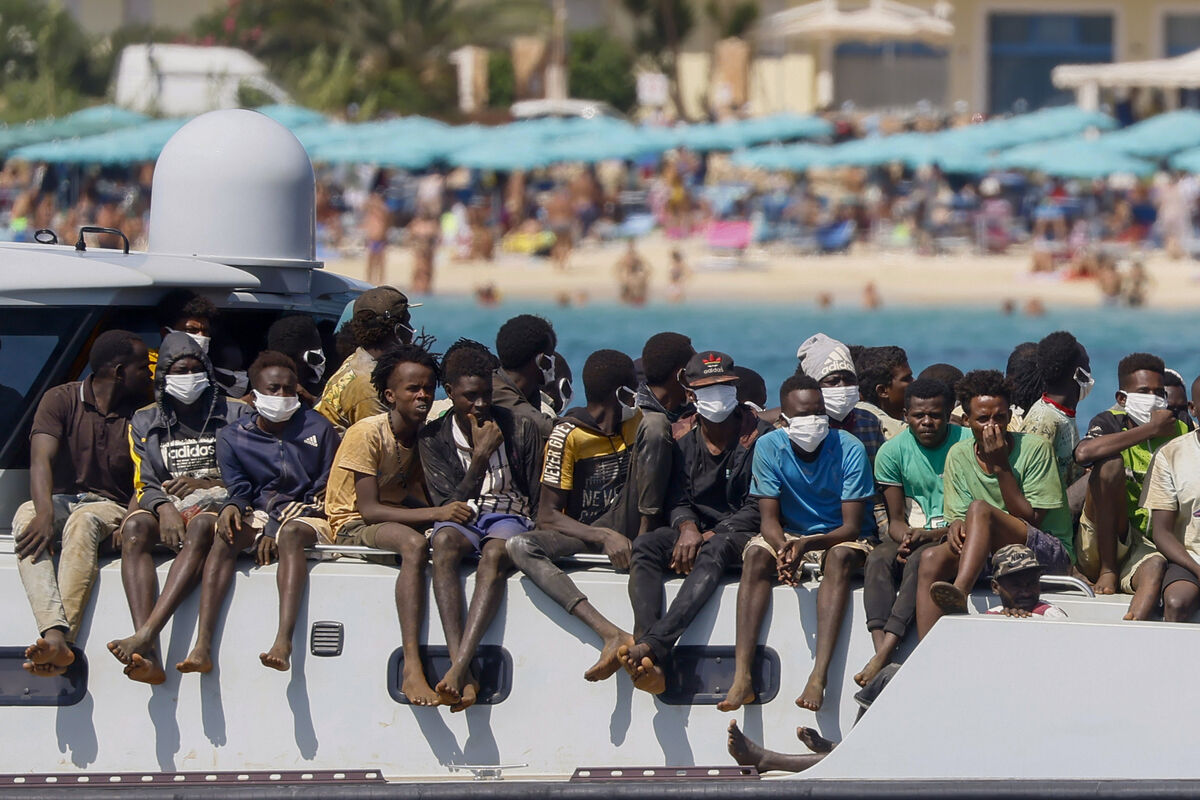
Migrants arrive at the village of Skala Sikaminias, on the Greek island of Lesvos, after crossing on a dinghy the Aegean sea from Turkey in March 2020. Harmful narratives on migration are increasingly permeating mainstream political discourse. File photo: AP/Michael Varaklas
After almost a decade of negotiations, the EU finally agreed on an asylum and migration pact that it claims will enable it to better manage migration. The proposed common migration system will, it says, be grounded in its core values.
However, there are real risks that the migration pact will lead to reduced protection for people, increased suffering for those fleeing war, and more rights violations across the EU.
We already see a trend in this direction with a hardening of attitudes across Europe to people arriving as irregular migrants. And Ireland, sadly, is no exception.
One of the core values of the EU is respect for human rights, especially those of minorities. But by claiming, or just implying, that migrants are contributing to the hardship of others, government politicians are undermining their human rights.
In a paper published earlier this month, the UK-based Institute for Race Relations noted that we are now seeing an authoritarian drift in society which is the culmination of decades of neoliberal economic policies.
Governments have disinvested from communities at a time when the gap between rich and poor has dramatically widened, and inequality has become more entrenched.
Public discourse is pitching communities against minorities and is becoming increasingly racialised, to a point where people who look and sound different are fearful as they go about their daily business.
Read More
In this context, the statements by the Taoiseach Simon Harris that there’s a link between a “surge in immigration” and rising homelessness are not only misleading, they are also quite dangerous.
When Russia invaded Ukraine in early 2022, one of Simon Harris’s ministerial colleagues, Charlie McConalogue, said Ireland could take in as many as 200,000 refugees fleeing the war. Just over half that number came, and yet the government failed to plan for their mid- to long-term accommodation.
In March 2022, there were already 9,800 people homeless in Ireland. Homelessness has been rising for many years, and while the number is now over 14,000, any attempt to blame people seeking protection for the government’s failure to provide housing is disingenuous.
Asylum seekers are also suffering as a result of the housing shortage. But instead of addressing this, the Irish government appears more focused on measures that make applying for asylum more difficult.
There is an ongoing failure to meet asylum seekers’ basic needs, despite a High Court ruling that the State is breaching their human rights by failing to do so. As of September 27, there were 2,756 asylum applicants who had not been provided with accommodation.
Thousands of others are trying to get by in centres where their basic needs are not adequately met. By forcing people onto the streets or into remote, poorly serviced accommodation, the government is effectively denying them proper access to legal support and health services.
This significantly reduces their capacity to present the evidence needed to support their application, especially if it is being fast-tracked. For those who have spent more than six months waiting for their applications to be processed, things are also getting more difficult.
Asylum seekers with jobs may be asked to make contributions of up to €238 a week to pay for State accommodation and services. At the same time, they are being denied basic supports like child benefit and access to third-level education.
Detention and prosecution of people who arrive without travel documents is also undermining the rights of those who need to seek asylum, by criminalising their attempt to reach safety. Measures like accelerated procedures and extending the ‘safe countries’ list present further curtailment of asylum seekers’ rights.
By claiming that these measures have been effective because they’ve reduced the number of applications, the government is showing little regard for the rights or safety of people fleeing oppression.
Harmful narratives on migration are increasingly permeating mainstream political discourse.
In an environment riddled with misinformation and economic hardship, a mix of anxieties and confusion can lead to extreme, overtly far-right attitudes and violence. The far-right is using every opportunity it gets to undermine trust in mainstream democratic institutions.
It is shocking to see, and even worse to experience, the extent of their organised violence against migrants, especially asylum seekers.
Yet we hear commentary from politicians that echoes and amplifies their dangerous rhetoric. Politicians and others in positions of influence need to ensure they do not undermine the rights of migrants or increase the risk to their safety and wellbeing.
Comments that call into question the rights of protection applicants or suggest they are to blame for our decades’ old socio-economic problems are not without consequences. They put individual migrants and members of minority groups at risk.
They embolden the far-right, and they undermine community efforts to maintain social cohesion. The drift towards the far-right is reinforced by repeating its tropes.
But this is exactly what the government is doing now. Its failure to act responsibly when it comes to the rights of migrants may be intentional or down to sloppiness. But either way, it needs to be addressed.
Back at European level, there is little for those of us that work in the area of refugee and migrant support to feel hopeful about.
Germany is tightening its asylum and residency laws; the government in the Netherlands is threatening to implement “the strictest admission rules in the EU”; Sweden is planning a law obliging public sector workers to notify undocumented people to the authorities; and Finland wants to ban undocumented people from accessing non-emergency healthcare.
As a nation that has benefitted from outward migration since before the formation of the State, Ireland can and should do better than that.
- John Lannon is the chief executive of the migrant and refugee group, Doras

CONNECT WITH US TODAY



Be the first to know the latest news and updates