‘The Taliban flogged my mum’: The Irish-based lawyer from Afghanistan who is fighting for women's rights worldwide
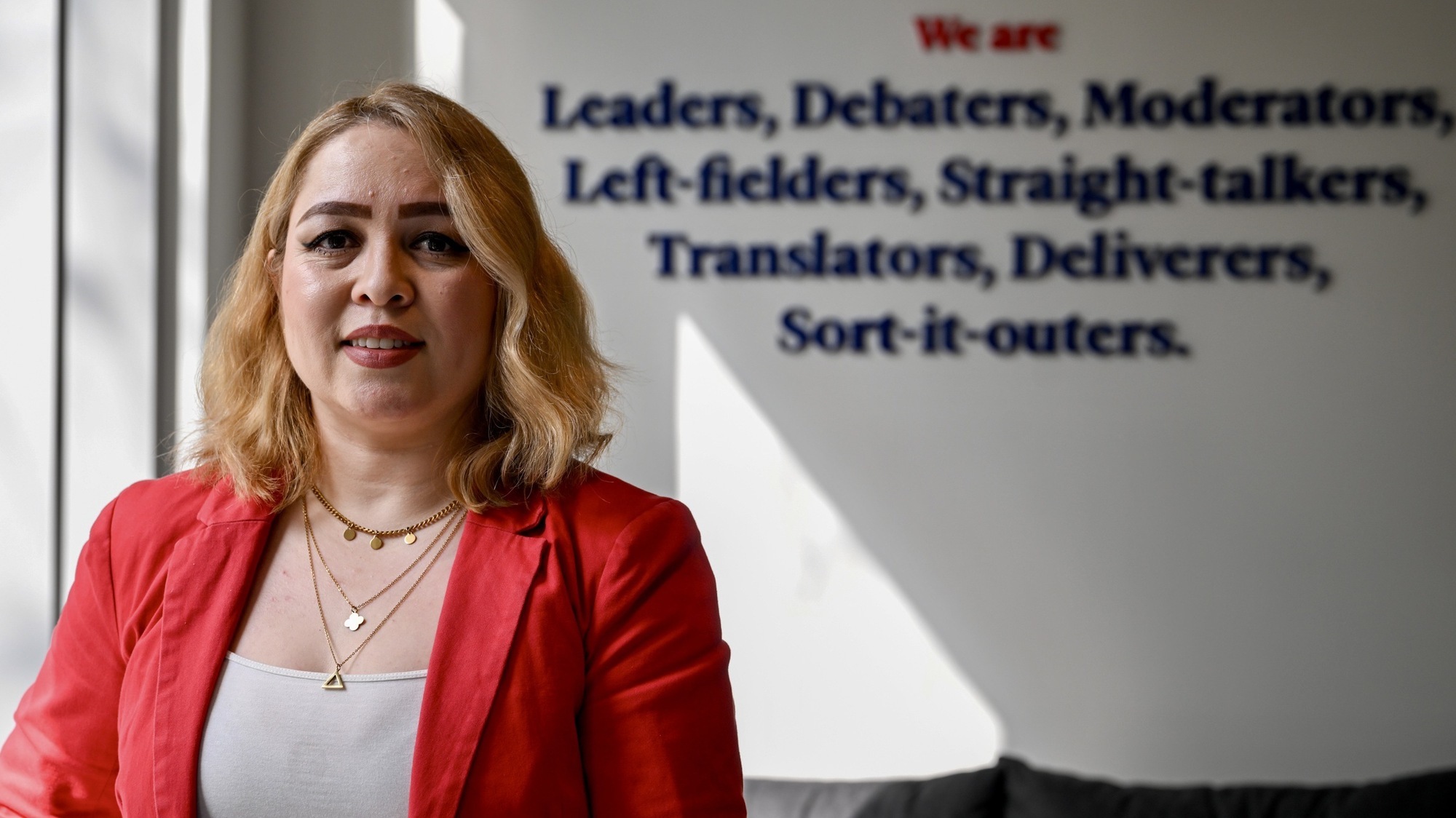
Mahbooba Faiz had to flee Afghanistan with her family — twice — but now works with Cork law firm RDJ while studying at UCC for another masters degree, and working with United Against Gender Apartheid.
"I am one of those unfortunate women who has twice seen the horrible faces of Taliban soldiers," says lawyer and women’s rights activist Mahbooba Faiz, who now lives in Tallow, Co Waterford.
Mahbooba was just a girl when the Taliban first took control of her native Afghanistan back in 1996.
This was her first experience of gender apartheid, something she would go on to campaign against.
The hardline Islamist group emerged in the early 1990s in northern Pakistan following the withdrawal of Soviet troops from Afghanistan. The clique has been internationally condemned for its restrictions on human rights, including the right for women and girls to access education, which is still prohibited in Afghanistan today.

Born and raised in Kabul, Mahbooba recalls the difficulties of growing up in an era when women were disregarded in society, particularly following the death of her father, a government official, who was killed during Russia’s invasion of Afghanistan during the civil war.
That left her widowed mother to care for Mahbooba and her three siblings.
“My mom bore all the burden of the family on her own,” she told the .
She recalls the time her mother, like many other Afghani women, was banned from working, prompting her to start a new job in an “unstable situation” to “put food on the table for us”.
“She worked hard to make ends meet for us to survive,” Mahbooba said.
Her mother began baking bread to sell at the local market to feed her family. On one occasion, Mahbooba accompanied her mother to the market, where she witnessed her being flogged for her lack of footwear. She said:
This event marked the end of her mother’s working days, handing the baton over to Mahbooba and her siblings, to provide for the family.
It wasn’t long before the family made the difficult decision to flee their home country in search of a better life in Pakistan, where they remained as refugees for a decade.

The family overcame many obstacles as a result of the migration — poverty, homelessness, lack of education, lack of healthcare, and lack of access to resources, among others.
Despite these challenges, Mahbooba completed her high school education, while learning English and Urdu, the official language of Pakistan.
In 2001, when the US military intervened in Afghanistan and defeated the Taliban, the family longed to come back to their home country, eventually returning home in 2007 when living conditions had vastly improved.
Less than a year later, Mahbooba was happily married, had completed her bachelor’s degree in criminal law, and was working for women’s rights organisations, all while celebrating the birth of her first son.
This was before her dreams came crashing down.

After she returned to university to complete her masters degree in international law, Mahbooba recalls the “heartbreaking” day she was en route to university to defend her dissertation research for her masters, when she received an alarming phone call.
“I thought that was the end of life, because it took us nearly two decades to work very hard, to study, to face all the challenges, to cross all the barriers, and to be the person that we wanted to be.
“We worked a lot for our goals. The dreams that I had since my childhood, the dream of becoming a lawyer in the future, all just wiped out in a blink of an eye.”
That day marked one of the toughest moments for the family. Making the decision to once again flee their home country, Mahbooba was forced to leave behind their family home, taking just one backpack as a memory of the life she was again having to abandon.

“In the period of 20 years, we worked tirelessly, to build a beautiful house for ourselves and from that huge house I took only one backpack.”
With Irish visas secured, the family went into hiding for a week before making the risky journey to the airport, heightened by the sense of chaos in the country. Mahbooba said:
Amid the severe overcrowding and sheer panic in the airport, the family were among hundreds of hopefuls that successfully secured a spot on a plane headed out of the country, all huddled together to fit as many people in as they could.
The family travelled to Doha and Germany before landing in Ireland, where they were housed in a direct provision centre in Mosney, Co Meath, for three months.

They were then offered a community house in Waterford, where they reside today.
Mahbooba is currently enrolled in University College Cork (UCC) for her second masters degree in law, while working as a legal secretary in Cork City law firm RDJ.
“I’m immensely grateful that we are able to live a peaceful life and my son is growing up in a peaceful country,” she said.
“He’s able to get a good quality education in Ireland. I’m able to work here, to have the freedom of choice, I’m able to travel without any male chaperone, and I’m able to wear the clothes that I like to.
“At the same time, I’m very, very sad about women in Afghanistan who are deprived of all these basic rights.”
This compassion and understanding for her country’s history led Mahbooba to discover the United Against Gender Apartheid campaign, which has been launched globally by a group of Afghan and Iranian women’s rights activists.

The group of like-minded individuals aim to raise awareness and push for the term “gender apartheid” to be incorporated in Article 2 of the draft Crimes Against Humanity Convention.
As of April 2024, 10 UN member states have expressed openness to exploring the codification of the crime of gender apartheid in the treaty.
Although Ireland has spoken in favour of this decision, as of now it has yet to directly support the inclusion of gender apartheid as a crime against humanity.
“Women’s rights activists and United Nations experts believe that the way the Taliban are treating women is more than just the discrimination against women,” Mahbooba added. “It is the dehumanisation of women.”
She hopes that the term is either included in the convention or criminalised in order to “hold the Taliban accountable” for the persistent mistreatment of women.
“It’s not only an issue for Afghan women or Iranian women, but it can also happen everywhere,” Mahbooba told the Irish Examiner.
“We urge the Irish Government not to forget the women of Afghanistan.”