Victims of sexual offences 'once again in a state of uncertainty' over use of counselling notes in trials
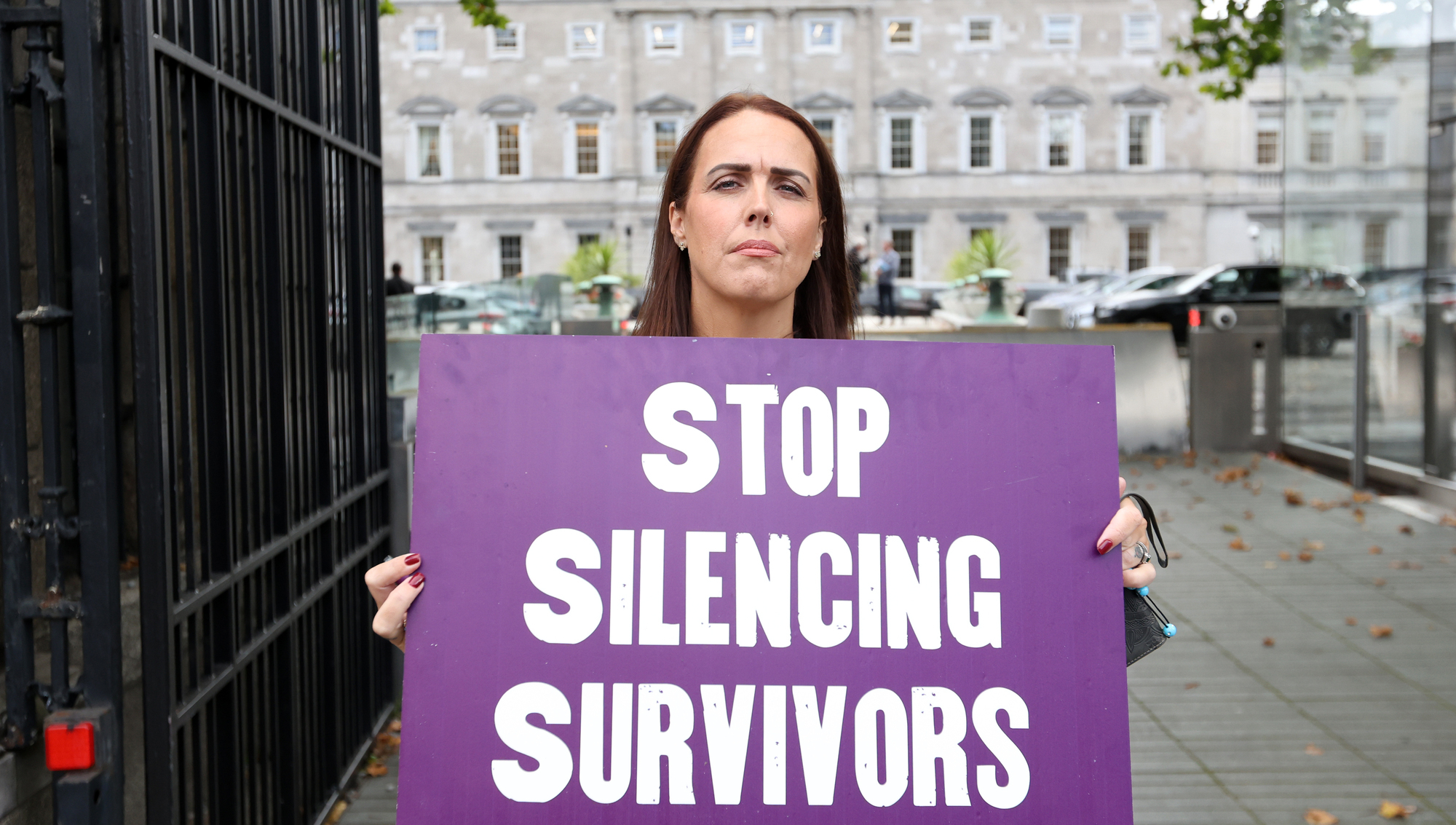
Rape survivor Hazel Behan protesting outside the Dáil last year to demand an end to victim-blaming practices in the court system. Picture: Sasko Lazarov/ RollingNews.ie
Survivors of sexual offences say they have been left in a state of uncertainty following a vote on new legislation that does not ban the use of counselling notes in trials.
A Dáil vote on the Criminal Law and Civil Law (Miscellaneous Provisions) Bill 2026 was passed on Wednesday, with TDs voting 80 to 65 in favour of the bill. It has now been referred to the Justice Committee for the next stage.
The Government's legislation, published late last year, includes restricting the use of counselling notes in sexual offence trials, but stops short of an outright ban. When the legislation comes into effect, disclosure hearings will be held, during which the relevance of the use of counselling notes in individual trials will be decided by a judge.
Survivors say they are disappointed the vote was passed on Wednesday without any new amendments to the legislation by justice minister Jim O’Callaghan.
They want to see a ban on the use of counselling notes. While stressing he would not be in a position to bring an amendment for an outright ban, the minister told the Dáil during a debate on the legislation that at committee stage, he would “seek to try to change the presumption so that there is a presumption for non-disclosure” of counselling notes.
Hazel Behan was one of a panel of 14 people who contributed to a session of the Oireachtas committee on justice in September for pre-legislative scrutiny of the bill.
Ms Behan, who alleged she was raped in 2004 by the chief suspect in the Madeleine McCann case, Christian Bruckner, is co-founder of Éist: Saying No To Silence, which is campaigning against the use of counselling notes in trials.
She said Mr O’Callaghan has yet to outline what additional measures, if any, he intends to propose, “leaving victims and survivors once again in a state of uncertainty”.
“Survivors have been clear, consistent and united — counselling notes should never be used in court. The Government has chosen to ignore those voices. Survivors need answers, accountability, and real change now. We cannot wait while our most private moments are treated as evidence and used to discredit us," she said.
Another survivor, Lisa Murray, is a psychologist and a postgraduate in international human rights law with the Irish Centre for Human Rights.
She called on the Government “to refrain from creating legislation that is based on erroneous and false assumptions”, and said "the basis of this legislation is fundamentally flawed”.
“The minister must cease describing the impact of counselling notes disclosure on victims as ‘distressing’," she said, adding it was an “unacceptably minimising and inaccurate description".
CONNECT WITH US TODAY



Be the first to know the latest news and updates