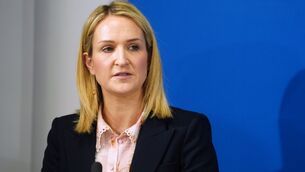
Female candidates boldly going where few have gone before

How can we avoid the prospect of intimidatory or criminal behavior deterring more women from running for local elections, or any elections, at a time when we need more balanced decision-making in our county councils?
With a record number of more than 600 women going forward for this year’s upcoming local elections, they are boldly going where few have gone before. Currently, women only hold 26% of the county council seats around the country and there is a stark under representation of women in many rural counties.
But the reality is that many women who put themselves forward for election will face abuse just because they are women who want to enter the political domain. A recently published Oireachtas commissioned report on the abuse suffered by politicians showed that 94% of TDs and senators have endured some type of threat, harassment, or violence.
In relation to the abuse encountered by elected members, 67% of it related to immigration, 47% to women's rights, 40% to housing/homelessness and 40% to LGBTQ+ issues.
Women were found to be more likely to experience digital harassment, prejudicial slurs, threats of sexual violence, sexual harassment, unwanted sexual approaches, sexually explicit images and were more likely to receive comments on their appearance.
Unfortunately, this comes as no major surprise as earlier this year the AILG (Association for Irish Local Government) also revealed two thirds of county councillors have experienced threatening or intimidating behaviour, sexual violence and in some cases even death threats.
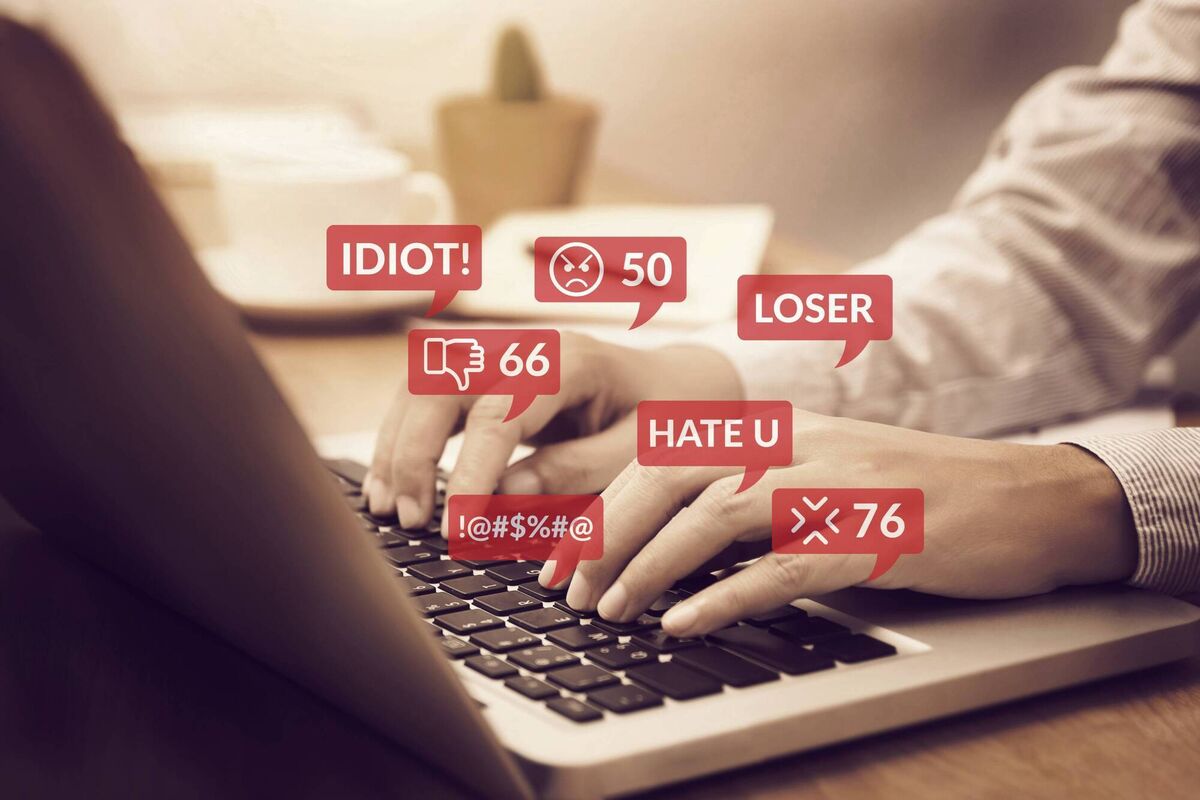
How can we avoid the prospect of intimidatory or criminal behavior deterring more women from running for local elections, or any elections, at a time when we need more balanced decision-making in our county councils?
What has gone so horribly wrong with our body politic that this type of behaviour both in-person and online has sadly become normalised in political life and what action has been taken to do something about this intolerable reality?
Unfortunately, in our post-covid world, social norms have become diluted and there seems to be a collective pent-up anger and bitterness which has manifested itself in a new type of coarseness.
This vile discourse has resulted in protests at politicians’ homes, bomb threats and threats of sexual violence which are totally unacceptable and only serve to erode our democracy.
Of course, we expect political debate as part of elections and of local and national government. But increasingly, especially online, this crosses over into unacceptable behaviours, threats, or attacks.
Civility in political debate and dialogue is essential to our democracy, and essential to creating an environment where more women feel safe to run for election. We need measures in place to ensure that those elected by the public to serve their interests can do so in safety.
See Her Elected recently teamed up with An Garda Síochána and Women for Election to produce ‘Safety Guidance for Candidates in Elections’. Naturally, it would be preferable if the need for such guidelines did not exist.
However, the anxious knot of caution and fear women feel in many situations is a familiar one. It is why we sometimes walk with keys in our hands. And, of course, suggesting to women that they change their behaviour or take precautions is something that we would of course prefer not to be making.
The guide provides practical advice for protecting yourself online, responding to a criminal attack, dealing with anonymous and threatening phone calls, hate crime and when to contact gardaí. Key supports and contacts are outlined with a useful list of divisional liaison inspectors throughout the country who are dedicated gardaí responsible for supporting safe participation in political life.
Coimisiún na Meán, Ireland’s body for regulating broadcasters, on-demand services and online media has also published guidelines for election candidates. Its online safety framework is aiming to drive behavioural change from the platforms and its useful guide provides links to the reporting mechanisms for all the main social media platforms. They also play an important role in election integrity, disinformation, and deceptive AI generated media.
Under the EU’s Digital Services Act, there is provision for Coimisiún na Meán to award the status of ‘trusted flagger’ of illegal content and submit a report to the social media platform concerned. The act also requires social media platforms to create a ‘fast lane’ for dealing with complaints in relation to politicians.
The Electoral Commission also recently published a framework on online electoral process information, political advertising, and deceptive AI content.
All of this is, of course, most welcome. But let us hope the recommendations outlined by the recent taskforce which was commissioned by the Oireachtas and conducted by UCD are implemented swiftly.
The taskforce has called on the Oireachtas to apply for accreditation as a "trusted flagger" to Coimisiún na Meán so platforms are obliged to give priority to reports received from the Oireachtas. A forum is to be set up between social media companies, An Garda Síochána and Coimisiún na Meán to address the online abuse of politicians. All of this is most welcome but swift implementation of these recommendations is vital.
Thankfully, due in part to support organisations, like See Her Elected, a gateway has been provided for women in rural Ireland to enter political life. Almost 40% of this year’s female local election candidates have availed of training and support from See Her Elected and they are marching towards June 7 with great gusto and determination.
We need to be the wind in their sails.
- Mairéad O’Shea is communications manager for See Her Elected, a grassroots organisation that supports women across rural Ireland to become county councillors and to be part of their campaign teams

CONNECT WITH US TODAY



Be the first to know the latest news and updates