History tells us about the future of artificial intelligence
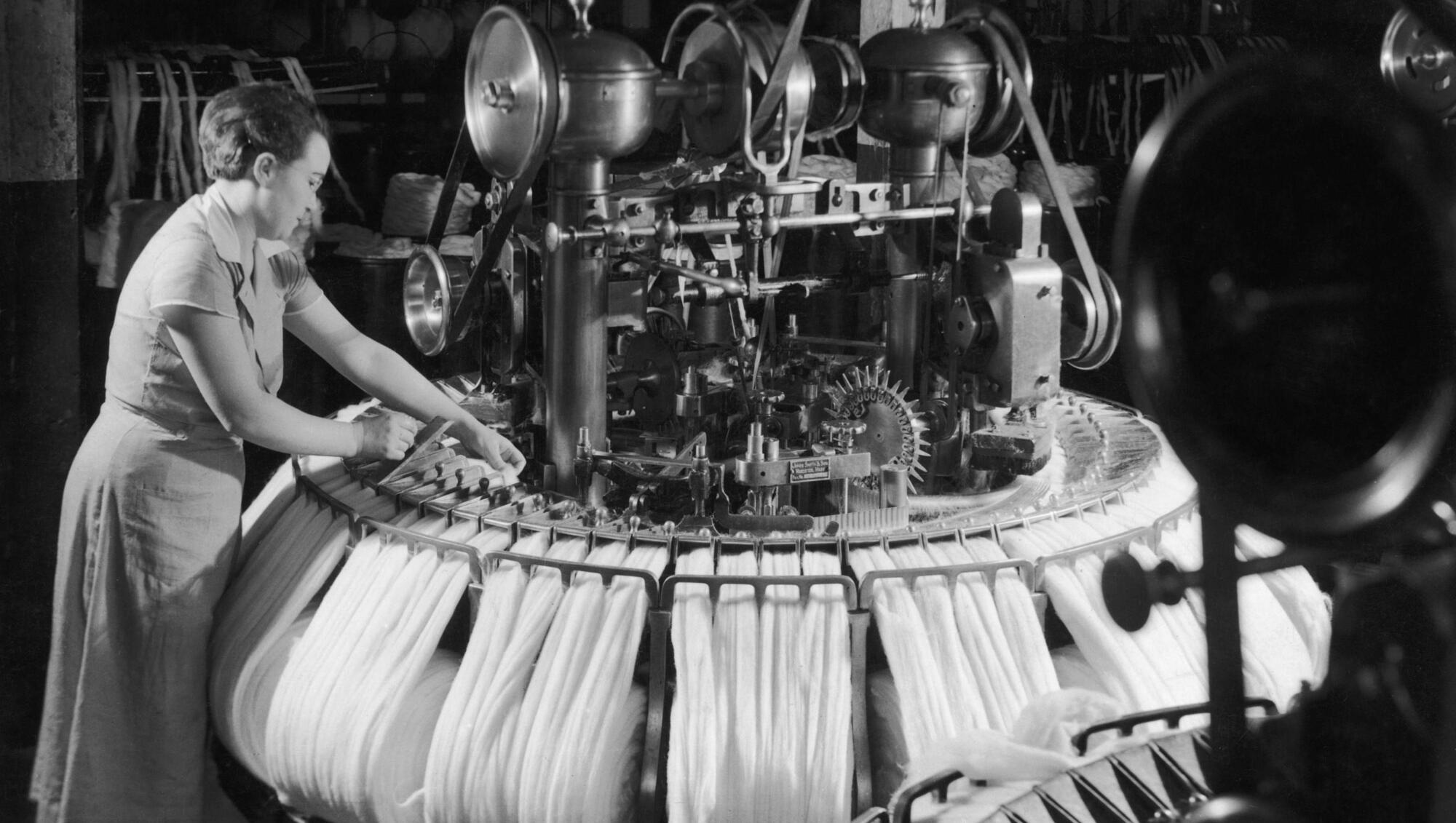
A woman operates a large cotton weaving machine, circa 1930. Most of the struggling handweaving artisans during the 1810s and 1820s did not go to work in the new weaving factories, because the machine looms did not need many workers. Picture: Getty Images
Artificial intelligence and the threat that it poses to good jobs would seem to be an entirely new problem.
But we can find useful ideas about how to respond in the work of David Ricardo, a founder of modern economics who observed the British Industrial Revolution firsthand. The evolution of his thinking, including some points that he missed, holds many helpful lessons for us today.
Private-sector tech leaders promise us a brighter future of less stress at work, fewer boring meetings, more leisure time, and perhaps even a universal basic income. But should we believe them? Many people may simply lose what they regarded as a good job — forcing them to find work at a lower wage. After all, algorithms are already taking over tasks that currently require people’s time and attention.
In his seminal 1817 work, , Ricardo took a positive view of the machinery that had already transformed the spinning of cotton. Following the conventional wisdom of the time, he famously said “machinery did not lessen the demand for labour".
Since the 1770s, the automation of spinning had reduced the price of spun cotton and increased demand for the complementary task of weaving spun cotton into finished cloth. And since almost all weaving was done by hand prior to the 1810s, this explosion in demand helped turn cotton handweaving into a high-paying artisanal job employing several hundred thousand British men (including many displaced, pre-industrial spinners). This early, positive experience with automation likely informed Ricardo’s initially optimistic view.
However, the development of large-scale machinery did not stop with spinning. Soon, steam-powered looms were being deployed in cotton-weaving factories.
As anxiety and protests spread, Ricardo changed his mind. In 1821, he wrote: “If machinery could do all the work that labour now does, there would be no demand for labour.” The same concern applies today. Algorithms’ takeover of tasks previously performed by workers will not be good news for displaced workers unless they can find well-paid new tasks.
Most of the struggling handweaving artisans during the 1810s and 1820s did not go to work in the new weaving factories, because the machine looms did not need many workers. Whereas the automation of spinning had created opportunities for more people to work as weavers, the automation of weaving did not create compensatory labour demand in other sectors. The British economy overall did not create enough other well-paying new jobs, at least not until railways took off in the 1830s. With few other options, hundreds of thousands of hand weavers remained in the occupation, even as wages fell by more than half.
Another key problem, albeit not one that Ricardo himself dwelled upon, was that working in harsh factory conditions — becoming a small cog in the employer-controlled “satanic mills” of the early 1800s — was unappealing to handloom weavers. Many artisanal weavers had operated as independent businesspeople and entrepreneurs who bought spun cotton and then sold their woven products on the market.
Weavers spoke bitterly about their refusal to accept such working conditions, or about how horrible their lives became when they were forced (by the lack of other options) into such jobs.
Today’s generative AI has huge potential and has already chalked up some impressive achievements, including in scientific research. It could well be used to help workers become more informed, more productive, more independent, and more versatile.
Unfortunately, the tech industry seems to have other uses in mind. The big companies developing and deploying AI overwhelmingly favour automation (replacing people) over augmentation (making people more productive).
That means we face the risk of excessive automation: many workers will be displaced, and those who remain employed will be subjected to increasingly demeaning forms of surveillance and control. The principle of “automate first and ask questions later” requires — and thus further encourages — the collection of massive amounts of information in the workplace and across all parts of society, calling into question how much privacy will remain.
Such a future is not inevitable. Regulation of data collection would help protect privacy, and stronger workplace rules could prevent the worst aspects of AI-based surveillance. But the more fundamental task, Ricardo would remind us, is to change the overall narrative about AI. Arguably, the most important lesson from his life and work is that machines are not necessarily good or bad. Whether they destroy or create jobs depends on how we deploy them, and on who makes those choices. In Ricardo’s time, a small cadre of factory owners decided, and those decisions centered on automation and squeezing workers as hard as possible.
Today, an even smaller cadre of tech leaders seem to be taking the same path. But focusing on creating new opportunities, new tasks for humans, and respect for all individuals would ensure much better outcomes. It is still possible to have pro-worker AI, but only if we can change the direction of innovation in the tech industry and introduce new regulations and institutions.
As in Ricardo’s day, it would be naive to trust in the benevolence of business and tech leaders. It took major political reforms to create genuine democracy, to legalise trade unions, and to change the direction of technological progress in Britain during the Industrial Revolution. The same basic challenge confronts us today.

CONNECT WITH US TODAY



Be the first to know the latest news and updates