Colin Sheridan: Why do we need to create fake worlds?

An image generated by AI tool Sora shows how the programme can be used to create fantastical images, but also construct life-like pictures of events and circumstances that may not have happened.
It's almost 20 years to the week since was released in cinemas.
In it, Jim Carrey's character discovers that his estranged girlfriend, Clementine (played by Kate Winslet), has undergone a procedure to have her memories of him erased by a New York City firm, Lacuna.
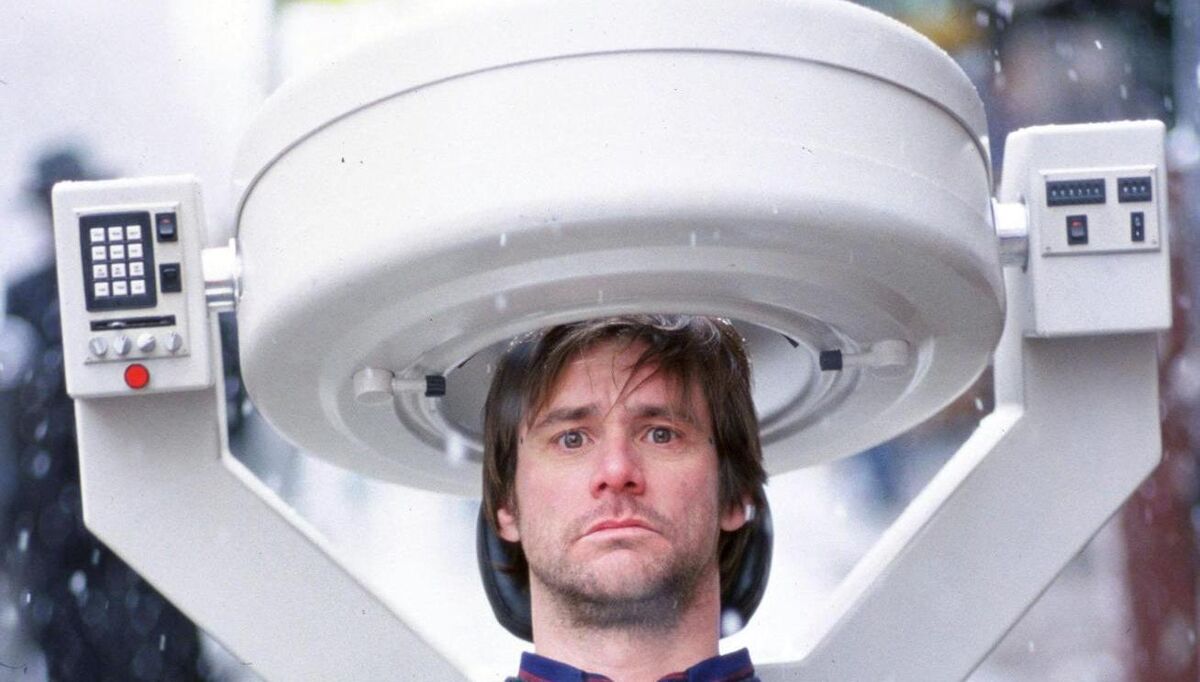
Heartbroken, he decides to undergo the same procedure.
Not to spoil the movie, but the science is ultimately flawed, mostly because it requires sentient human beings to execute it.
Human beings, motivated by love, loss, joy, despair, regret, and shame.
It’s a little like but with the human heart as the atomic bomb.
Two years ago, Apple TV debuted its science fiction psychological thriller television series .
Not too dissimilar to in concept, the plot of centres around a biotechnology corporation called Lumon Industries which uses a medical procedure called "severance" to separate the memories of their employees depending on whether they are at work or not.
When a severed worker is at work, they are dubbed 'Innies' and cannot remember anything of their lives or the world outside.
When outside work, they are dubbed 'Outies' and cannot remember their time at work. Due to this, Innies and Outies experience two different lives, with distinct personalities and agendas.
The idea of escape, especially in the genre of science fiction, isn’t exactly novel.
From to and everything before and since, the path is so well worn one might assume there’s little room left for any originality.
Yet, it’s a genre that has never stood still, which makes sense because the rate of advance in alternate reality technologies this century has been nothing short of phenomenal.
If you haven’t watched , you should.
It paints a rather unsettling picture of the power and potential of science and psycho-technology, not least because, behind every curtain of magnificent scientific progress and discovery, is a very human Wizard of Oz, playing God.
Last month, artificial intelligence company OpenAI revealed a new AI tool called Sora, a tool that can generate highly realistic 60-second videos based off a simple text prompt.

Since the “soft launch”, social media has been awash with samples of Sora's rumoured infinite potential.
One highlight was a clip of a crab walking along a beach.
Seemingly ordinary, but the shell of the crab is an incandescent lightbulb, shining light in a darkened scene.
This video was shared by Sora engineer Aditya Ramesh on X with the prompt: "Night time footage of a hermit crab using an incandescent lightbulb as its shell".
Another, posted by Bill Peebles, was preambled, "an alien blending in naturally with New York City, paranoia thriller style, 35mm film.”
It does exactly what it says on the tin.
You immediately process the alien to be computer generated, as none of us have ever met one (sober, at least), but everything else — the street, the people, the buildings — all look disconcertingly real to the naked eye.
Sora, we are told, has a "deep understanding of language, enabling it to accurately interpret prompts and generate compelling characters that express vibrant emotions".
To achieve this higher level of realism, the software combines two different AI approaches.
The first is something called diffusion, which gradually converts randomised image pixels into a coherent image.
The second technique is called “transformer architecture” and is used to contextualise and piece together sequential data.
For example, large language models use transformer architecture to assemble words into generally comprehensible sentences.
In this case, OpenAI broke down video clips into visual “spacetime patches” that Sora’s transformer architecture could process.
I know, I don’t understand it either, but then I still have absolutely no idea how 3D printers work, or how to get my own printer to print a single sheet of paper with 500 typed words.
To date, OpenAI declined to say when Sora will be available to the public.
“We’re announcing this technology to show the world what’s on the horizon,” said Tim Brooks, a research scientist at OpenAI who co-leads the project.
For all the excitement that followed the announcement, there are concerns about how this technology may be used by bad actors.
This is especially true in a year when more voters than ever in history will head to the polls, as at least 64 countries (plus the European Union) — representing a combined population of about 49% of the people in the world — are due to hold national elections, the results of which, for many, will prove consequential for years to come.
Given the goal of Sora is to manipulate commands and create videos as close to life-like as possible, you wouldn’t need to be a James Bond villain to imagine what problems this may cause in the realm of misinformation and misdirection.
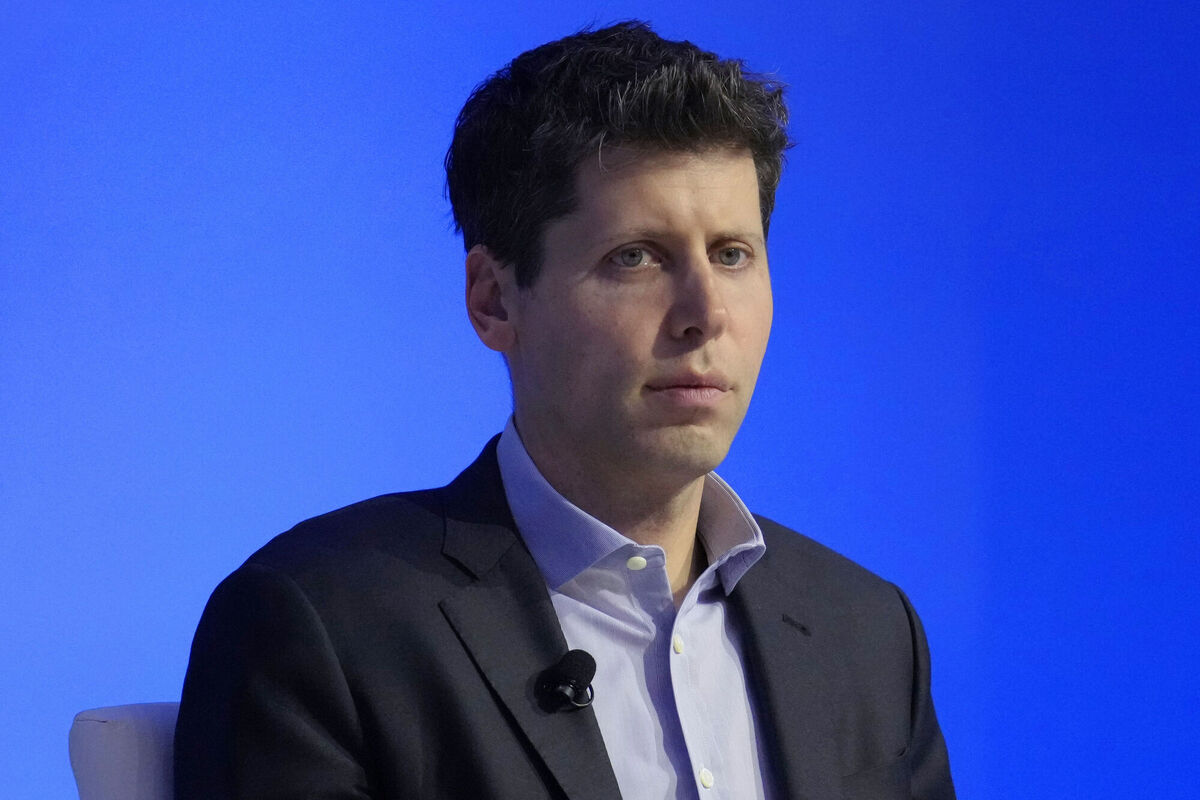
OpenAI Chief Executive Sam Altman said during January’s World Economic Forum’s annual meeting in Davos, that while OpenAI is preparing safeguards, he’s still wary about how his company’s tech might be used in elections.
“We’re going to have to watch this incredibly closely this year.”
You don’t say?
Just last month, days before the US presidential primary in New Hampshire, thousands of people received a call from someone who sounded like President Joe Biden, telling them not to vote.
The call was discovered to be a ‘deepfake’, this century’s answer to photoshopping, which allows anyone with a mid-range knowledge of digital software to make images or audio of fake events.
It has been estimated that of the 500,000 or so deepfake videos detected on the internet, over 80% are pornographic, the overwhelming majority featuring women.
With Sora’s emergence, nefarious innovations like deepfake are already old news.
Which begs the question, why?
Why does the world need another technology to create fake worlds, worlds so real in appearance that we can’t tell the difference?
Misinformation is arguably the biggest global challenge of the 21st century.
At least ChatGPT cured irrational anxiety surrounding composing basic emails. Sora, in my opinion, cures nothing.
Whatever limited good it might do for the easily distracted intent on a virtual tour of King's Landing in a -themed alternate universe, just wait until we are all watching an all-too-real-looking video of somebody we know and love do something obscene or illegal.
Like a dirty, malicious rumour, there is no un-ringing that bell.
The story goes that, as he witnessed the first detonation of a nuclear weapon on July 16, 1945, a piece of Hindu scripture ran through the mind of J. Robert Oppenheimer: “Now I am become Death, the destroyer of worlds.”
Regardless of his moral reckoning, it didn’t save Hiroshima and Nagasaki from evaporation just months later.
I am no scientist, but a simple pros and cons list might be a good starting point for every next-best-thing.
Nothing about Sora leads me to believe we will somehow be better off for its existence.

CONNECT WITH US TODAY



Be the first to know the latest news and updates