Mick Clifford: Bike-gate shows Harris' clean-up mission spun out of control
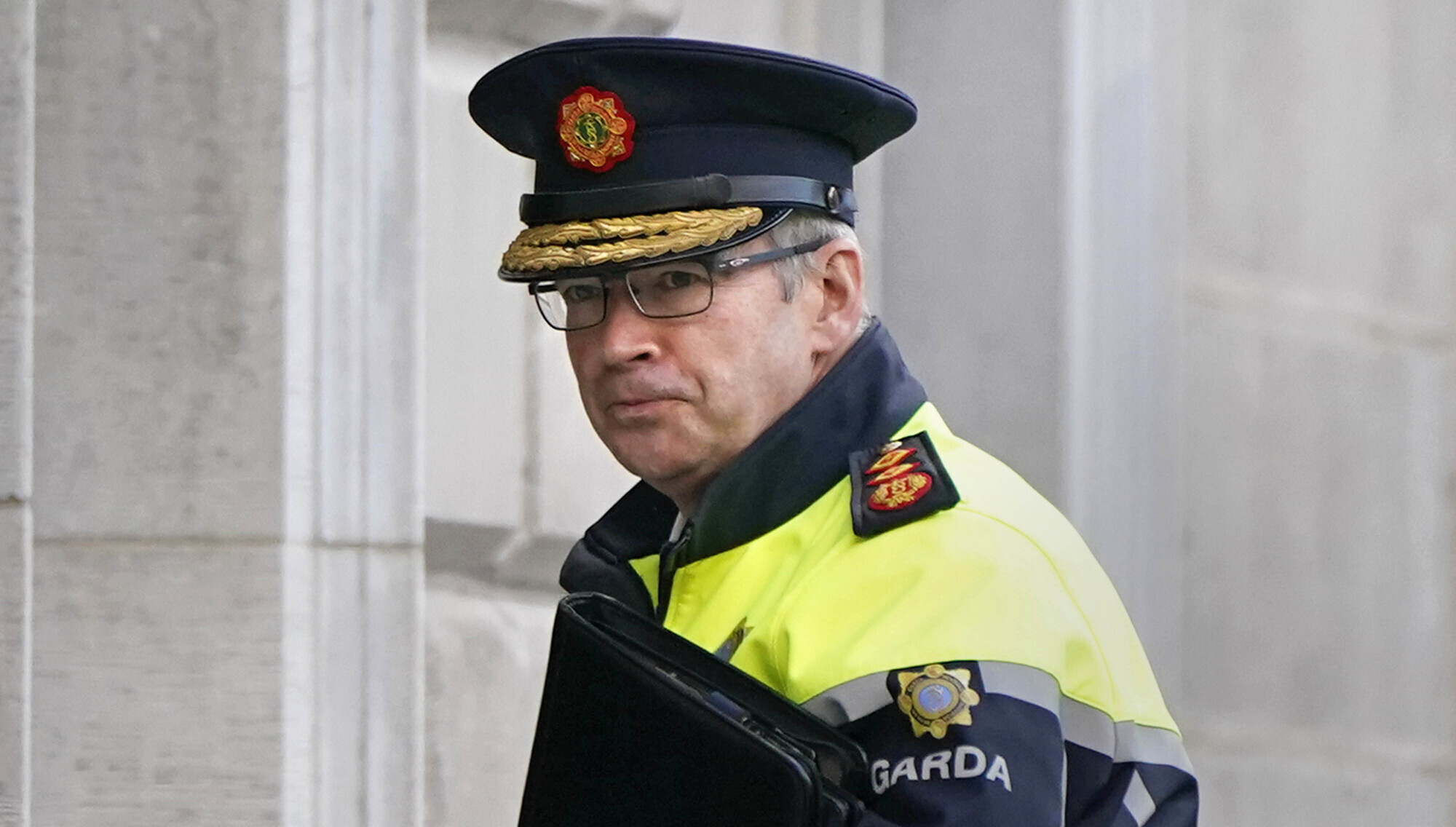
Garda Commissioner Drew Harris was appointed in 2018 with a mandate, to the greatest extent, to clean up the organisation.
The case of the garda and the bicycle has left many people wondering about the apparent new way of doing things. In recent days, what had turned into a saga came to a head when the garda was finally cleared of any wrongdoing.
The facts have been well aired. A garda in the Midlands lent a bicycle which was the property of An Garda Síochána to a local man during covid. The man had a problem with his knees and couldn’t access a new bike he’d bought because of the lockdown.
For performing a charitable act, in keeping with how many gardaí lent a hand during covid, this garda was investigated by the National Bureau of Criminal Investigation (NBCI), a file was sent to the DPP, and when there was no prosecution recommended, he was put through a disciplinary ringer until cleared. In total, he was suspended or confined to desk duty for three and a half years.
Some have ascribed the whole affair to bureaucracy gone mad. In reality, it owes far more to do with a culture drafted into An Garda Síochána by the new commissioner, Drew Harris.
There are three major issues in the case worthy of attention:
- Why was the garda investigated for what was obviously a minor gesture of community support during the pandemic?
- Why, even in the context of such an investigation, was it handled by the NBCI — including a dawn raid on the garda’s home?
- And why did it take so long for the whole thing to be cleared up and the garda allowed get back to his life?
Drew Harris was appointed in 2018 with a mandate, to the greatest extent, to clean up the organisation. In the years preceding his appointment, An Garda Síochána has been rocked by a succession of scandals — from the Maurice McCabe case, to phantom drink-driving checkpoints, to irregularities in the garda college.
Many problems in the organisation centred on discipline, including a perception among the public that when the occasion arose, some within An Garda Síochána acted with impunity. If a garda was caught engaged in serious criminality, he or she was pursued with the full rigours of the law. There were a few exceptions to this, most prominently domestic violence. But otherwise, a blind eye was often turned, particularly for stuff that was seen as a little perk of the job. Undoubtedly, this culture did lead to problems and ultimately fed into scandals.
Mr Harris came from a more disciplined culture in Britain and the North, but also one in which the police were at more of a remove from the community at large. For instance, the rate of suspensions among officers in British police forces is greater than it has traditionally been in An Garda Síochána.
So Mr Harris got tough. But whether his attempts to improve discipline, and change the existing culture, went overboard is a moot point.
In the two years immediately preceding Harris’ appointment, 2016 and 2017, the number of active suspensions was 27 and 28 respectively. By last November, this figure was 105.
In response to a parliamentary question last November from Fine Gael TD Brendan Griffin, the minister for justice laid out the various reasons for suspensions. Some were entirely predictable and appropriate, such as “theft and forgery,” (9), “drugs” (5), “sexual (10) and “assault” (9).
Others were not so transparent. For instance, three were suspended for “misuse of garda resources”, 12 for “discredible conduct”, and the biggest category of suspensions of all was for “perverting the course of justice” — which included 17 suspensions.
The stories behind these various cases would make for interesting exploration. No doubt suspension would have been merited in some of these cases under any modern police regime, but how many fall into that category? Even within the context of a more disciplined force, the four fold increase in suspensions suggests a complete change of culture.
That is one issue. Just as important is how long it takes before a disciplinary matter can be dealt with and a final outcome determined one way or the other.
In an entirely separate case, a Garda inspector was arrested in 2019 on foot of suspicion that he had ingested an illegal substance, presumed to be cocaine. The evidence was flimsy, consisting of grainy CCTV footage — seen by the — in which he put his hand to his face in a public bar.
The DPP decided he had no case to answer, but it was three-and-a-half years before his suspension was lifted. Emerging from such a process with a clean record is hardly compensation for what that officer was put through.
Last December, four members of the Garda traffic corps appealed to the High Court to have their suspensions lifted. They have been suspended since November 2020 over allegations of “squaring” fixed charge notices.
However, they have not been prosecuted or disciplined. The judge in the case found it “difficult to comprehend” why they were still suspended but she did not intervene. And just as the garda and the bicycle case was investigated by the crime-busting NBCI, so also were cases of squared tickets in a deployment of precious resources that seems nothing short of bizarre.
The president of the Garda Representative Association ( GRA) Brendan O’Connor referred to this culture on RTÉ on Monday when he called for “basic principles of fair procedure, transparency, and accountability”.
"We’re not saying the guards shouldn’t be suspended … but whenever the public look at what this guard [with the bike] was suspended for, the circumstances surrounding it, there is serious questions to be asked about how the discipline and the culture of discipline is being applied within the organisation, and the effect it’s having and the chill it’s placing between guards and the communities they serve.”
There are some straws in the wind to suggest that the commissioner is no longer intending to go on as he started. Last year, just over 20 suspensions were initiated, down by half on the previous and preceding years. Some of this may be attributable to improved discipline, but it is far more likely it has to do with a softening of the "suspend now and ask questions later" regime that has been a feature of Mr Harris’ commissionership.
The jury is out, and will remain out for some time, on whether his approach will lead to a better, more disciplined force. However, bike-gate would certainly appear to suggest that in recent years proportionality has been sacrificed in the name of instilling a new disciplinary regime.


CONNECT WITH US TODAY



Be the first to know the latest news and updates