Mick Clifford: Is last week's Supreme Court decision the beginning of the end for bogus self-employment?
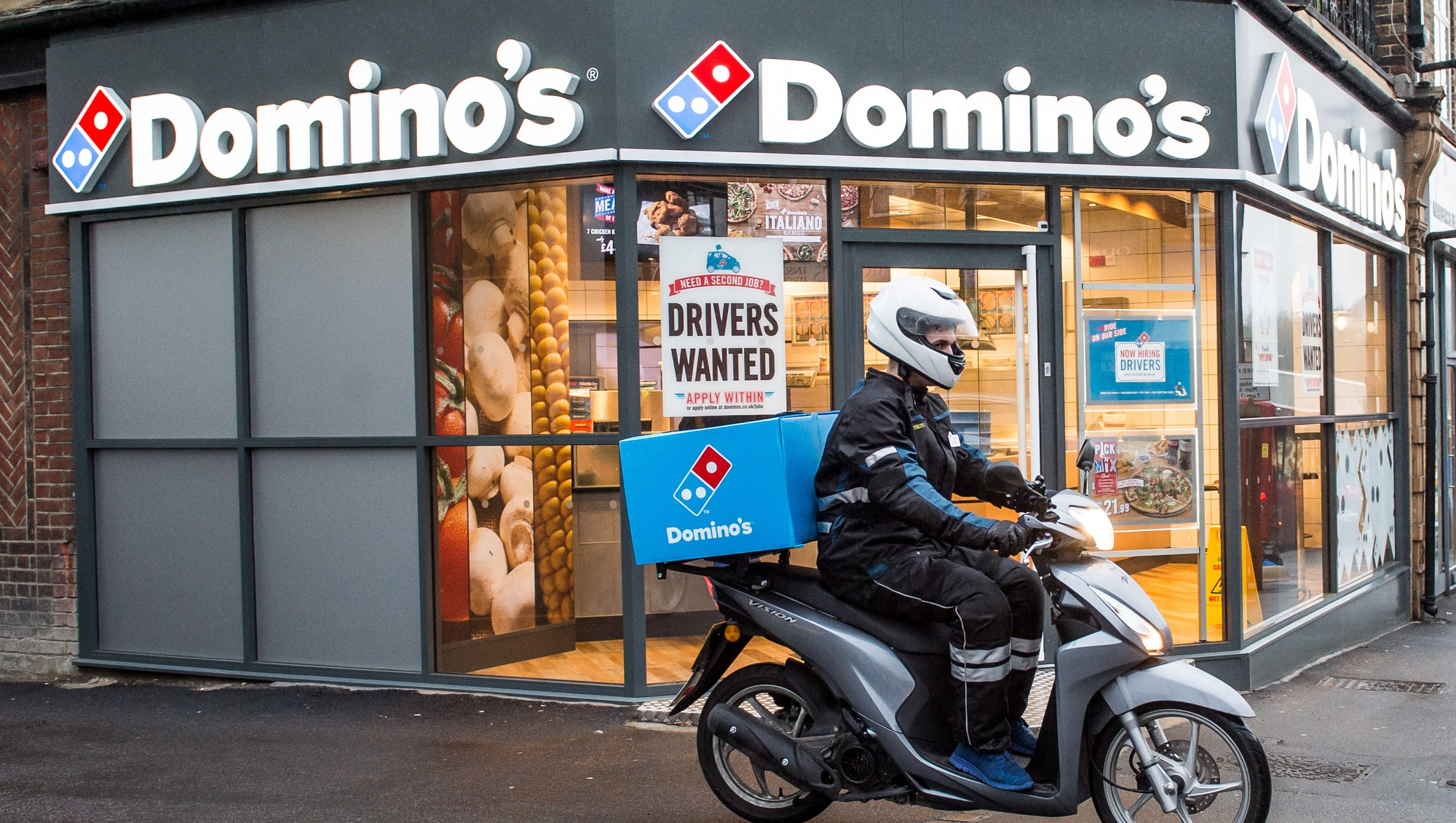
Effectively, the Supreme Court determined that the status of the Domino’s drivers as self-employed was bogus, at least for tax purposes.
Last week, it was business as usual in the Four Courts. Case were heard, applications made and rulings delivered. Outside, on Inn’s Quay, hugging the Liffey, delivery drivers dodged between the traffic and sped along the newly created cycle lanes.
These delivery drivers have one thing in common with the practitioners inside the hallowed halls of justice.
Barristers are self-employed, a status which ensures those who are good at their job can increase their earnings, sometimes exponentially. The delivery drivers equally are self employed, except the chances of any of them increasing their earnings and achieving a decent standard of living are close to zero.
The companies the drivers provide a service for, such as Deliveroo and Just Eat, pay as little as €2.90 for a job that can take half an hour. They are not entitled to basic rights such as the minimum wage. The law does not protect them in any way. They are the mainstay of what has come to be known as the gig economy.
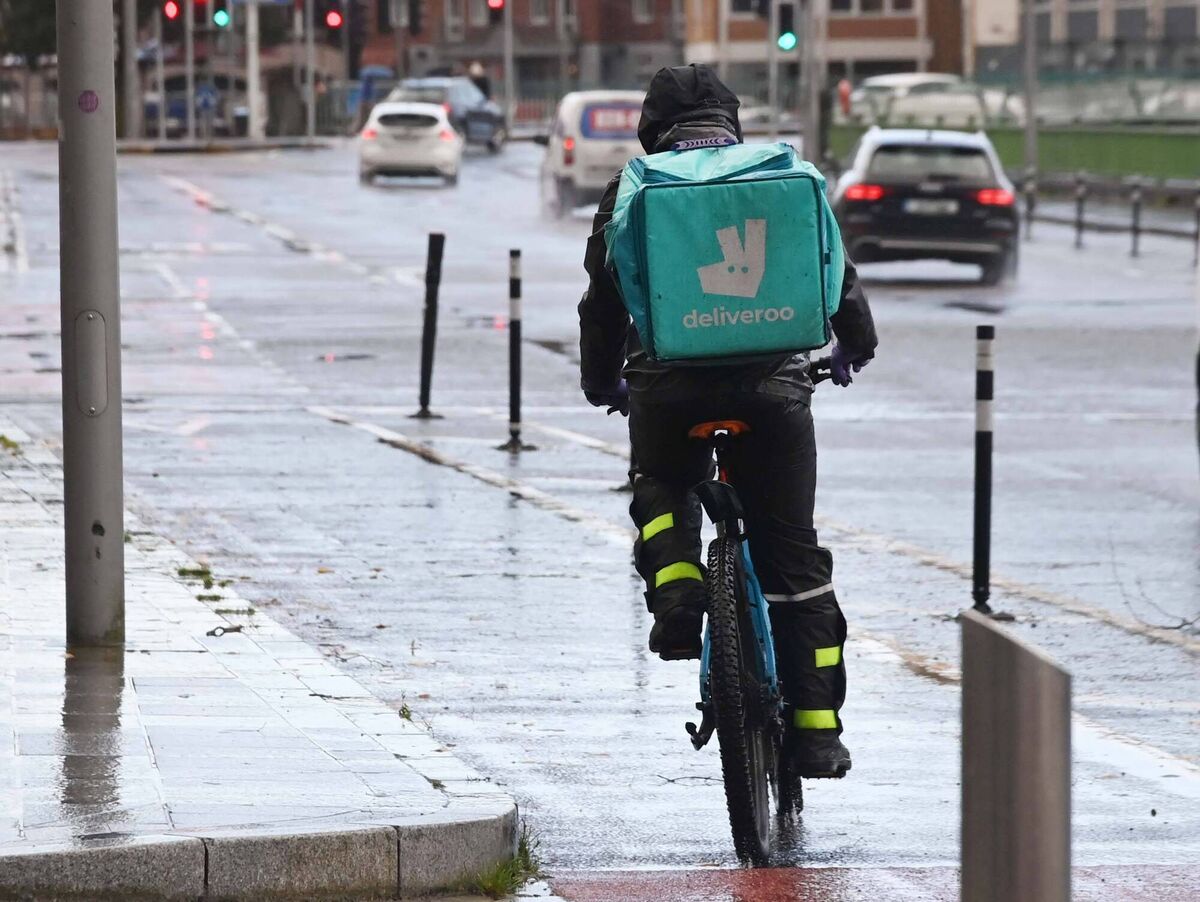
Last week, a judgement was delivered in the Four Courts could potentially have a huge impact on the delivery drivers going by on the quay outside.
The Supreme Court found delivery drivers for Domino’s Pizza should be treated as employees and not contractors.
The drivers had argued they were employees for tax purposes and Dominos, trading as Karshan Ltd, said they were independent contractors under “contracts for service”. The result overturned a ruling from the Court of Appeal which had been in Karshan’s favour.
Effectively, the Supreme Court determined that the status of the Domino’s drivers as self-employed was bogus, at least for tax purposes.
This is a major development and may have implications right across the economy, down all the way to the lowest socio-economic rung where delivery drivers operate.
Bogus self-employment has been a growing area in the last decade or so. Long before that it was a feature of the construction industry, but has spread across in sectors like media and in particular the food delivery model.
Over the weekend it was revealed that 700 personnel in RTÉ were forced to work on a bogus self-employment basis. The system ensures employers minimise the cost of employment, but employees do not receive the protections and entitlements that should accrue to workers with full employee status.
The judgment, delivered by Judge Brian Murray, stated that a number of tests are required to determine whether a worker is employed or self-employed.
These include: Does the contract involve an exchange of wage or other remuneration for the work?
If so, is the agreement one in which the worker is agreeing to provide their own services and not those of a third party?
And if so, does the employer exercise sufficient control over the putative employee to render the agreement one that is capable of being an employment agreement?
In the case of Domino’s, the court found they were working as employees and should therefore be accorded that status for tax purposes.
Legal sources suggest this could see a huge raft of claims from workers who have been employed long term on a bogus self-employed basis. Whether that comes to pass remains to be seen, particularly, as any self-employed barrister might tell you, going to court can be both a lottery and life-changing drain on resources.
Apart from the immediate implications that might flow from the ruling, the bigger questions around bogus self-employment will have to be addressed at some point.
For instance, what constitutes self-employment? This question was addressed in a paper prepared by barrister Michael O’Doherty following the earlier Court of Appeal hearing into the Karshan case.
Referencing the gig economy, he pointed out that the self-employed contractors it employs require “little more than a phone and a mode of transport and often work unsociable hours for low pay”.
As there is a big pool of labour for this work, the companies which use the service “have little need to incentivise the workers with better pay and conditions”.
Self-employment, O’Doherty wrote, has the benefit that if you do your work to a good standard you have ability to grow your business and reputation.
“This is clearly not the case with the gig economy where the only benefit of doing your job well is to maximise your income on that particular day,” he wrote.
In this respect it could be argued that those subjected to bogus self-employment, particularly but not exclusively in the gig economy, are encumbered with all the negative aspects of working for themselves and are deprived all the positive aspects of doing so.
Successive governments have repeatedly run a mile from addressing this anomaly. Employers are happy with it, and anything which might threatened conditions in which jobs are created is simply avoided, irrespective of any basic concept of fairness or social justice. Now the law appears to be catching up with the practice.
If the Government is minded to do something to address the situation, there is one possible avenue to explore. While we have two categories of worker here, self-employed and employee, there are three in the neighbouring jurisdiction, the third being ‘worker’, a category that enjoys most benefits of an employee apart from protection against unfair dismissal.
This was highlighted during a case in Supreme Court case in the UK, also on the issue of bogus self-employment, this one involving Uber drivers.
The court ruled in the drivers' favour, which should lead to the drivers being reclassified from self-employed to the ‘worker’ category.
Such classification ensures workers receive most monetary rights of an employee, such as sick or holiday pay, but that in industries where demand fluctuates they can be let go, usually for a temporary period. Could such a category be introduced here?
“That situation in the UK has been the case for quite a while and any change here would be up to the legislature,” Michael O’Doherty said.
“Here there is no middle ground, where as over there ‘worker’ is a kind of halfway house category, they don’t get all the same rights but it is particularly relevant to gig economy workers.
"And it is surprising given the vast numbers employed that there has been no appetite to create something along the lines of what’s in the UK. In my opinion it would be sensible.”
If there is any intention of shifting from the head-in-the-sand policy regarding bogus self employment, it might be a start to examine any such change. There are other options also, but the time is fast approaching when doing nothing will no longer suffice.

CONNECT WITH US TODAY



Be the first to know the latest news and updates