Children's low activity levels are a pandemic — but what are we doing about it?
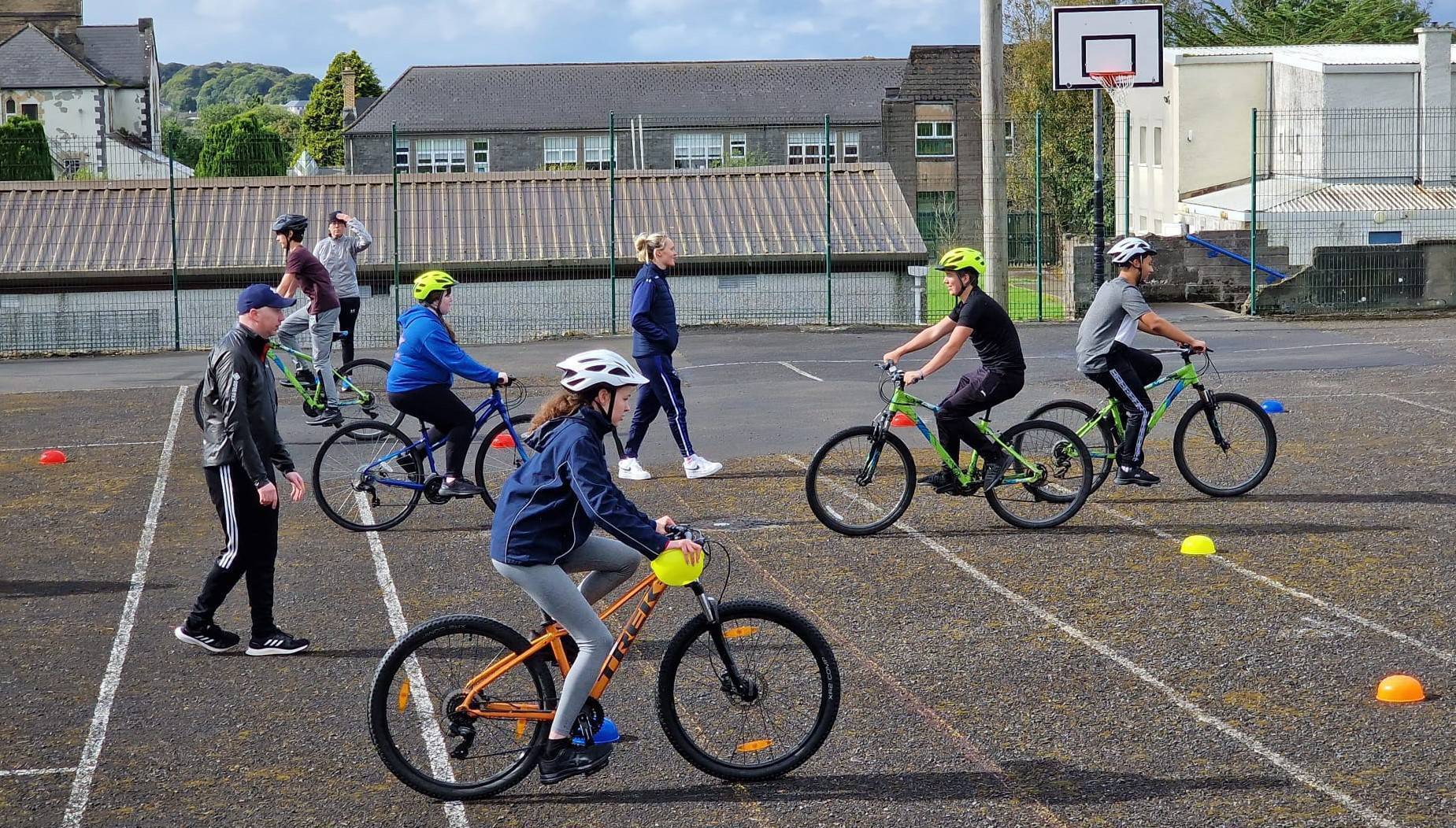
More children walking or cycling to school could put a significant dent in a target that was once the norm for almost every child in Ireland.
The pandemic of sedentary and online behaviour continues unabated among children and adolescents across Ireland.
Two separate research reports published this month show ongoing worrying trends among primary and secondary school children in relation to time spent online and not enough time moving.
CyberSafeKids report that more than two thirds (67%) of secondary school aged children and half (51%) of primary school-aged children feel they spend too much time online, while separate research from UCD’s school of public health, physiotherapy and sports science reports that primary and secondary school children are increasingly sedentary.
While boys prefer gaming to any other online activity, the CyberSafeKids survey of more than 5,000 primary and secondary school children found that the dominant activity for more than half (55%) of secondary school-aged girls was social media.
Girls experience negative feelings more than boys when they spend time online. Almost one in five girls aged 12 to 16 reported feelings of jealousy of others (19%) compared to boys (4%), feelings of missing out (18% vs 5%), and anxiety (14% vs 3%).
Almost three quarters of girls (70%) felt they spent too much time online compared to about a third (30%) of boys.
This evidence is compounded by new research from UCD, reporting that just one in five primary school children and one in ten secondary school students meet the WHO recommendation of 60 minutes of physical activity daily, a target achieved by only 25% of children globally.
More children walking or cycling to school could put a significant dent in a target that was once the norm for almost every child in Ireland. The study, conducted pre-pandemic among 6,650 students across Ireland, found that only a third of children commute to school by walking or cycling and that parents are a big part of the problem with an ongoing heavy reliance on car commutes.
Six out of every ten primary school students (57%) travel to school by car while a third (33%) walk, less than one in ten (7%) use public transport and just 3% cycle.
One in three (33%) secondary students use private transport for the school commute with just over a third (37%) using public transport, a quarter (28%) walking and a tiny fraction of students (2%) cycling to school.
Active travel is skewed in favour of urban schools and higher income groups. Predictably, families that owned a car were less likely to walk or cycle or if they lived more than 5km from school. Neither was there any difference between boys and girls.
Barriers to active travel identified by students include heavy school bags, heavy traffic and unsafe road crossings; the same issues that cross my mind when considering the commute to work.
The low levels of cycling among primary school children (3%) and even lower at secondary school (2%) are concerning.
Cycling and walking offers more than just physical activity. It also offers independence.
New research published in the Journal of Paediatrics (March 2023) suggests that adults’ drive to guide and protect children and teens has deprived them of the independence they need for mental health that is contributing to record levels of anxiety, depression, and suicide among young people.
"They need to feel they can deal effectively with the real world, not just the world of school" said co-author Professor David F Bjorklund at the department of psychology at Florida Atlantic University in the US.
The authors suggest that concern for children’s safety and the value of adult guidance needs to be tempered by recognition that as children grow, they need ever increasing opportunities to manage their own activities independently.
Public policy that promotes active travel to school can be a key part of that, providing increased opportunities for independence derived from physical activity that is woven into daily life.
But the global pandemic of sedentary activity is not because of an outbreak of laziness. It’s because everyday life is no longer as exertional as it once was — from manual work, household chores, or traveling to work or school. Streets are designed for cars, offices are designed around lifts and houses designed with every electrical convenience.
Successive governments have framed physical activity, along with healthy eating and alcohol consumption, as a personal choice and a personal responsibility. The reality is that physical activity has been designed out of our world.
There is mounting evidence of the association between prolonged periods of sedentary behaviour on both rates of chronic disease and death. In a major study in Annals of Internal Medicine (2015), significant associations were found between sedentary behaviour and all-cause mortality, as well as rates of cardiovascular disease and deaths, rates of cancer and cancer mortality and rates of type 2 diabetes.
The impact of prolonged periods of lying or sitting is now being explained in terms of inflammatory and hemodynamic markers as well as metabolism that have adverse effects on body weight, waist circumference, risk of type 2 diabetes, blood pressure and lipid profile.
Patterns of behaviour from an early age that embed movement into daily life are a key preventative measure that is not receiving the priority and resources at government policy level that could have a monumental impact on population health.
Healthcare is broken. Government healthcare budgets are not able to keep up with demand.
Medical innovation and technology has never been more advanced – in terms of gene therapy, immune therapy and the impact of AI on both diagnosis and treatment. Yet, despite these extraordinary advances, no healthcare system in the world is successively tackling the onslaught of chronic disease that is the result of the way we are now programmed to behave.
A study in JAMA (2016) reported that life expectancy and quality of life is determined more by what we eat, if we exercise and whether we smoke more than our access to healthcare. How long we live and how well we are are determined by the choices we make every day.
The colossal impact that core health behaviours have on long-term health has been massively overlooked. If we are going to move the dial on chronic disease, we need to move the dial on healthy behaviours and government policy that makes the healthy choice the easy choice.
Let’s start by going to war on sedentarism among young people. Let’s put all our resources into getting children back to walking and cycling to school.


CONNECT WITH US TODAY



Be the first to know the latest news and updates