It is an understatement to say teacher supply crisis requires urgent attention
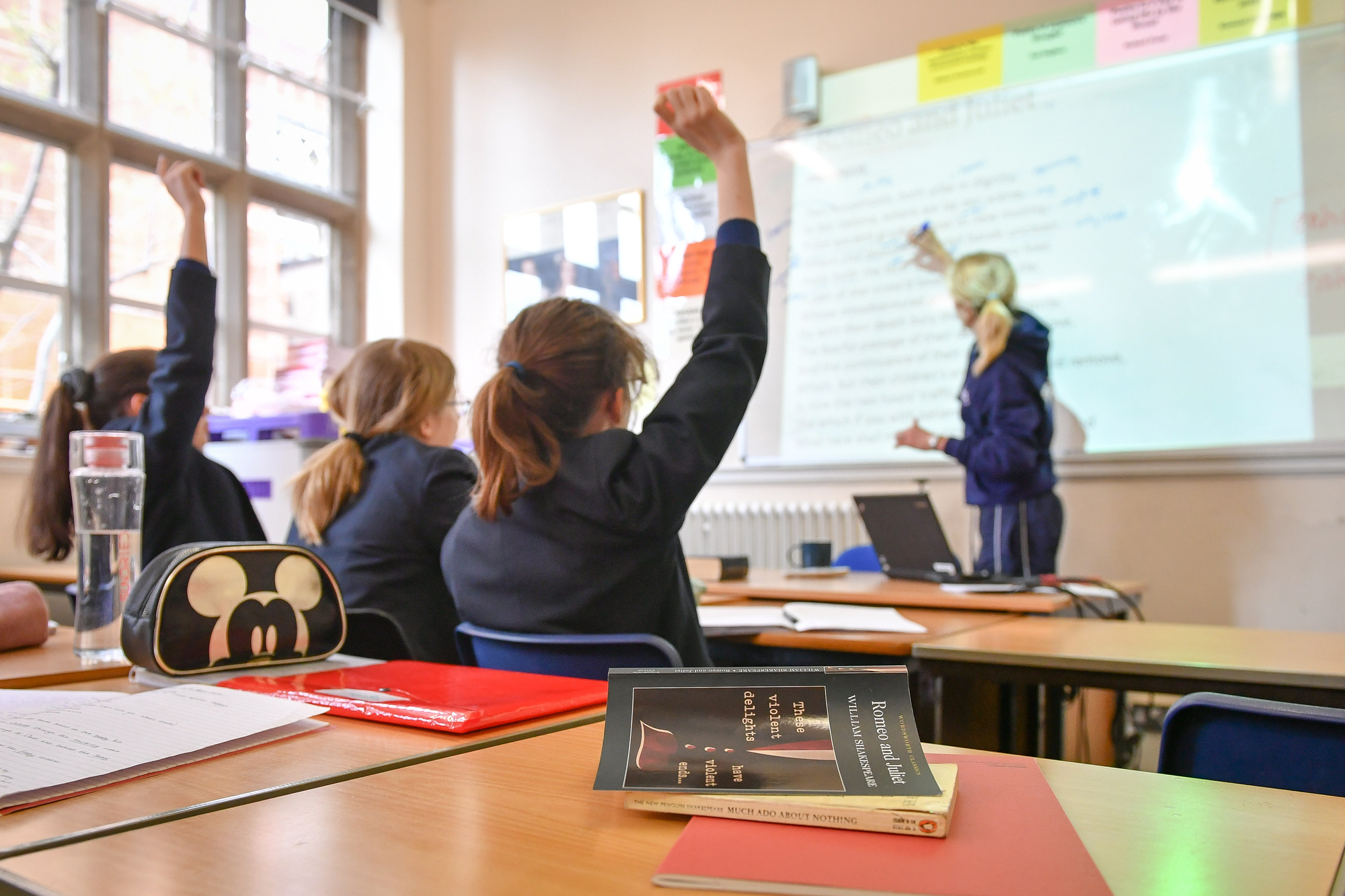
It has become very clear that in cases where principals cannot secure the services of a fully-qualified teacher, they are left with no choice but to employ a non-qualified person, or ‘out-of-field teacher,’ to take particular classes.
For well over a decade now schools in Ireland have been facing a crisis in teacher supply. This has applied at both primary and post-primary level although the focus in this piece is on the latter.
Occasional shortages of teachers under particular subject headings have understandably occurred from time to time. Examples of this include a shortage of teachers of home economics following the closure of St Catherine’s College of Education for Home Economics in Dublin in 2003.
The difference in the past decade is that the shortages have applied over a wide range of subjects including Gaeilge, metalwork/engineering, various science subjects, modern languages, home economics and maths.
The situation has been even more acute in Gaelcholáistí. A number of factors have contributed to the escalation in teacher shortages. These include the decision to introduce a two-tier salary scale in 2010, the subsequent reduction in promotional opportunities, the cost of the Professional Master of Education, the increasing casualisation of the profession and, in urban areas particularly, the cost-of-living crisis.
The situation has been exacerbated by the slow response on the part of the Department of Education (DE) and the Teaching Council. It wasn’t until 2018 that a Teacher Supply Steering Group (TSSG) was established by the DE.
Notwithstanding its delayed launch, it has proposed a number of useful initiatives. These include allowing teachers on career break to engage in part-time teaching; permitting teachers who are job sharing to undertake some additional hours; encouraging retired teachers back into the profession; incentivising those teaching abroad to take up positions in Ireland; devising teacher supply panels; and designing upskilling courses in a number of subject areas.
Collectively, these initiatives have had some impact, yet not sufficient enough to adequately address the teacher supply problem. The implications for schools have been far-reaching. In some cases, students have found courses they had commenced in junior and senior cycle cancelled midstream, often necessitating they take up a new subject late into the cycle.
Anecdotal evidence suggests that some schools are, because of teacher shortages, reducing or removing subjects completely from the curriculum, which can have profound implications for career pathways and higher education routes open to students.
It has become very clear that in cases where principals cannot secure the services of a fully-qualified teacher, they are left with no choice but to employ a non-qualified person, or ‘out-of-field teacher,’ to take particular classes. Such a situation is reprehensible for students and indeed for the teacher, one which will in time impact the overall quality of our education system.
By any standard the response of the Department of Education, successive ministers, and the Teaching Council to this growing crisis has been inadequate. The Sahlberg Report (2012) recommended that an effective modelling of the supply and demand for new teachers should be developed as a matter of urgency. Yet, only now, 11 years later, has it been developed. Why the delay?
First, it’s a simple case of inertia, a case of a big body moving very slowly, though, if true, this would be an extreme example of the phenomenon. An alternative interpretation of the Department of Education’s approach is that, rather than inaction or inertia, this is a considered strategy, albeit an unarticulated one.
The demographic projections when this problem arose indicated that the numbers enrolled in primary schools would peak in 2018 and at post-primary level in 2024. So has the DE been ‘playing for time’ and waiting for the changing demographics to address the problem? There are some straws in the wind which lend credence to this line of thinking.
Firstly, in the minutes of a meeting of the TSSG in September 2018 it was noted that "teacher supply is not an IR issue". The idea that the fundamental industrial relations issues of pay and conditions of service might have no impact on recruitment and retention patterns is a nonsense.
Secondly, whole school inspections carried out in schools rarely, if ever, reference teacher recruitment problems and the use of ‘out-of-field’ teachers. Yet, the practice is widespread. Is it that the Inspectorate do not consider the practice worthy of comment? Have the policymakers, both political and administrative, decided that ‘out of field’ teaching is just a fact of life?
In the meantime the DE is continuing to tinker around the edges of the problem and declining to act on the real issues. Surely there is an inherent contradiction in an education system that requires an Inspectorate to issue reports on the quality of teaching and learning in schools while failing to ensure that appropriately qualified personnel are available in each and every classroom.
The definitive reason for the slow and ineffective response by the authorities to the growing teacher shortage problem remains unclear. What is clear is that schools continue to report widespread shortages and this is likely to persist at least in the short to medium term. The evidence from primary level is that the problem persists for years after the demographic peak is reached.
At post-primary level, the additional complication caused by the subject specialism issue suggests that recruitment problems will persist for the rest of the current decade at least. In March 2023, a survey carried out by the Association of Secondary Teachers of Ireland (ASTI) found that in almost all of the schools who responded, teacher supply was a problem.
Three-quarters reported that they had advertised vacancies which elicited no applications while 88% had experienced situations where no qualified substitute teacher was available.
Around the same time, the Teachers Union of Ireland carried out a survey of principals and deputy principals in which 91% reported recruitment and retention difficulties and 61% reported unfilled teaching posts.
In recent weeks, the ASTI revealed that 416 posts advertised on the education recruitment website educationposts.ie remain unfilled, accusing successive ministers of education of adopting a ‘minimalist approach’ to the issue of teacher supply.
The issue of introducing a ‘Dublin allowance’ to ease the cost of living in the capital, a model employed in London, has been dismissed in government circles on the basis that the problem is a national rather than local one and that the current recruitment crisis extends beyond teaching.
To state that the teacher supply crisis requires urgent attention is an understatement. The fragmentary, piecemeal approach applied over the last decade, if continued, will irrevocably damage the education system and the profession of teaching.
The time for taking significant action is long overdue. There are a number of steps that should be taken now:
- The Common Basic Salary Scale should be restored as an essential first step.
- Exchequer funding should be made available to HEIs to grant a waiver of fees for year 2 PME students.
- Increasing casualisation has been part of the problem. Schools must be supported to offer full-time permanent contracts to the maximum extent possible.
- Radical action will almost certainly be necessary to further reduce the ‘leakage’ of qualified teachers choosing other careers, encourage those working in the system to remain and others teaching abroad to take up positions in Ireland. In an economy that is doing well and when jobs outside teaching are relatively plentiful it is important to offer recruits to the profession attractive terms and conditions of employment.
- Professor Judith Harford and Dr Brian Fleming work at the School of Education, UCD
CONNECT WITH US TODAY



Be the first to know the latest news and updates