Mick Clifford: Most of us are in favour of neutrality but not sure what exactly it is
With the Consultative Forum On International Security Policy beginning at UCC, and an opposition series of meetings already underway, MICK CLIFFORD asks if we are set to put in place another 'Irish solution to an Irish problem'
Mick Clifford: Most of us are in favour of neutrality but not sure what exactly it is

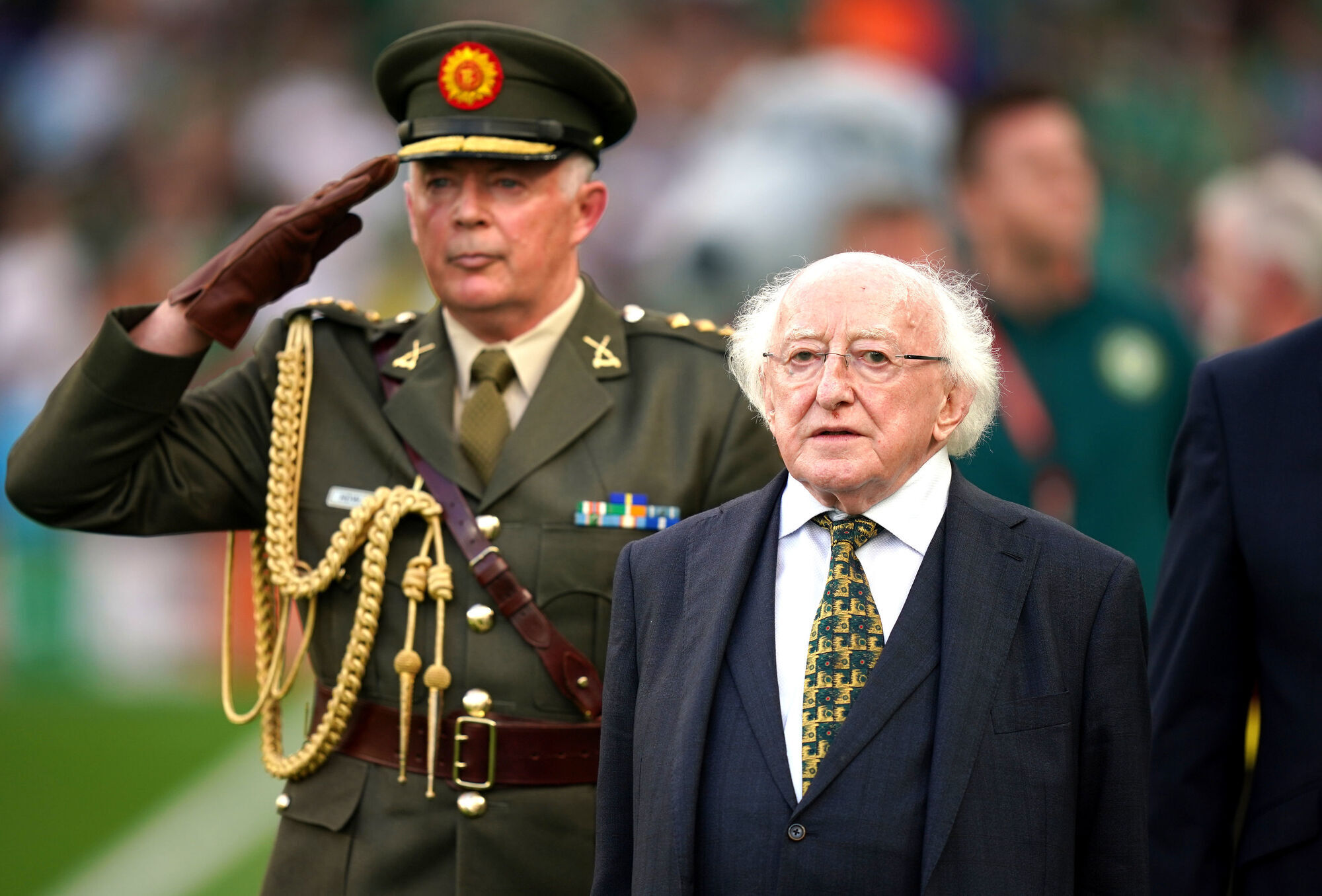
President Michael D Higgins at the Aviva Stadium for the Republic of Ireland's Uefa Euro 2024 qualifier against Gibraltar. Picture: Niall Carson/PA 

Michael D’s tribe gathered at Liberty Hall in Dublin on Monday evening. A meeting of ‘pro-neutrality’ groups was taking place effectively in opposition to the government-backed Consultative Forum On International Security Policy which gets underway in UCC on Thursday.

At the weekend, President Higgins was critical of the composition of the forum and decried what he described as a “dangerous drift” to joining Nato that he believes is afoot. The President would have felt perfectly at home in Liberty Hall. When his intervention was referenced at the outset, a round of applause rang out.

Brendan Behan’s dictum that the first item on any agenda is the split might well be applied to conversations on neutrality and security. The government — and a cross section of some, but not all, elements engaged in and concerned about these issues — have one talking shop. The opposition, led in this instance by People Before Profit, have their own talking shop and never the twain shall agree on anything.
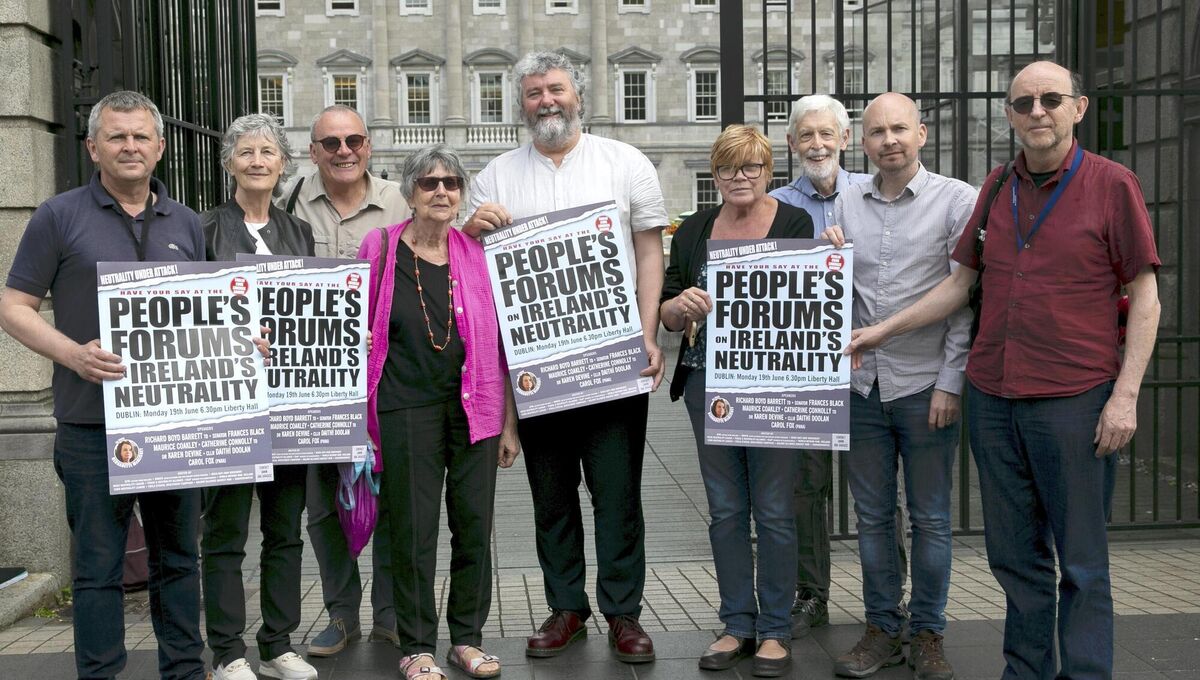
The first thing both sides don’t agree on is whether there is a requirement, in the wake of Ukraine and the potential of digital and cyber warfare, to discuss threats to the security of the State. Instead, this side, with whom the President appears to agree, believe that any discussion will merely lead to a “dangerous drift” into the arms of Nato.

The flyer advertising the Liberty Hall gathering could have been borrowed from the Áras. “The government is seeking to fabricate public endorsement for the abolition of the triple lock so as to engage in expanded, non-peacekeeping military operations,” it stated. “There is a strong likelihood that the forum will recommend the abolition of Ireland’s neutrality.”

Read More

Members of the Irish Neutrality League and a coalition of groups launching the series of alternative forums on neutrality in opposition to the Government’s Consultative Forum on International Security Policy. 	File Picture: Gareth Chaney/Collins
Members of the Irish Neutrality League and a coalition of groups launching the series of alternative forums on neutrality in opposition to the Government’s Consultative Forum on International Security Policy.  File Picture: Gareth Chaney/Collins

The chairwoman of the forum, Waterford woman Louise Richardson, who has a track record in tackling education disadvantage, was referenced as if she was a relic from English aristocracy.
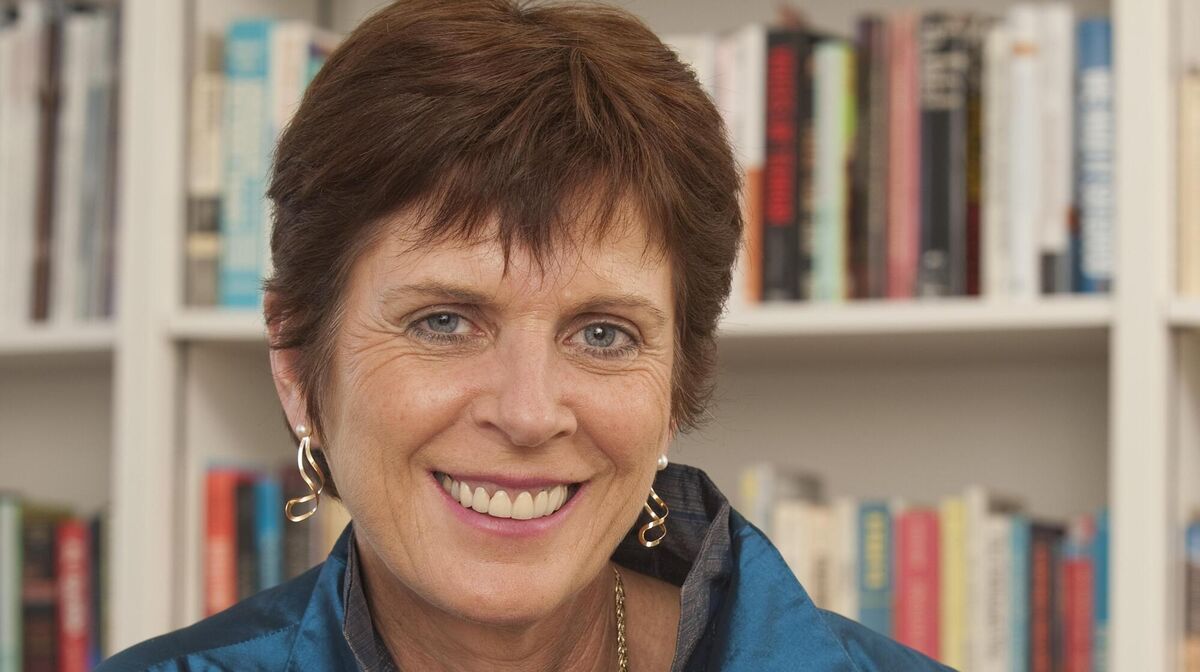
“Dame Richardson DBE is not an impartial chairperson,” the flyer read.

This, of course, echoed the President’s comment about Ms Richardson, but it is unclear whether the organisers came up with this all on their own or whether it was a late addition to the flyer on foot of the President’s observation.

The main auditorium in Liberty Hall was three quarters full for the event. The age demographic veered towards late middle age, which suggests that young people do not see this matter in the kind of stark or urgent terms that some older people do. In any event, the fare on view largely consisted of mapping reality as seen through the lens of these groups. This constitutes a vista in which the government, the media, and large sections of academia are surreptitiously pushing an agenda to deliver the country in Nato.

On the same day that it took place, Taoiseach Leo Varadkar said it was not government policy to join Nato. It is safe to say that practically all those in attendance in Liberty Hall don’t believe a word of it. Three speakers, introduced as “experts”, made presentations which, if taken at face value, were insights into a great conspiracy among would so-called political elites.

Academic Maurice Coakley told the gathering the war in Ukraine was a “proxy war between the USA and Russia”. He said the real thing to keep an eye on is the USA and China.

“It begins with the financial crisis,” he said. “That showed the fragility of the USA and the strength of China
 there is a very real possibility, if not a probability of heading into nuclear Armageddon,” he said.

“The Irish political elite are attempting to push us into Nato.”

Carol Fox of the Peace and Neutrality Alliance said the world “does not need another member of Nato”. “What it needs is a country pushing for peace and demilitarisation,” she said.

The opposition 'pro-neutrality' flyer echoed the comments that Michael D Higgins made about forum chairwoman Louise Richardson. File picture

The third expert was Karen Devine, who lectures on European politics in DCU. She helpfully told the audience that if they were to Google neutrality and public opinion, the first thing that comes up is her PhD on the issue. Ms Devine said that Ireland is effectively already part of a military alliance through various EU bodies. She produced documents which she said backed up what she was saying.

“Only one in 10 people across Europe know about this,” she said, referencing the close military ties that now exist within the union.

“I don’t know if the forum is going to reveal we are already part of a military alliance but we are.”

She also suggested she was a voice in the wilderness in academia. “I think I am the only lecturer in Ireland and Britain who lectures on EU policies and is not paid through the EU,” she said. “I pay a high price for that”.

She suggested that academic freedom is a principle that no longer exists when dealing with these kind of issues.

There followed various politicians, all singing from the same hymn sheet. The thrust of the message is that various sections of elite society wanted to deliver the country into the hands of Nato.

There was no analysis as to why people like, for instance, Micheál Martin, wants to do this. Neither was there any acceptance that the State’s security does require reappraisal in the wake of what has unfolded in Ukraine.

Another element lacking was any analysis of what exactly neutrality has meant at different times over the last 80 or so years and whether this Ă  la carte approach to the concept should continue.

A different reality will be presented in the Forum on Thursday in Cork and through next week in Galway and Dublin. 

At the same time the ‘pro-neutrality’ groups go on the road with a parallel talking shop. It is disappointing that everybody can’t get into the same room and thrash these matters out. A citizens’ assembly would appear to be a suitable forum but that was ruled out by the Government. Presumably, one of the reasons for so doing was a fear that anything to emerge from an assembly might tie the hands of the government of the day, making the concept of neutrality less elastic than it has been for decades.

For the real issue here is a simple one. Most people in the country — all polls suggest in excess of 60% at least — are in favour of neutrality. What exactly that means is an entirely different matter.

As it was with other matters in an earlier time, it would appear the most practical solution to neutrality is to have an Irish solution to an Irish problem, which generally means making it up as you go along.

Read More

More in this section

Revoiced

Newsletter

Sign up to the best reads of the week from irishexaminer.com selected just for you.

Cookie Policy Privacy Policy Brand Safety FAQ Help Contact Us Terms and Conditions

© Examiner Echo Group Limited