Ireland's school performance reads well, but there is a twist in the tale
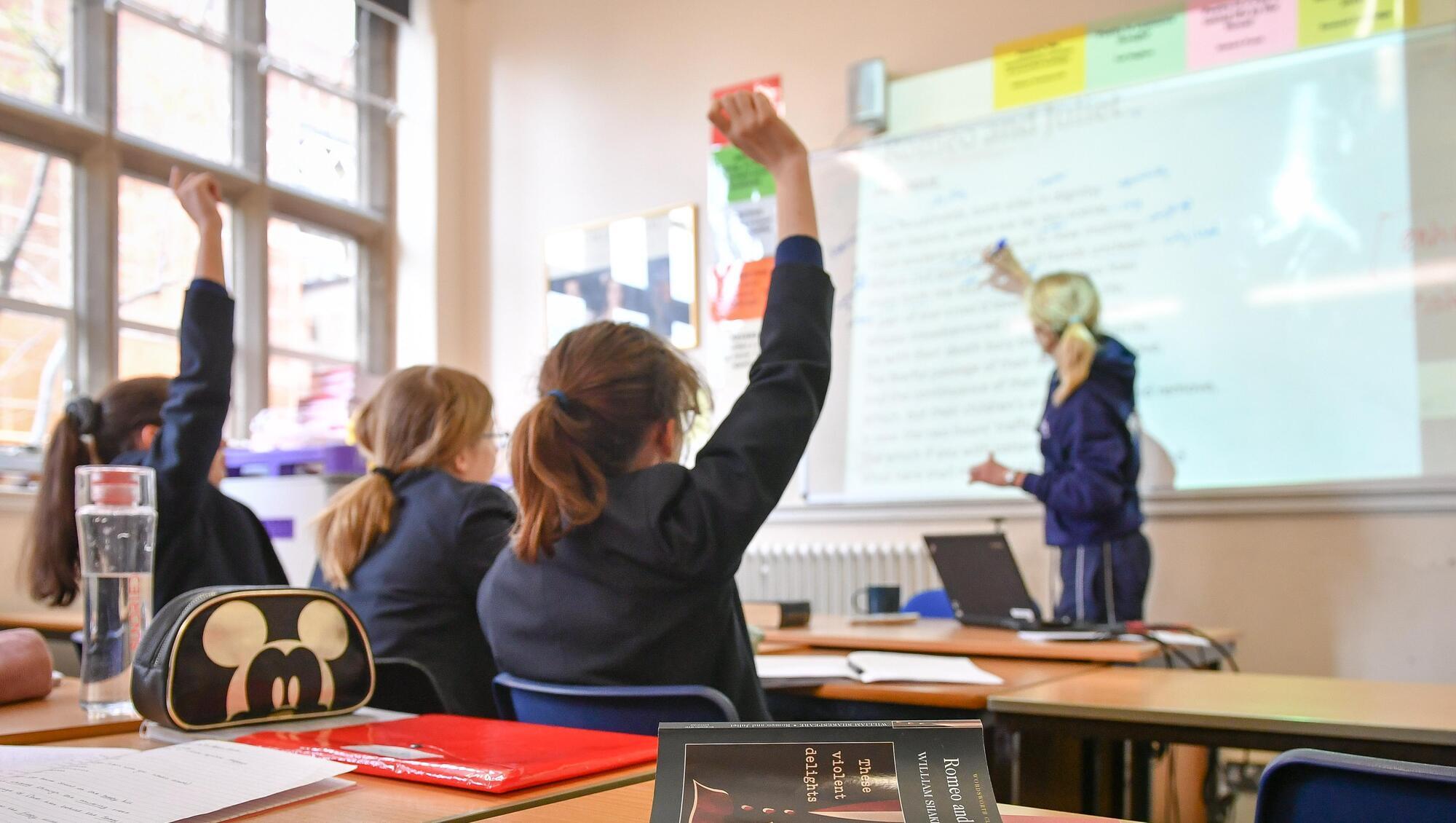
Schoolchildren in Ireland are still near the top of the class when it comes to reading and maths, but when it comes to wellbeing, there are signs that the pandemic has taken its toll.
Ireland's school performance reads well, but there is a twist in the tale

There is plenty of good news to celebrate in both the latest international PIRLS and the National Assessments of Mathematics and English Reading (NAMER) 2021. File Picture.

Ireland has ranked amongst the top in the world when it comes to the reading prowess of our primary school children, a point of pride for a country with such a strong literary connection.

Such an accolade in one of the largest global studies of its kind is some achievement. More than 300,000 students in almost 60 countries around the world took part in the latest Progress in International Reading Literacy Study (PIRLS) which has now been published by the Department of Education.

However, on closer inspection, the PIRLS also shows another area where Ireland ranks among the top of the table — it was one of three countries where 100% of students taking part had missed more than eight weeks of normal schooling due to closures during the covid-19 pandemic. The international average was 47%.

Against the backdrop of school closures, remote learning, and general disruption wreaked on the education system by covid, there is plenty of good news to celebrate in both the latest international PIRLS and the National Assessments of Mathematics and English Reading (NAMER) 2021.

More than 10,000 students in second and sixth classes in 188 primary schools took part in the major domestic study NAMER, which was examined for the first time in 1972. It also included a larger sample and analysis of children in disadvantaged (Deis) schools. 

Reading and maths

Despite the overall upheaval, primary school children maintained their overall performance in English reading and maths. Where marginal decreases were recorded, these were deemed by the Educational Research Centre to not be “statistically significant”.

A quarter of students in Deis schools were found to be reading at higher levels, and although a gap remains between students in Deis schools and non-Deis schools, it did not widen significantly during the pandemic.

PIRLS found that a significant proportion of students here are reading at a higher level.

In 2021, 27% of pupils were found to be ‘advanced’ readers, an increase from 21% in 2016. A further 67% of students were found to reach the ‘high’ benchmark for reading, an increase of 5% from 2016.

Irish pupils performed well across all four scales measured by PIRLS — literary; informational; retrieval and infer; and interpret and evaluate.

However, Irish students performed significantly better when reading literary, fictional texts over informational ones.

They also performed significantly better when it comes to using more holistic comprehension processes than more localised, detail-oriented processes.

This would suggest that pupils in Ireland perform relatively better on items requiring an integrative, critical approach than on items requiring a localised, detail-oriented focus.

While this is all to be celebrated, that’s not to say that Covid’s effect on the education system cannot be seen in the published reports.

Educational disadvantage

A number of key targets, set in 2017, particularly those aiming to tackle educational disadvantage, url=https://www.irishexaminer.com/news/arid-41140003.html]have been missed[/url].

These targets were set in 2017 as part of a review of the National Literacy and Numeracy Strategy, which aimed to raise standards in maths and reading.

Three out of four numeracy and literacy targets specifically relating to disadvantaged schools were not met in NAMER 2021.

These included reducing the percentage of second-class students reading at lower levels from 44% to 40%; reducing the percentage of sixth-class students performing at the lower levels in maths from 50% to 42%; and increasing the percentage of ‘high achievers’ in sixth-class maths from 19% to 27%.

Decline in wellbeing

In the latest round of PIRLS, which took place in autumn 2021, it appears students' wellbeing in three key areas had declined since 2016. More than one-fifth of students reported feeling tired every day, and a further 24% reported feeling tired almost every day.

An increase on 2016, the reading achievement of pupils who reported feeling tired every day was also found to be “substantially lower” than that of their peers.

In 2021, more than one in 10 pupils in Ireland (11%) felt hungry every day on arrival at school, and a further 11% experienced this almost every day.

This represents a slight but statistically significant increase in the prevalence of hunger from 2016. Pupils who arrived hungry every day had the lowest mean achievement score, while pupils who never arrived hungry had the highest.

A further 20% of students reported being bullied monthly, and 6% reported being bullied daily. Pupils who were bullied more frequently achieved lower scores, on average, in the PIRLS reading test.

Bullying behaviours were more commonly reported here in 2021 than in 2016, with the largest increases relating to being made fun of or called names, and being physically assaulted. The study notes that the latter is a particular cause for concern. 

It is possible that an increased prevalence of bullying could reflect difficulties with social interaction following the lockdowns," the report states. 

While the report admits we do not know to what extent these declines in wellbeing can be attributed to the pandemic, it says it underscores the continued need for emphasis on wellbeing in primary schools.

More in this section

Revoiced

Newsletter

Sign up to the best reads of the week from irishexaminer.com selected just for you.

Cookie Policy Privacy Policy Brand Safety FAQ Help Contact Us Terms and Conditions

© Examiner Echo Group Limited