Paul Hosford: On price caps and paywalls, how far can the government go?
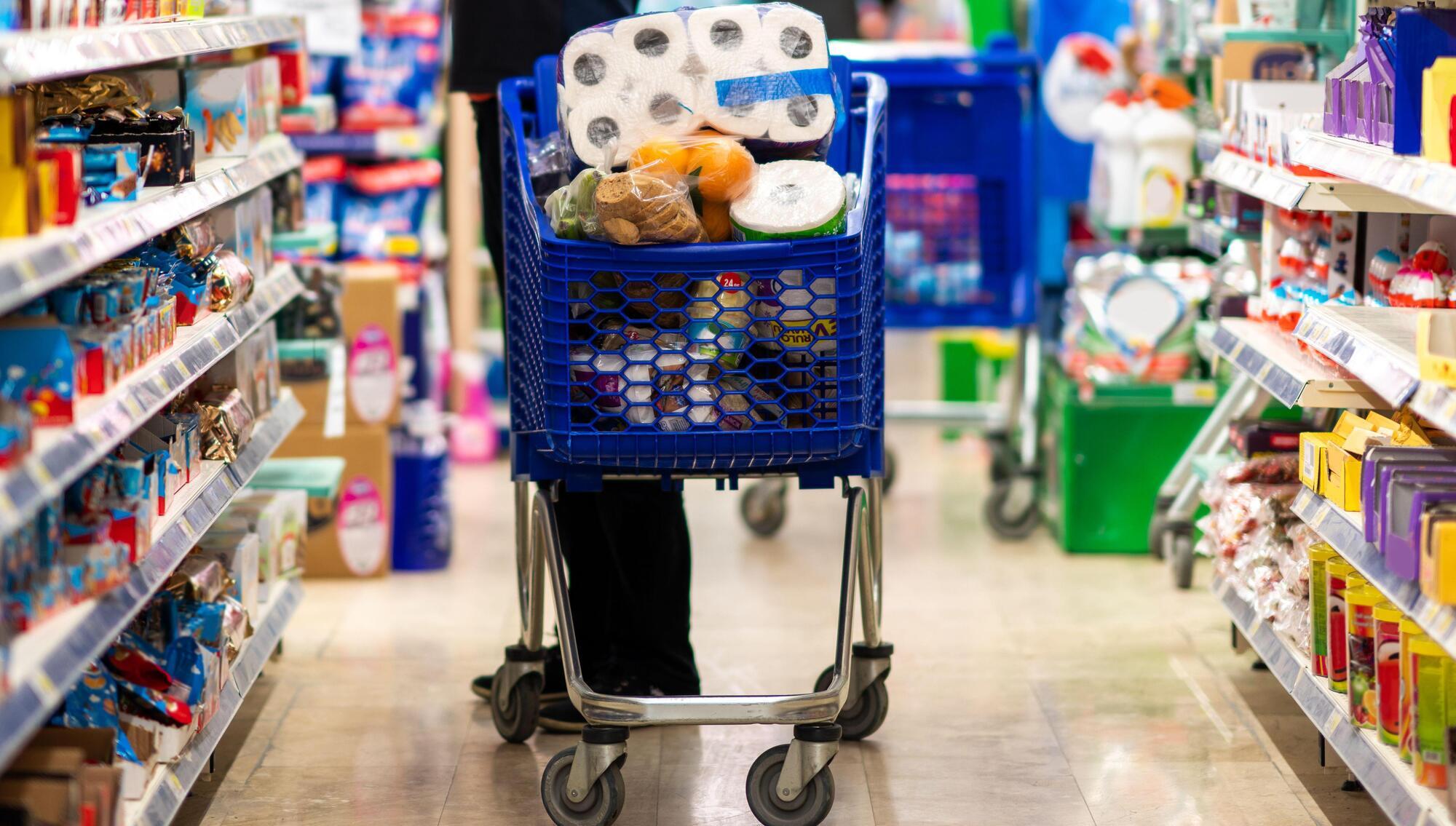
Opposition parties have clamoured since February for a cap on staple goods, but this week junior enterprise minister Neale Richmond convened the Retail Forum to get tough on those shopkeepers who might see an opportunity in inflation to raise prices unnecessarily. File picture
Just how far is the Government willing to go is a question asked in political circles every week.
In the boxing ring of party politics, the punch-counterpunch is some version of problem, followed by government announcement, followed by Opposition criticism that the Government has gone too far/not far enough.
Take this week, as the Government moved to show it was reacting to high grocery prices, despite either not wanting or being willing to go as far as needed.
Opposition parties have clamoured since February for a cap on staple goods, but this week junior enterprise minister Neale Richmond convened the Retail Forum to get tough on those shopkeepers who might see an opportunity in inflation to raise prices unnecessarily.
Before the meeting, this paper reported the minister's desire to see a "demonstrable reduction” in prices at the checkout, and that he will be expecting these cuts to be in place ahead of the next scheduled meeting of the retail forum on June 21.
The following morning, the Taoiseach Leo Varadkar was less forceful, saying that the message would be relayed that prices should come down, but that the Government was not minded to use its power under the Consumer Protection Act 2007 to impose caps on prices. Much of that, Mr Varadkar said was down to advice from the Competition and Consumer Protection Commission (CCPC), which had been asked to come up with advice on price caps.
The idea, the advice said, was "a significant risk to the Irish economy and consumers", saying that there was no evidence that Ireland was in an emergency situation and that how such a scheme would work was unclear. For example, the CCPC asked, how do you decide which type of a staple to cap? Is it just white bread? Half a loaf or a full pan? Does batch count? What about gluten free?
It was telling that the CCPC said that it has "not seen any evidence or analysis to support the suggestion that an emergency or market failure exists in the retail grocery market". This is simply the market working as designed.
But when Mr Richmond's meeting was hit with criticisms that it had led to little in the way of concrete action, his senior minister Simon Coveney issued a further threat, telling retailers "the game is up" and that he would prepare measures that could see price-gouging shops named and shamed. What the criteria for that would be is unclear, but it's another line in the sand.
The whole debate, and the Government's desire not to intervene in the free market, comes at the same time as the Tánaiste Micheál Martin bemoans the "creeping paywalling" of GAA events.
Surely if bread is to be subject to the whims of the free market, the GAA is entitled to get the highest price possible for its rights packages, even if RTÉ is publicly-funded?
From the Government's side, there is the argument that there has been multi-billion euro interventions to cover the rise in the cost of living. For the Opposition, there is the fact that there has been a doubling of the number of families who are relying on food banks in this country.
How far can the Government go? The Opposition believes a lot further, but is anyone in the Cabinet really willing to publish the names of private businesses charging over the odds? It seems unlikely that any minister will go Jean Valjean and man the barricades at their local Tesco.