Exposing the true colours of companies that mislead with corporate greenwashing
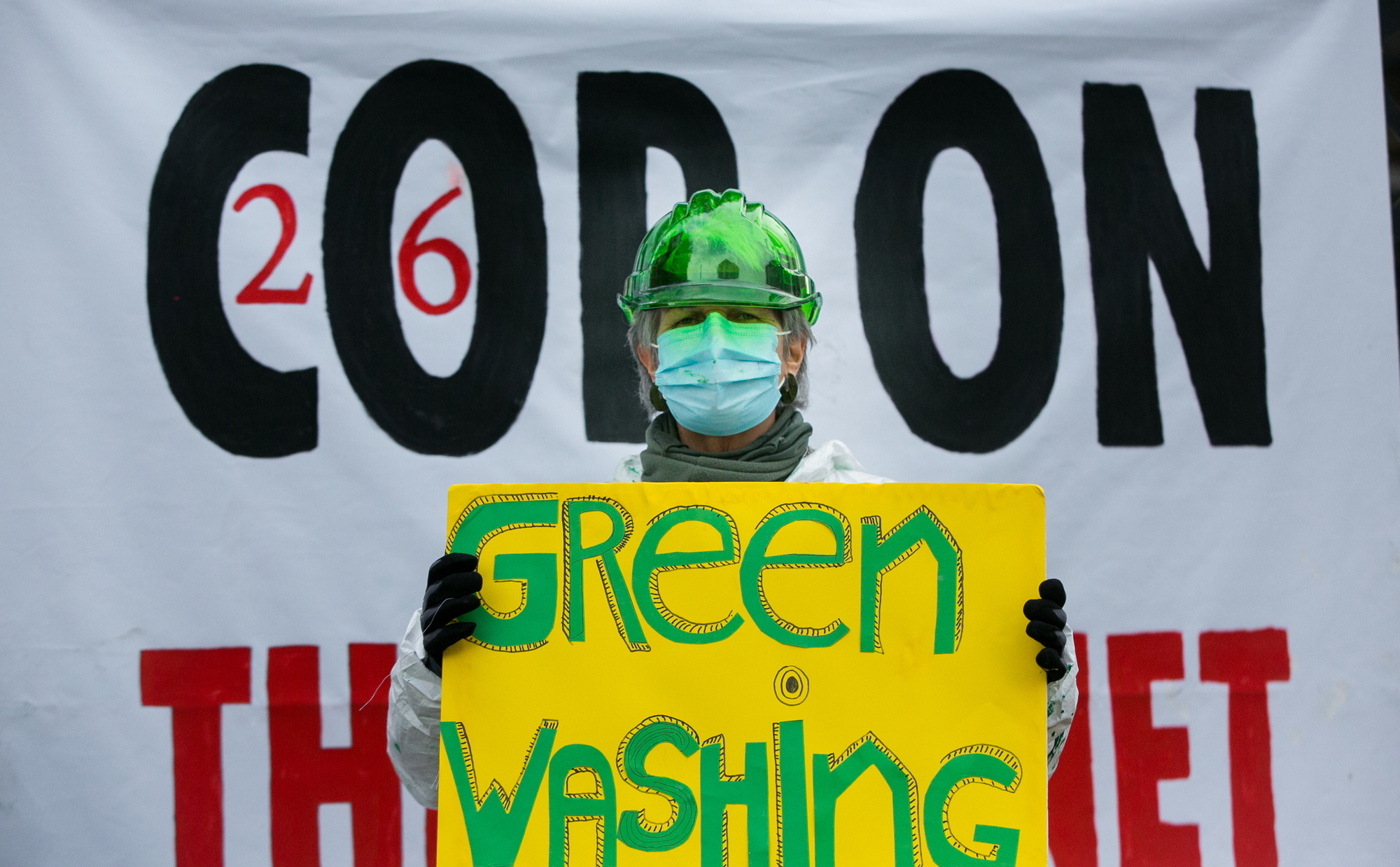
Many of the world’s largest companies have announced plans to achieve net-zero emissions, but their pledges often rely on misleading or false claims, writes Richard Black
Exposing the true colours of companies that mislead with corporate greenwashing

Activists from Extinction Rebellion have highlighted the problem of greenwashing, a term used to describe various PR techniques that 'camouflage the damage and destruction' to the environment present in many industrial activities. File picture: Gareth Chaney/Collins

Judging by the growing number of companies vowing to reduce their greenhouse-gas emissions to zero these days, it may seem like the corporate world is finally taking the climate crisis seriously. 

According to the Net Zero Tracker, more than one-third of the world’s largest publicly traded companies have announced such targets, up from one-fifth in late 2020.

While some of these corporate pledges appear to be genuine, others are clearly a fig leaf to obscure pollution as usual. 

One can easily imagine an oil executive telling an airline boss: “A net-zero target, some ads featuring trees, and everyone will love us.” 

If that was the plan, it is rapidly falling apart, owing to a slew of regulatory decisions and court actions that signal a crackdown on corporate greenwashing. 

CLIMATE & SUSTAINABILITY HUB

And last year’s report by the United Nations High-Level Expert Group on Net-Zero Emissions Commitments, which provided detailed recommendations for maintaining the integrity of such pledges, heralds limits on companies’ ability to make promises they have no intention of keeping.

Extravagant claims

New regulations in France and the United Kingdom, for example, aim to prevent advertisers from making extravagant claims about the carbon neutrality of their products. 

Research commissioned by the UK’s Advertising Standards Authority found when people hear such a claim, they assume an absolute reduction in emissions has occurred. 

So, the ASA’s updated guidelines instruct companies to avoid claiming carbon neutrality if the emissions associated with the advertised product were merely offset.

The French climate law, passed in 2021 and amended last year, goes further. 

To claim carbon neutrality, the product must be neutral across its entire life cycle. 

Companies must disclose how emissions were avoided, reduced, and offset (the order is important). 

They must also show how these offsets qualify as measurable, verifiable, permanent, and additional. 

Companies that get it wrong could face a €100,000 fine for misleading consumers.

Underlying this trend is the obvious mismatch between what some companies say and what they do. 

After all, one does not need to be a sleuth to figure out that when a company can claim that a barrel of oil, a cargo of liquefied natural gas, or some tar sands bitumen is carbon-neutral, something has gone wrong.

Spate of lawsuits

A spate of recent lawsuits promises to draw a line in the (tar) sand. 

Over the past year, companies such as food giant Danone Waters, cement maker Holcim, oil companies TotalEnergies, BP, and Shell, cosmetics manufacturer Beiersdorf (Nivea), and KLM have been sued in various countries for making misleading sustainability claims. 

The Australia Institute, a nonpartisan think tank, has filed a complaint with the Australian Competition and Consumer Commission, claiming the government’s own certification scheme, Climate Active, is misleading under national consumer law, because it assures people that products are carbon-neutral when they are not.

In countries where national net-zero plans rely on offsets and wishful thinking, citizens must use all the legal tools at their disposal to force their governments to do the hard work that a credible decarbonisation path demands. File picture: Gareth Chaney/Collins

Companies’ net-zero pledges look just as flimsy under scrutiny. 

For example, a recent report by the Corporate Climate Responsibility Monitor examined the net-zero plans of 24 major corporations purporting to be “climate leaders” and found numerous flaws, loopholes, and omissions. 

On average, according to the report, these companies will cut just 36% of their emissions by their net-zero target year. 

Moreover, their plans imply a median reduction of 15% by the end of the decade, rather than halving emissions, as the current science says is necessary. 

Similarly, an earlier report by CDP found fewer than one in 200 companies that submitted climate data to its environmental-disclosure platform have devised credible transition plans.

Potential game-changer

The UN group’s recommendations, commissioned and endorsed by secretary-general António Guterres, are a potential game-changer. 

As they become mainstreamed, companies will no longer be able to claim they have a credible net-zero plan unless they have set a decarbonisation pathway compatible with the 2015 Paris climate agreement’s targets. 

Such plans must include measures to reduce emissions along the entire value chain, phase out fossil fuels, invest in renewable energy, abstain from lobbying for high-carbon industries, disclose emissions annually, have reductions data independently verified, and so on. 

An ad campaign, a cheery speech, and some tree-planting will no longer do.

Companies without detailed transition plans in place can expect regulatory as well as legal action, as more and more countries require corporations to disclose climate-related risks. 

The European Union, India, New Zealand, and Switzerland are expected to join the UK and China by introducing such measures this year, followed by Canada and South Korea in 2025. 

The International Organization for Standardisation has also recently published its own set of net-zero guidelines, providing regulators with clear rules and criteria for credible climate strategies.

But if the world is to achieve net-zero emissions by 2050, regulators must insist on independent verification of corporate claims, interim targets, and binding commitments to phase out fossil fuels. 

In countries where national net-zero plans rely on offsets and wishful thinking, citizens must use all the legal tools at their disposal to force their governments to do the hard work that a credible decarbonisation path demands.

While there is still much work to be done, a carbon-neutral future is within reach. Net-zero targets now cover 91% of global GDP, compared with 16% just four years ago. 

But to have any hope of meeting the Paris agreement’s targets, the first step is to ensure that governments and companies are setting realistic goals that they can back up with credible data. 

We can see the right path ahead, but the right decisions are still needed to ensure it is taken.

  • Richard Black, senior associate at the Energy & Climate Intelligence Unit, is co-lead of Net Zero Tracker.

x

CLIMATE & SUSTAINABILITY HUB

More in this section

Revoiced

Newsletter

Sign up to the best reads of the week from irishexaminer.com selected just for you.

Cookie Policy Privacy Policy Brand Safety FAQ Help Contact Us Terms and Conditions

© Examiner Echo Group Limited