Paul Hosford: Labour is all talk on housing reform but the devil is in the lack of detail
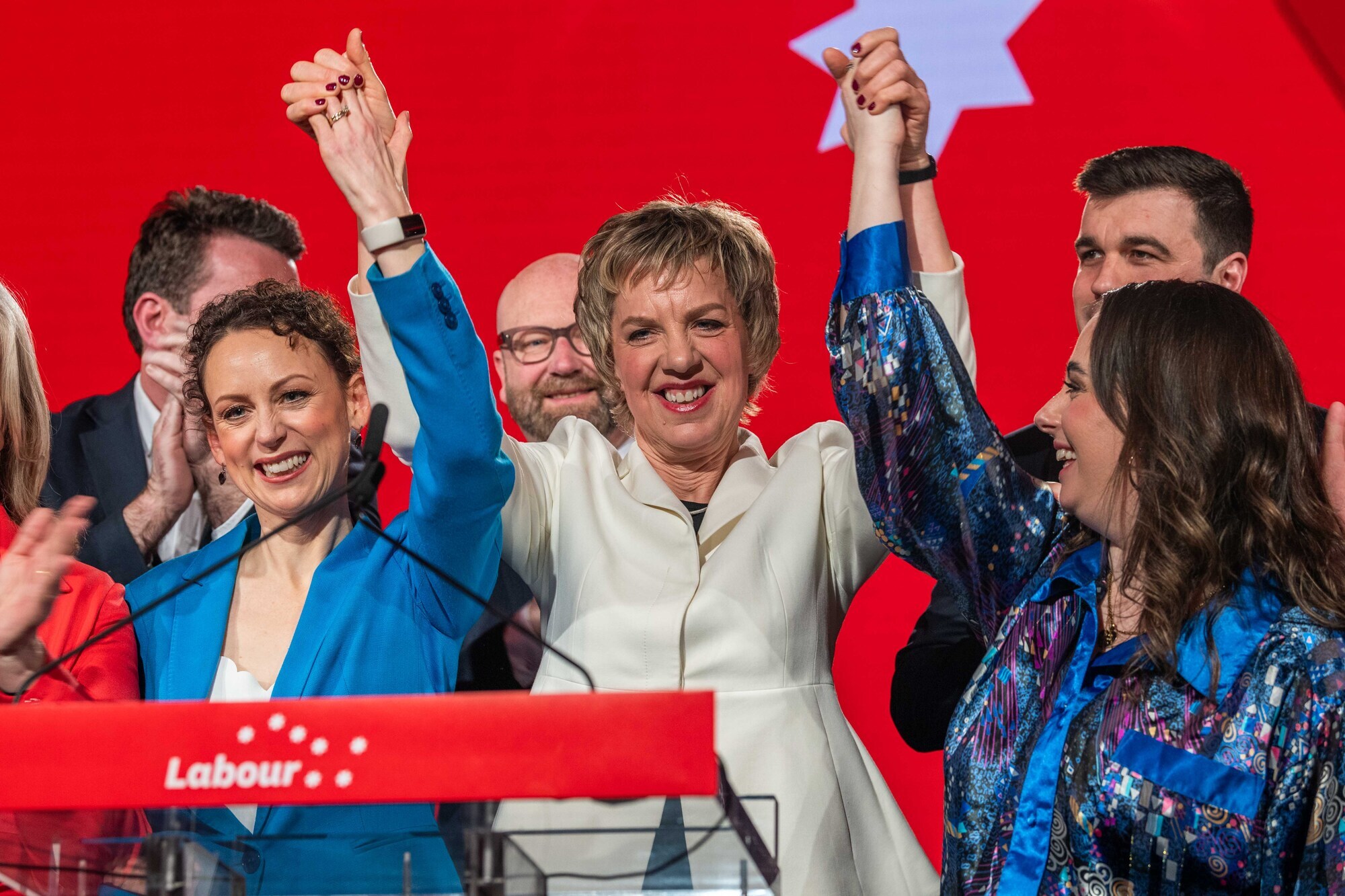
Labour Party leader Ivana Bacik with colleagues after delivering her keynote speech at the party conference in Cork. Pictures: Andy Gibson
One million homes in a decade.
If the Labour Party felt the sting of accusations that its brand of politics was too incrementalist, Ivana Bacik's speech to the party faithful at the Silver Springs Hotel in Cork was a decent, but possibly misguided riposte.
She would later clarify that that figure would include 50,000 refurbs a year alongside 50,000 new builds.
Given that most experts put the country's capacity to deliver at a maximum of around 60,000 units a year, 100,000 is what the tech industry would call a moonshot — a deliberately high bar that even getting close to would constitute success.
And why not? We are in a crisis that needs bold thinking and tinkering around the edges is what Labour's opponents to the left constantly accuse it of, so why not go all in?

The idea was presented by some as Ms Bacik "pledging" to deliver on the promise, but nobody in the party has any illusions that Labour will be the senior partner in whatever government comes after the current one.
The speech itself was light on detail on how this would be done. "In a strong economy with financial surpluses, we can do this. With new thinking and new ideas, we can do this," Ms Bacik said.
"That’s our ambition for housing."
Ms Bacik has said that she wants to see a state-owned building company established, but without any detail on who might staff it to improve capacity.
For Labour, the one million homes announcement could become a millstone around the party's collective neck, similar to one made a year ago.
In spinning the parliamentary party's ousting of leader Alan Kelly as an issue of opinion polling and not one of internal personalities, Labour unwittingly made Ms Bacik a hostage to polling fortune
Every discussion of the party focuses around what kind of job the polling says she is doing.
To that end, the party has polled as high as 6% just once in her tenure.
It is perhaps somewhat unfair to compare that to the Social Democrats, but given the astounding 9% result in an opinion poll the week after Holly Cairns was announced that party's leader, it bears mentioning.

The problem the Labour Party faces is that it will always be compared to those in the centre-left and left with whom it is competing, and the party understands it needs to get away from this.
This worked particularly well in Ms Bacik's by-election win in Dublin Bay South in 2021.
While it was pitched online as a referendum on the Government versus Sinn Féin, Ms Bacik's campaign understood that there was an appetite for more than a binary choice.
The increasingly rancorous relationship between Sinn Féin and Fine Gael works for both parties, other politicians understand.
If Irish electoral politics is all about which side of the fence you are one, you are more likely to land on one.
But our system and the reality are not like that. There are many options for people to support.
Labour's pitch is to be that third force in Irish politics — a party that can operate in opposition but is determined to lead.
The fact that this week's motion of confidence in the Government has been brought by Labour is telling in itself — the party has not done this in a quarter of a century.

This now is a party ready to attack the Government more vociferously and doggedly, but always with an eye on stealing a march or standing out from Sinn Féin.
It will be a real challenge, however, and the polling currently suggests that the message is not getting through.
There are many for whom a vote for Labour will never be a thing again, such is the depth of feeling about the party's time in government from 2011 to 2016 and the centre-left space is now more crowded than it would have been even a decade ago.
So, can Labour really stand out in this environment?
Much will depend on its success or otherwise in next year's local elections — the party is strong at council level and has over 50 councillors.
But, as a starting point, pinning yourself to an ambitious, if unrealistic, idea isn't the worst idea.
So, why not one million homes?