What does the 'Qatargate' scandal mean for European democracy?
An EU-wide ethics body that is fully equipped to rise to challenges such as ‘Qatargate’ must be established, writes Alexander Conway
What does the 'Qatargate' scandal mean for European democracy?

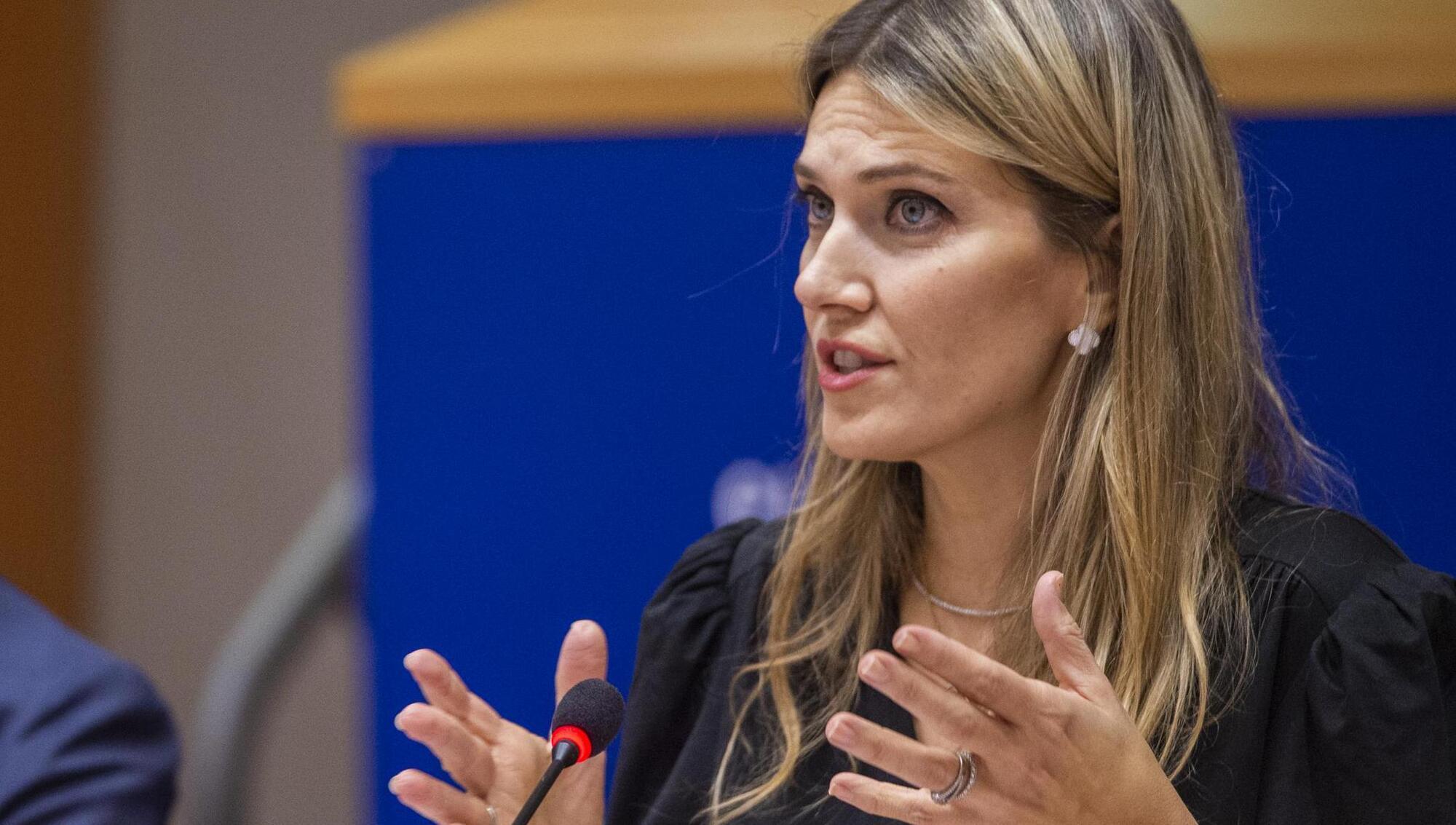
Greek politician and European Parliament vice-president Eva Kaili was arrested in December on suspicion of corruption and money laundering. Picture: European Parliament via AP

In December, Belgian police launched raids on homes and apartments across Brussels, while security officers sealed off members of the European Parliament’s (MEPs) offices across the sprawling European Parliament complex. 

Initially, six suspects were arrested, including a now former vice-president of the European Parliament and member of the centre-left S&D Group, and more than €1.5m in cash hidden in nappy bags, prams, computers, and phones were seized from apartments and hotel rooms in the city. 

Several suspects associated with the parliament remain in detention on suspicion of corruption and money laundering for Qatar, and potentially other countries like Morocco, in what has been dubbed ‘Qatargate’.     

This story is the stuff of spy drama, but is there any more substance to it than that? Further to European Parliament president Roberta Metsola’s visit to Ireland last week, how seriously should we consider her previous remarks that “European democracy is under attack”? 

As the European Ombudsman Emily O’Reilly has said, the investigation is a 'gift' to Eurosceptics seeking to push anti-EU narratives. 

In reality, the allegations are not an existential threat to the EU, but the Qatargate scandal has certainly undermined the EU’s credibility as a moral authority and has highlighted the lax enforcement of rules in the European Parliament.  

As the European Ombudsman Emily O’Reilly has said, the investigation is a “gift” to Eurosceptics seeking to push anti-EU narratives. 

It has made it more difficult for the EU to play a role in challenging threats to the rule of law, anti-democratic legislation, and threats to judicial independence in Poland and Hungary. 

EU reputation tarnished

It has also undermined the EU’s reputation beyond Europe’s shores where its reputation for upholding the rule of law and opposing corruption has been tarnished. 

It also complicates crucial EU natural gas negotiations with potentially implicated countries like Qatar or Morocco.  Second, the investigation clearly impacts the legitimacy of the European Parliament even within the European institutional infrastructure, and highlights the weakness of the parliament’s internal rules and enforcement mechanisms.

There are 705 MEPs, 13 from Ireland, representing European citizens from the 27 EU member states, forming one-half of the EU legislative system oppositive national governments in the European Council. 

The occasionally lax standards for expenses within the European Parliament have long been known, and what rules do exist tend to be lightly enforced. MEPs are not obliged to declare meetings with state representatives and may hold additional positions alongside their MEP duties. 

In addition to a monthly salary of €9,386.29, MEPs receive a €4,778 per month “general expenditure allowance” and expenses to cover constituency and administrative costs. While these allowances are regulated, MEPs are not required to submit receipts. This situation ought to be urgently reformed in the interest of restoring the credibility of parliament.

Qatargate puts pressure on the commission to finally propose a much-delayed EU ethics body to support the work of the Ombudsman and the EU institutions themselves. Any new agency must have the teeth needed to properly enforce the rules. 

The fact the Belgian authorities have taken the lead in this investigation, rather than the EU authorities themselves, further underscores the inability of the European Parliament, and by extension the broader EU institutions, to effectively police themselves.  

Threat of malign foreign influences

Third, this episode has highlighted the potential threat posed by malign foreign influences within the EU system. 

In an increasingly contested, fragmented, and transactional world, countries like Qatar use their wealth to exert power. The influence and power of wealth, both through legitimate lobbying and political donations, as well as through bribery and corrupt activities, supports a system of connections and influence maintained through gifts, favours, and rewards. 

So-called “dark money” from Russia, China, and elsewhere, sometimes sponsors museums, media outlets, universities, think tanks, and sporting events. Much like a river, these money flows carve out channels over time by following the paths of least resistance. 

While Qatargate has exposed corruption and misdeeds within the European Parliament, it is important to temper claims that the event marks an assault on European democracy itself.

While the direct impact of Qatargate for Ireland may seem limited, especially as no Irish MEPs have been implicated, the scandal has shone a light on the potentially insidious role of illegal money in influencing democratic processes. 

With European elections coming in 2024, Qatargate may raise the profile of traditionally second-order elections amid increased scrutiny of the legislative role and political influence of the European Parliament for European citizens.  Who guards the guardians?  

While Qatargate has exposed corruption and misdeeds within the European Parliament, it is important to temper claims that the event marks an assault on European democracy itself. 

Corruption scandals in Ireland in the 1990s into planning matters and payments, or, indeed, ongoing discussions about payments for postering services for Public Expenditure Minister Paschal Donohoe by Sipo, do not call into question the legitimacy of all Irish institutions. 

Nor did revelations over the misconduct within German financial regulators impugn the reputation of all German public bodies. 

Until more information is revealed about the Qatargate scandal it is presumptive to suggest it is emblematic of a deeper malaise within the EU, but the response to date at least shows that such matters are taken seriously by the EU institutions when they are uncovered.       

Nevertheless, Qatargate has highlighted at least two things that are worth thinking about. One, the European Parliament’s regulatory guardrails are clearly insufficient and highlight the failure of light-touch self-regulation to tackle, detect or pre-empt corruption. 

Two, the EU now shares a world where third countries are able and willing to use their wealth to buy access and influence decisions deemed important to them, and such scandals are likely to remain a threat in the years ahead.  

Qatargate has been deeply embarrassing for the European Parliament. By way of a solution, the rules and regulations around donations and money at the European Parliament and across the EU’s institutions must be strengthened and enforced, and an EU-wide ethics body that is fully equipped to rise to this challenge must be established. 

So long as corruption goes unchallenged, it will continue to gnaw away at the vital sinews of trust which could represent a fundamental existential threat to the very foundations of democracy and prosperity in the European Union.  

Alexander Conway is a Risk Consultant at Resilium Group and a former researcher for the Global Europe Project at the Institute of International and European Affairs (IIEA), which focuses on internal EU policy developments and the EU’s role in the world.


More in this section

Revoiced

Newsletter

Sign up to the best reads of the week from irishexaminer.com selected just for you.

Cookie Policy Privacy Policy Brand Safety FAQ Help Contact Us Terms and Conditions

© Examiner Echo Group Limited