Elaine Loughlin: Taoiseach’s micromanaging could be a boost for Coalition ministers 
Leo Varadkar's 'land grab' of key issues has ruffled feathers but some — notably including a Fianna Fáil minister — say his involvement could help them get crucial reforms over the line
Elaine Loughlin: Taoiseach’s micromanaging could be a boost for Coalition ministers 

Exactly one month in office and Leo Varadkar has already taken charge of everything that isn’t his and is doing so with a real sense of urgency.

It’s a strategy that, come election time, could pay off.

Picking pet projects allows Varadkar to claim credit for any gains in the tricky areas of housing, health, and climate as well as childcare and child poverty. However, if significant improvements are not made ahead of a general election, he can simply point the finger back on each of the line ministers who, conveniently, are not members of his party.

Varadkar’s strategy of micro-meddling could also drive division and increase tensions between his party and the two other Coalition partners, in whose portfolios he appears to have taken a more than keen interest.

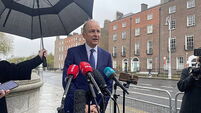
Speaking to reporters after he gathered his not-so-new new Cabinet together in Farmleigh House last week, he announced that the “core priorities” for the Government in the coming months will be the delivery of housing, making progress on health reform, implementing the climate action plan, and of course, dealing with the cost-of-living crisis.


                        ‘It was almost like the school principal was coming in and taking over the teacher’s class,’ is how Lorcan Sirr described Leo Varadkar taking command of the housing summit from the minister, Darragh O’Brien. Picture: Niall Carson/PA
‘It was almost like the school principal was coming in and taking over the teacher’s class,’ is how Lorcan Sirr described Leo Varadkar taking command of the housing summit from the minister, Darragh O’Brien. Picture: Niall Carson/PA

Easing the burden of inflation on families and businesses will undoubtedly require input from across the Government. But it was noticeable that everything Leo had a keen interest in is currently the responsibility of the other parties in government, with housing and health presided over by Fianna Fáil and reducing our carbon emissions coming under Eamon Ryan’s department.

Childcare and poverty

Leo’s land grab didn’t end there.

Varadkar then referred to the new unit within his own department that will be tasked with addressing child poverty and other issues impacting young people.

When it was announced, I was like, ‘this is just a way to say Fine Gael has delivered childcare reductions’. 

So said one political adviser, pointing to the 25% decrease in childcare fees announced in last October’s budget and the promise to bring costs down further for parents in the next budget.

While Varadkar has strongly denied that the establishment of the new unit is simply trying to steal positive news stories from Roderic O’Gorman, it did take officials somewhat by surprise when it was announced during the pre-Christmas reshuffle.

The Taoiseach has stressed that the new unit will focus on addressing child poverty and the long waiting lists for therapies and treatments.

However, as another Government source said: “Childcare and child poverty is an area that — depending on what he wants to do in the budget or what comes out of social protection in the budget — it’s an area you can move the dial on quite quickly if you invest in the right places.

"I’m sure he’s very mindful that it’s probably two years until the next election."

Others have given credit to Varadkar, who has met Barnardos and the Children’s Rights Alliance and promised that the unit will be up and running in the first quarter of this year with an action plan developed in co-ordination with Children’s Minister Roderic O'Gorman, a Green Party TD.

Given the fact that education, social protection, health, and other areas all feed into addressing child poverty, a cross-departmental unit was something Mr O’Gorman had raised when entering the department.

Major policy changes, especially in the area of housing, will have to be made in the first quarter of this year if their impact is to be felt ahead of the next general election. This has also been cited as the reason behind the speed at which Varadkar seems to have moved in his first 30 days as Taoiseach.

Health

Varadkar, a former health minister himself, has also got into the weeds of the health service over the past four weeks.

Micheál Martin had barely been moved out of the Taoiseach’s office when Varadkar met senior HSE officials to discuss the surge in winter virus infections.

Last week, he attended a virtual meeting between management and staff of the HSE’s Mid-West region and local TDs and senators.

Housing Minister Darragh O’Brien and Taoiseach Leo Varadkar at last week’s housing summit. Critics say Varadkar's intervention in key policy areas could win him all of the credit if things go well, and none of the blame if they don't. Niall Carson/PA Wire

Housing

While both sides have insisted the recent housing conference was arranged with input from both Varadkar and Housing Minister Darragh O’Brien, it was the Taoiseach’s name that appeared first on the invite and the half-day Housing for All event was hosted in Government Buildings and not The Custom House. 

Housing lecturer Lorcan Sirr, who attended the stakeholder conference, said it was “very evident that this was the Taoiseach’s gig”. He said: 

It was almost like the school principal was coming in and taking over the teacher’s class. 

"It was very evident because it was the Taoiseach who spoke first and the Taoiseach who spoke last." 

The move prompted Fianna Fáil senator Mary Fitzpatrick to snipe at what she described as Varadkar’s “road-to-Damascus type interest in the housing crisis that he presided over for, whatever, the 10 years that he was there”.

However, the Taoiseach later insisted that “everyone in politics has a genuine interest and a genuine desire to solve the housing crisis”.

As Taoiseach, he said, he will now chair the Cabinet subcommittees on both housing and health and it is “normal and natural” that he would spend some time meeting stakeholders and getting abreast of all issues in his first few weeks in the role.

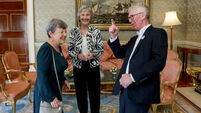
This was echoed by a Fianna Fáil minister, who said having the Taoiseach involved does give the issue extra weight.

“To get housing to where we need it to be it does require every department of government and requires the support of the Taoiseach,” the minister said. 

Any assistance that any minister can get from across government, including the Taoiseach as leader of the Government, is welcome.

Whether or not Varadkar is cynically using issues to gain more votes, having the direct involvement of the Taoiseach in critical areas such as housing, health and childcare cannot be a bad thing.

Did You Know?

Oireachtas committees can take a deeper look into areas such as housing, budgetary oversight, mental health, foreign affairs, and public accounts.

Committees, usually made up of both TDs and senators, receive submissions and presentations from the public, interest groups and Government departments. Their public meetings are broadcast live and recorded and they may publish reports on specific issues.

Committees also scrutinise Government expenditure and take a detailed examination of proposed legislation.

There are four types of committee:

  • Standing committee;
  • Joint committee;
  • Select committee;
  • Special committee.

Committee meetings are broadcast on the Oireachtas TV channel and streamed live on oireachtas.ie which also has an archive of previous meetings. File picture: Oireachtas TV


This week in years gone by

1972

Jan 22: Ireland signed a treaty of accession to the European Economic Community along with nine other States meaning the “centuries-old dream of a united Europe” became a step closer. Taoiseach Patrick Hillary and 25 government officials travelled to Brussels to sign the deal.

1983

Jan 19: An investigation found that the previous Fianna Fáil administration was involved in tapping the phones of journalists Geraldine Kennedy and Bruce Arnold. After a
16-hour Cabinet meeting to discuss the report, the Government released a statement confirming that a bugging device borrowed from a garda source was used to record political conversations.

1993

Jan 20: Bill Clinton took charge as the 42nd US president, declaring that “a new season of American renewal has begun”. It was reported that Clinton capped his oath-taking with an inaugural address laced with inspirational lines reminiscent of John Kennedy and Ronald Reagan.

2017

Jan 20: The Irish Examiner reported that US president Donald Trump did not dilute any of his trademark populism as he delivered his inaugural address after being sworn in as 45th president of the US. Pledging to put “America first”, he broke with tradition as he rallied against “the Washington elite”.

Hot topicals 

Leo returns: The Dáil is resumes on Wednesday after the Christmas recess. It also marks the return to the chamber of Leo Varadkar as Taoiseach. Expect testy exchanges between Mr Varadkar and Sinn Féin leader Mary Lou McDonald during Leaders’ Questions.

Leo Varadkar returns to the Dáil chamber as Taoiseach on Wednesday.

On life support: The Oireachtas Health Committee is to hear from representatives from the HSE tomorrow morning on the challenges facing public hospitals as the number of patients on trollies remains extremely high and staff come under immense pressure.

Public standards: Fine Gael ministers Paschal Donohoe and Damien English found themselves in the spotlight over their declarations during the Christmas break. Mr English was forced to resign as a junior minister after it was revealed that he had not declared a home he has owned in Castlemartin since 2004. As TDs return to Leinster House, the focus is likely to be on the standards public representatives adhere to and the lack of power the watchdog Sipo actually has.

The spotlight will be on Damien English as well as on Paschal Donohoe.

Getting the house in order: The Public Accounts Committee is to meet on Thursday during which representatives from the Housing Agency; the Approved Housing Bodies Regulatory Authority, as well as Department of Housing officials, will be grilled.

More in this section

Revoiced

Newsletter

Had a busy week? Sign up for some of the best reads from the week gone by. Selected just for you.

Cookie Policy Privacy Policy Brand Safety FAQ Help Contact Us Terms and Conditions

© Examiner Echo Group Limited