Seán Rooney's murder shows how we are out of touch with realities in Lebanon
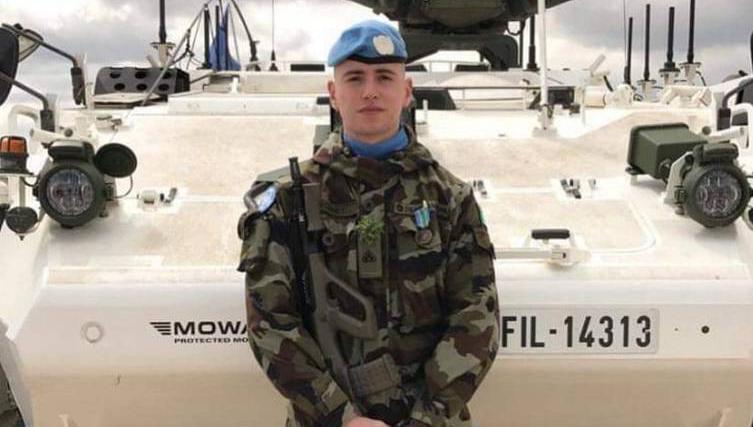
The death of Private Seán Rooney in Lebanon highlights how much has changed in the State over the past four years.
The speed of Lebanon’s collapse has been both seismic and alarming. Until 2019, Lebanon was classified as a middle-income country. Today, 80% of Lebanon’s population lives below the poverty line with 36% experiencing extreme poverty. One-third of the population is dependent upon the UN World Food Programme for food rations.
Lebanon is located 240kms off the coast of Cyprus and the EU. Lebanese citizens now join Palestinian and Syrian refugees in small boats attempting to escape hunger and poverty. Since the Cypriot Government introduced new legislation, those making the journey are risking the longer voyage to reach the Italian mainland. Human traffickers sense an opportunity as the Lebanese state security system disintegrates.
According to the World Bank, US$7bn in remittances came into the country in 2022. This doesn’t take into account cash carried by a diaspora with an obvious distrust of the broken banking system. Unfortunately, most of this money went on essentials, no longer affordable to family members – medical bills, school fees, generator costs, etc.
The infrastructure — social, economic, and political — is in ruins. Decades of corruption, mismanagement and bad governance at all levels across the political spectrum are to blame. Hezbollah, although not immune to corruption itself, has turned a blind eye to political gain.
It's easy for a foreigner visiting Lebanon to be deceived by its trappings. The Lebanese themselves put their best foot forward. Those who can live, do so to the maximum. It’s a coping mechanism that has served them well through years of conflict and now an economic collapse.
It’s also one of the factors that caught many humanitarian agencies off guard when there was continuous support for Syrian refugees often at the expense of beleaguered host communities.
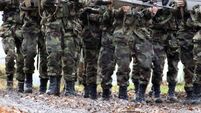
Ireland has had close ties with Lebanon since 1958, initially through the UN peacekeeping missions. To date, over 30,000 women and men have served professionally with UNIFIL in south Lebanon whilst 48 Irish Defence Forces personnel have died serving in South Lebanon.
The Irish view of the ‘Leb’ as a nation has traditionally been through the prism of the area of operations of our Defence Forces, namely south of the Litani River and North of the Blue Line. As a result, we’ve failed to grasp the unravelling of the State over the past four years and the scale at which Hezbollah runs and dictates most elements of Lebanese society.
While diplomatic missions are expensive, their presence needs to be balanced smartly against the political, security and economic interests of the State. Unlike our European counterparts, Ireland doesn’t operate an Embassy in Beirut. Instead, Irish interests are represented through a consul with limited capacity that is also supported by the Irish Embassy in Cairo.
President Higgins’s state visit to Lebanon in 2019 highlighted just how out of sync we are as a nation with unfolding events in the country. During the ‘Thawra’ (revolution) which sparked popular mass peaceful protests throughout large parts of Beirut and Lebanon, President Higgins and his entourage were holed up in the Phoenicia Hotel in the downtown area of Beirut as streets were blocked off and security forces deployed.
With the continued presence of our Defence Forces personnel with UNIFIL in South Lebanon and those present on the Syrian side of the Golan through UNDOF, additional diplomatic capacity and representation in Beirut should be a priority.
In addition, economic opportunities and a clearer understanding of the humanitarian needs of Lebanon would benefit from having a proactive embassy in Beirut. If we can operate an Embassy in neighbouring Jordan and appear to have been considering reopening in Tehran recently, surely Lebanon deserves better.
An EU joint task force for Lebanon, similar to that of the US, could be established and led by the Irish Government. Targeted sanctions against those individuals blocking reform, engaged in corruption and facilitating non-State actors are required.
Our recent leadership at the UNSC and presence in Brussels could be brought to the fore. Irish management of such a task force would be well received in Lebanon and hence have more of a chance of success.
One of the most significant roles allocated to Ireland on the Security Council over the past two years was Facilitator of Resolution 2231, which underpins the Iranian nuclear deal, the JCPOA.
Relationships between Ireland and Iran appear stronger than many of our European neighbours. Those relationships could be used for pushback against Hezbollah’s overextending control in Lebanon.
The Iranian ‘axis of defence’ stretching across Iraq, Yemen, Syria and Lebanon has caused much human suffering and resentment from local populations. Again, the Irish leadership and experience as displayed in the recent two-year term of the UNSC are invaluable when dealing with Iranian influence in Lebanon.
The Irish Aid programme has built up in recent years and is supporting NGOs and the UN within Lebanon. The aid programme remains overstretched in terms of capacity in the region and this is an area which requires greater investment to bolster the tremendous work being carried out.
We need a different approach to providing humanitarian assistance in Lebanon and ensuring the host communities benefit whilst supporting Syrian refugees. Investing in the agricultural, solar energy and water sectors is critical. Direct engagement with elements of Lebanese civil society through the localization agenda is paramount.
As a nation, we are out of touch with the realities of today’s Lebanon. There is much Ireland can do but starting with a review of bolstering the capacity of an already limited Consul would be a refreshing start. Lebanon as a geopolitical flashpoint requires analysis and proper investment.
Before we start talking about our proud history, we need to get the basics right.
Read More
- Colin Lee works with the Gorta Group. He lived and worked in Beirut for 14 years.
CONNECT WITH US TODAY



Be the first to know the latest news and updates