Time to look to our own history for inspiration on national energy security

Ireland had the first publicly owned energy system, in the 1920s. We need to return it to democratic public ownership
Time to look to our own history for inspiration on national energy security

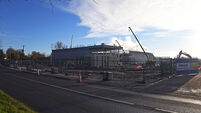
The energy crisis has prompted calls for state intervention, as was the case when the ESB and Bórd na Mona were formed. Picture: Eamonn Farrell/RollingNews.ie

Escalating energy costs, power cuts, and the doubling down on fossil fuels during a summer of unprecedented heat waves: The news is full of troubling stories related to our broken energy system. 

One positive is that a system that many of us take for granted has come under greater scrutiny, opening a space for public debate and political intervention that might otherwise have been impossible.

The market has not delivered.

While the rise in energy prices is related to the war in Ukraine, this does not explain why large energy companies have soaring profits at a time when many people are just about paying their bills. 

Bord Gáis Energy (a subsidiary of British-owned Centrica) announced that its operating profits surged 74% in the first half of this year. Earlier this month, The Irish Times reported that Irish energy companies are making six times more money off wind-generated energy than was predicted two years ago. Meanwhile, 70% of households could be in energy poverty this winter in worst-case scenarios drawn up for the State’s energy crisis oversight group.

Potential blackouts this winter would be because of the failure of some companies to fulfil their contracts for generating electricity from conventional energy. Eirgrid has stated to the Commission for Regulation of Utilities that the root of the problem is the 'market mechanism' used to deliver Ireland’s security of supply.

At the same time, Eirgrid has been tasked with providing for the rapid growth in energy demand from data centres, which claim 14% of grid capacity (more than all rural households put together). Twenty years ago, Eirgrid planned and developed the grid around the predicted growth of towns and cities. Today, it is guided by the projected demands of large tech companies and their data-storage requirements.

What the crisis shows is that commercial energy companies and large energy users have significant power to influence the security, affordability, and sustainability of our energy system. The long-term planning and strategic development required to achieve a decarbonised and fair energy system become much harder in this context. This situation has not been created by the war in Ukraine, but by 30 years of EU and Irish energy policy.

Since the 1990s, EU energy policy has relied on market mechanisms to achieve the overarching goals of energy security, affordability, and sustainability. The internal energy market and the 'unbundling' of generation, transmission, and supply services were about introducing market competition to break the monopolies of state-owned energy utilities. This competition, it was believed, would drive efficiencies (including less staff), which would benefit consumers.

Fossil fuel has increased, prompting protests across the world.

But this is not what has happened. Fossil-fuel use has increased alongside renewable-energy production. In many instances, energy companies have consolidated, meaning they can exert more influence on national energy systems. 

This has led to contradictions between the interests of private companies operating in a competitive, global energy market and the public values of equity, sustainable development, and democratic participation — for example, ongoing debates here about whether or not to introduce a windfall tax on energy companies for fear that it might deter investment.

Some argue that the current price surge is temporary, that all that is needed are short-term financial measures to cushion the impacts on households until the 'storm' passes. But this storm has been brewing for 30 years of market-led policy. With even greater cost increases and urgency around climate change, there is growing pressure for more far-reaching reforms in how our energy systems are controlled and planned.

In the past few months, Germany and France have moved to take control of assets and firms critical to their energy supply. A survey published this week found that half of Conservative voters in the UK are in favour of nationalising the energy industry. Just as the Covid-19 pandemic saw the return of a more publicly oriented state intervening in healthcare and the economy, so the energy crisis has seen calls for stronger state intervention in the energy system.

One hundred years ago, the newly independent Irish state set up the world's first publicly owned energy system, the Electricity Supply Board (ESB). The aim was universal access to affordable electricity, especially in Ireland’s rural regions. This Rural Electrification Scheme was to be powered by Ardnacrusha, the hydro-electric dam on the Shannon River, and funded by 20% of the State’s income and a levy from richer urban areas.

The ESB and Ardnacrusha were world-class world-firsts. Universal, affordable, efficient energy was provided to the Irish public for decades, lifting homes out of poverty and darkness. The blueprints were used in the US for the New Deal Tennessee Valley Project, and ESB expertise became internationally renowned. They remain sources of enormous national and local pride, evident from the Shannon Scheme's proposed nomination as a UNESCO World Heritage site.

When Bord na Móna was established, in 1946, it was given a mandate to develop the country's peat resources to reduce dependence on imported fuel and generate employment in the Midlands and West. As well as developing the bogs, the plan determined that all new power stations would be based on turf, and all state-owned and state-assisted institutions would be equipped with turf-powered heating, including public housing. 

A fully funded, experimental station was set up to develop technologies for turf extraction and develop a range of domestic cooking and heating appliances reliant on turf. Housing for workers was also provided by the new statutory authority — the legacies of which remain in the beautiful, people-centred housing estates designed by architect Frank Gibney.

This is not about nostalgia. The pre-1990s ESB and Bord na Móna were products of a time and political culture, and ecological damage caused by the peat industry and Ardnacrusha's turbines must change. But we can reclaim the ideal of a public energy system to tackle the growing crisis. 

Ireland’s incoming National Energy Security Framework, Energy Poverty Strategy, and Climate Action Plan can be integrated and incorporated into a broader, visionary plan to re-nationalise and re-bundle the Irish energy system. This means taking back into democratic public ownership existing energy companies and infrastructure, from gas and coal, to wind and biomass, changing the mandate from profit to public good — as was done in the 1920s. 

Just transition

Underpinned by the principle of a 'just transition', we can address the intertwined issues of climate change, energy poverty, and air pollution — winding down fossil fuels into jobs-intensive renewables. We can use our own energy bills and PSO levies not for private profit, but to fund a major public retrofitting programme across the country and investment in base-load sources of renewable energy.

Other countries provide us with the blueprint for a bigger, braver Ardnacrusha — from Nova Scotia’s tidal energy along the Wild Atlantic Way, to offshore wind owned and operated by a re-invigorated environment and poverty-focused ESB, as proposed in Scotland. Costa Rica’s publicly owned energy system provides almost 100% renewable, low-cost energy to 99.9% of its population. 

We can use our energy bills to set up national industries, rather than importing wind turbines and solar panels from Denmark and South Korea. We can use Irish wood and wool to retrofit every home, supporting rural jobs and family farming.

Countries across the globe have realised that it was a mistake to unbundle and privatise energy systems, leaving us in the lurch when it comes to rapid climate breakdown and geopolitical insecurity. 

Let’s look to our own history and visionary young state, its artists, its rural farming families, engineers and revolutionaries; visions that inspired the ‘New Deals’ of others. Instead of doom, gloom and handouts, let’s take on the challenge: What better way to celebrate our nation’s decade of centenaries.

x

CLIMATE & SUSTAINABILITY HUB

More in this section

Revoiced

Newsletter

Sign up to the best reads of the week from irishexaminer.com selected just for you.

Cookie Policy Privacy Policy Brand Safety FAQ Help Contact Us Terms and Conditions

© Examiner Echo Group Limited