Sustainable transport plan will fail unless we stop putting cars first
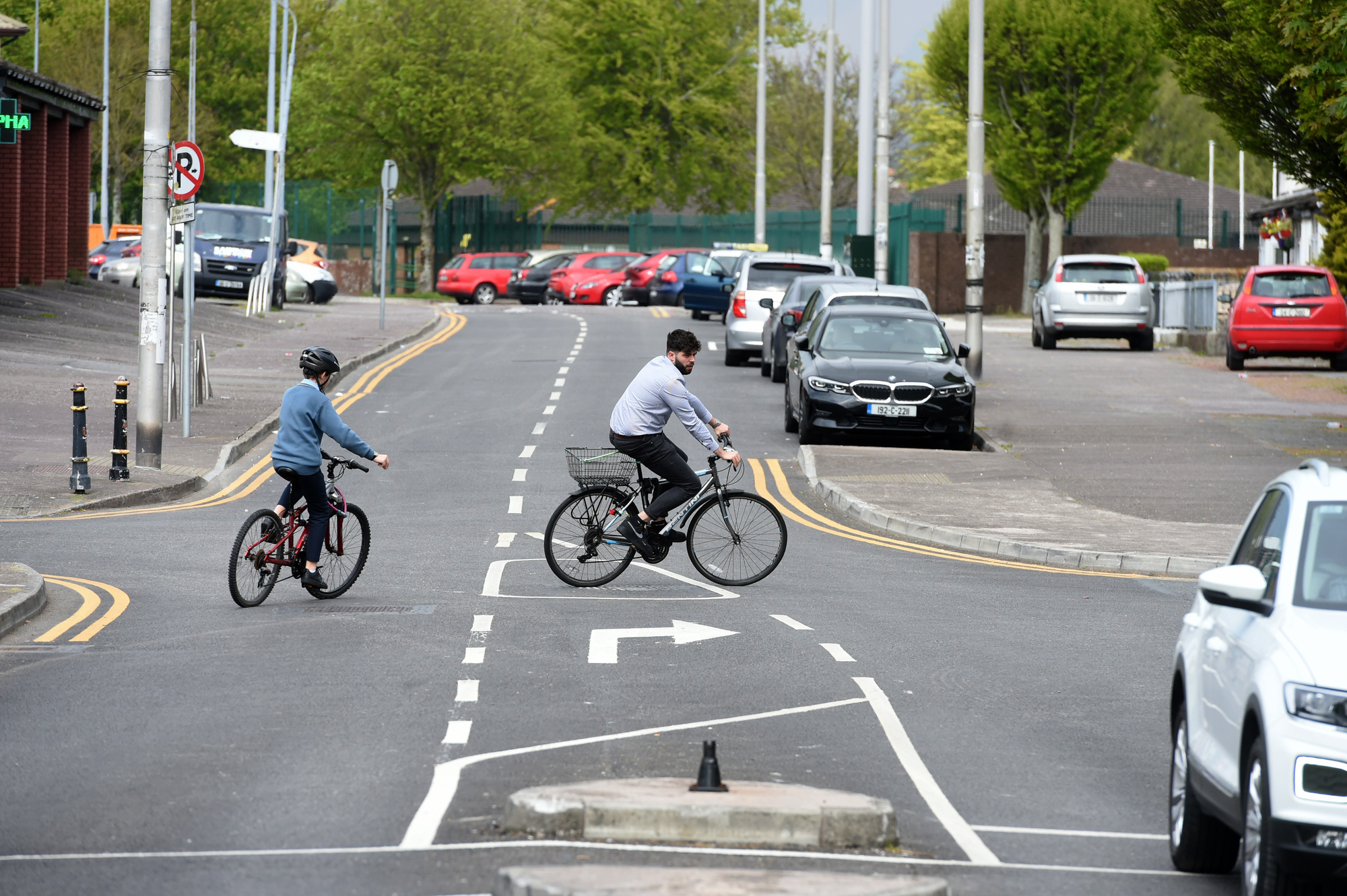
Avenue des Rennes, Mahon, Cork is one of the areas targeted for improvements under the proposed Mahon Cycling Scheme, by Cork City Council. Picture: Larry Cummins
The revelation in the that local authorities have failed to spend their allocations for walking and cycling infrastructure is not surprising to those in transport circles: the Programme for Government commitment to spend 20% of the transport budget on walking and cycling made headlines around the world, but its implementation has proven to be a problem.
There are many causes of this problem at all levels of Irish governance: local authorities have been slow to recruit staff, the staff that have been hired may not have the skills to know what’s best for walking and cycling, the multinational engineering firms hired by local authorities to do design work do excellent work in other countries, but this is not always appropriate in the Irish setting.
The National Transport Authority only has an indirect accountability to the minister for transport: it is primarily accountable to its own board.
Eamon Ryan has achieved much in putting walking and cycling first in policy, but has perhaps not been as assertive as he could have been in ensuring that the considerable amount of money he has allocated has been spent, and spent well.
CLIMATE & SUSTAINABILITY HUB
Yet perhaps the biggest cause of this underspend is not political or bureaucratic: it’s cultural.
We love our cars in this country and we both consciously and unconsciously put the car first when we think about our roads and streets.
This car-first approach results in a timidity at all levels of the system to create communities where it is easy and comfortable to get around without a car, and significant public resistance when we try.
Of course not all of us own a car and this is not just a Dublin phenomenon either: research that I carried out in Co Limerick revealed many towns and villages where over a fifth of households do not own a car.
But there are also a fifth of towns and villages in Co Limerick which have no timetabled public transport services at all. The good news is that some of those communities will start to get public transport services later this year under the Connecting Ireland initiative.
Yet Connecting Ireland will only provide three bus services a day each way for these communities. The bus is still seen as a poor relation.
We would do well to follow the model of Switzerland and have a public transport guarantee: where every settlement has an ‘every village, every hour’ service.
My research showed that such a network in Co Limerick would cost about 10 times the amount the existing bus service costs, for an hourly service to each settlement from 6am to 10pm.
This would cost money to roll out to every village across the country, but could easily be funded by diverting some of the road building budget, or extending a levy of less than 2c on every kilometre driven in a car.
Combined with a commitment to high quality walking and cycling infrastructure, such as seen in the Netherlands or Denmark, would be transformative for Ireland.
The prize is significant: towns and villages where kids can get to school under their own steam, an equality of mobility for everyone who lives in a village, town or city no matter how young or old, rich or poor.
Clean air and nicer, quieter streets to live on, for the price of making it slightly less convenient to travel by car.
We need to fix the problems in the system but we also need to reexamine our own attitudes. If we put people first, not cars, we can achieve significantly better outcomes for everyone.

CLIMATE & SUSTAINABILITY HUB
CONNECT WITH US TODAY



Be the first to know the latest news and updates