Yuliya Tymoshenko: The roots of Ukraine's resistance
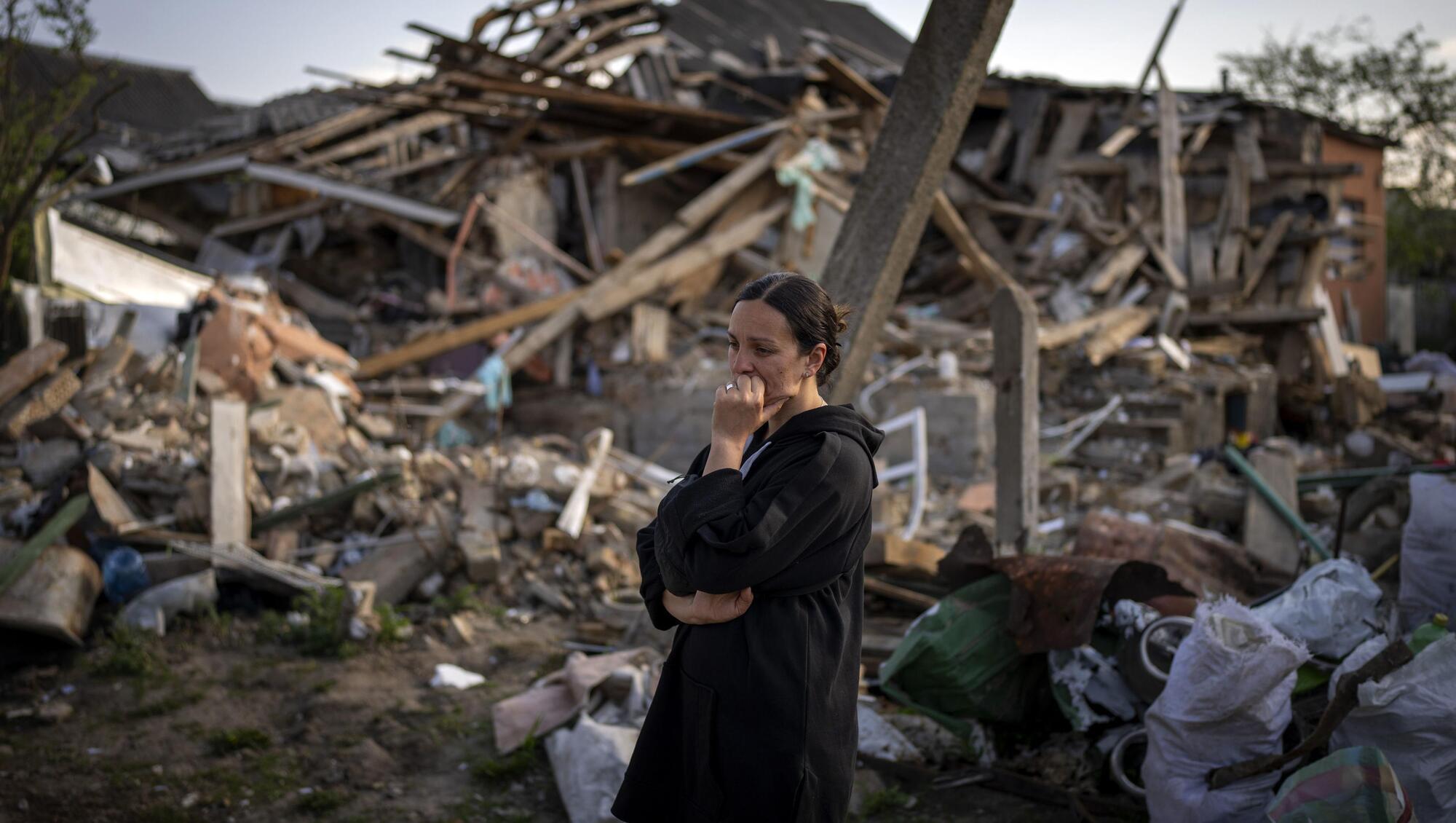
Anna Shevchenko in May next to her house in Irpin, near Kyiv, built by her grandparents which was nearly completely destroyed by bombing in late March during the Russian invasion of Ukraine. In her beloved flowerbed, some roses, lilies, peonies and daffodils survived. "It is new life. So I tried to save my flowers," she said. Photo: AP/Emilio Morenatti
After months of artillery shelling, rocket attacks, and the mayhem unleashed by Russia’s invasion of my country, the very idea of Halik Kochanski’s book is disorienting. Am I to see it simply as a comprehensive study of the resistance to Nazi rule in Europe during the Second World War, or is it, through some alchemy of history writing, something more: a warning from the past about the nature of Ukraine’s present and future?
The book’s publication came at a time when the world feared that Ukraine’s sacred capital would fall under military occupation, like Paris, Prague, Warsaw, Brussels, Belgrade, and so many other of Europe’s ancient capitals during the Second World War. Indeed, a fate worse than occupation seemed to await us because of Russian President Vladimir Putin’s pathological desire to erase Ukraine from the map of Europe.
Indeed Kyiv, if Putin had gotten his way, would have become a second Carthage. But thanks to the tenacity of our army and the resilience of our volunteer fighters – everyone from pensioners to miners to ballerinas – Kyiv escaped that fate.
Still, a murderous army of occupation, abetted by the jackals of collaboration, now has much of Ukraine’s south and east under its jackboot. As an underground war erupts in these occupied cities, towns, and villages, and artillery duels between Ukrainian forces and Russia’s much larger army transform the Donbas into a wasteland, Halik Kochanski’s Resistance reads less like a work of history and more like a chronicle of a partisan war foretold.
William Faulkner’s quip, 'The past is never dead. It’s not even past' has rarely sounded more true.
The thematic structure that Kochanski has given to her book, her scrupulous scholarship, and her refusal to romanticize the grim, grimy work of being a resister, does make Resistance something of a primer for the many Ukrainians now fighting to undermine Russian authority over the areas of our country that the invader now occupies.
She shows us the difficulty of running underground publications and of providing to the wider population the truth when the occupier is plying them with lies. She details the networks that were built (and infiltrated by the Nazis and their collaborators) to evade capture by the invader, as well as to resupply weapons.
She also shows the problems of dealing with demanding, yet all too often ill-informed foreign allies, of meeting demands which can at times seem nonsensical to men and women engaged in a life and death struggle with an enemy that is harrying them day and night. These many complications of resistance today’s Ukrainians, fighting for their liberty, now understand all too well.
Resistance begins with a simple and yet little-asked question by historians of the Second World War: Why resist? After all, Hitler’s blitzkrieg was overrunning Europe with ease. The national armies of Poland, the Netherlands, Belgium, Denmark, Norway, France, Greece, and Yugoslavia had been routed.
Even the mighty Soviet Union seemed poised to fall as the Wehrmacht approached Moscow in the summer of 1941. In many cases, national governments had fled or made Faustian pacts with the Nazi occupiers. So how could people without military training dare to stand up and confront the all-conquering Wehrmacht?
For most people, Kochanski shows, the safest bet was to keep one’s head down and, when necessary, “learn to howl with the wolves”. And yet, people did begin to resist. They resisted out of a need to preserve their dignity, or because they had no other choice if they wanted to survive. Those same impulses animate Ukrainians today.
That occupation follows its own merciless, even genocidal, logic is what gave rise to Second World War resistance, with the scale of resistance usually reflecting the degree of the occupier’s criminality. Early on, Kochanski contrasts life under occupation in the West of Europe (France, Denmark, the Netherlands, Bohemia and Moravia, and Norway) with conditions in Eastern Europe (Poland, Ukraine, the Balkans, and the former Soviet Union).
In the West, the Nazi “occupations were carried out with a much lighter hand.” True, gruesome slaughters took place at Lidice, in Bohemia, and at Oradour-sur-Glane in France. But mass killing on that level stood out for its rarity, at least until 1944 when, Kochanski points out, the retreating Wehrmacht adopted the criminal tactics it had long employed in Poland, the USSR, and the Balkans, where “mass murders were the norm.”
Mass killing was the norm because, Kochanski argues, “Nazi racial theory was the principal determinant of how the Germans would keep conquered people”. And the “full impact of racial policy fell in the east, where the Slavs and Jews were viewed as Untermenschen, people to be fully conquered and then eradicated to make space for Germanic Lebensraum”.
It is in the depravity of the Nazi occupiers in Eastern Europe and the USSR that I see parallels with what is happening in Ukraine today. In an immense insult to the memory of the ordinary Soviet soldiers who fought and won the Great Patriotic War against Hitler – and I am proud to count family members among their ranks – those Nazi 'Untermenschen' rules seem somehow to have become embedded in the behavior of today’s Russian army.
Our women are raped, our children stolen, our men taken to God knows where. As for the laws of war, they mean nothing to the invader.
In an unspeakable horror, one of our prisoners of war was castrated, with soldiers loyal to Putin gleefully recording their barbaric act on their cellphones. And at least 50 of our prisoners of war, men who for months had defended the city of Mariupol with Biblical courage, were massacred while being confined (and tortured) at Olenivka prison. Nacht und Nebel has become Ночь и туман (дымка).
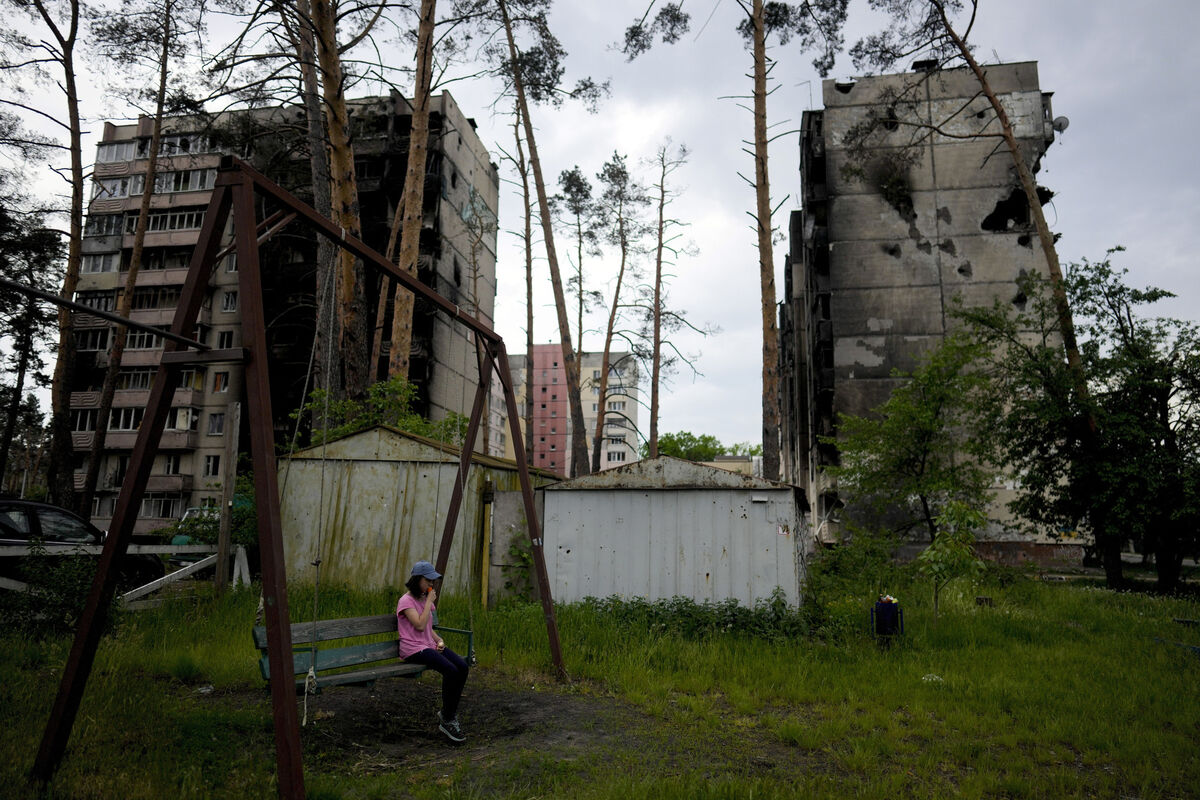
Kochanski is particularly detailed in her description of how the Nazis broke city, town, and village governments and sought to break civil society. Those same methods are being applied in occupied Ukraine today: the murder and abduction of local officials; mass deportations; and the closure of schools, churches, and synagogues.
The Russian army today regularly “disappears” local leaders. The abduction of Kherson’s mayor, Ihor Kolykhaev, is one prominent example. Kolykhaev resisted Russia’s occupation in the only way open to him: by providing the world, through social media posts, a portrait of the humanitarian disaster taking place in his city under Russian control. As I write, his fate remains unknown.
Schools, too, are under attack, with the Ukrainian language being evicted from the classroom, replaced by mandatory Russian classes. Our history books are no longer used; our children must learn the history of the occupier, who wants Ukrainian youth to bend the knee to Russia as an overlord.
And soon, the occupier will hold referenda in the areas it ostensibly controls, supposedly as a way to justify to the world the planned forced incorporation of these territories into Russia. Here we should all remember what Margaret Thatcher said of such referenda, that they are “the devices of dictators and demagogues”.
Even worse are the forced deportations, not of slave labour, but of thousands of Ukrainian children. Among Putin’s many criminal acts in Ukraine, this one beggars belief.
Does the Kremlin somehow think that it can reverse Russia’s dire demographic future by kidnapping Ukrainian babies and children? Does it really believe that Ukrainian mothers will ever forgive or forget this crime? Unless our children are returned, all of them, the enmity that Ukrainians feel for Russia will not begin to decline even if peace is somehow restored one day.
Even more ominous than this crime, if that is even possible, peaceful suburbs of Kyiv such as Bucha and Irpin, when occupied by Putin’s army, have now joined the hallowed list of places like Lidice, Oradour-sur-Glane, and Babi Yar, where the very mention of the name instantly evokes bestiality and horror.
Never again has become once again.
The most indelible lesson that Kochanski offers concerns unity. Rivalry between Gaullist and communist resistance groups in France, between royalist Chetniks and Tito’s partisans in Yugoslavia, between communists, liberals, and Roman Catholics in Italy, between Jewish underground groups and the Polish underground army, and other ethnic, religious, and ideological divisions did incalculable damage to the anti-Nazi and anti-fascist resistance movements.
In the Balkans, Kochanski writes, “there was a war of ethnic cleansing caused in large part by the break-up of Yugoslavia into its component states under the aegis of the various occupying powers. Then there was a war of resistance waged by different forces against the occupying powers... This war also led to two other, simultaneous conflicts: the war waged against collaborators and perceived collaborators.
The lesson for Ukraine is clear. The courage of our fighting men and women has stunned the world since Putin launched his blitzkrieg across our borders on February 24. But that courage has a root source in the fact that our country is unified in a way that it has not been in centuries. And that unity has a simple, single purpose: preserve the sovereignty of our nation and the lives and liberties of our people.
On this, all of Ukraine’s political forces are in absolute, unshakeable agreement.
Just days before Vladimir Putin sent his army to terminate our existence as a sovereign state – perhaps to establish a quisling government under the Kremlin’s thumb, perhaps to simply recreate the Russian Empire by annexing all of Ukraine in the way that he annexed Crimea in 2014 – Ukraine’s democratic forces, both opposition and those allied to President Volodymyr Zelensky, met with the president to pledge our unity in the defense of our nation.
Since then, we have continued to put politics aside for the duration of the fighting. Today, sadly, there are those in the West who, failing to recognize that Ukraine’s brilliant military response to Russia’s far larger invading army is a direct result of our newfound unity, would put this solidarity at risk.
They call for Ukraine to prepare to make territorial sacrifices in order to achieve a peace agreement with Russia. Such calls supposedly reflect a cold-eyed “realist” approach to diplomacy. But there is nothing to be gained by shattering our national unity and sapping our fighters’ will. The Kremlin would merely pocket a unilateral concession and then demand more.
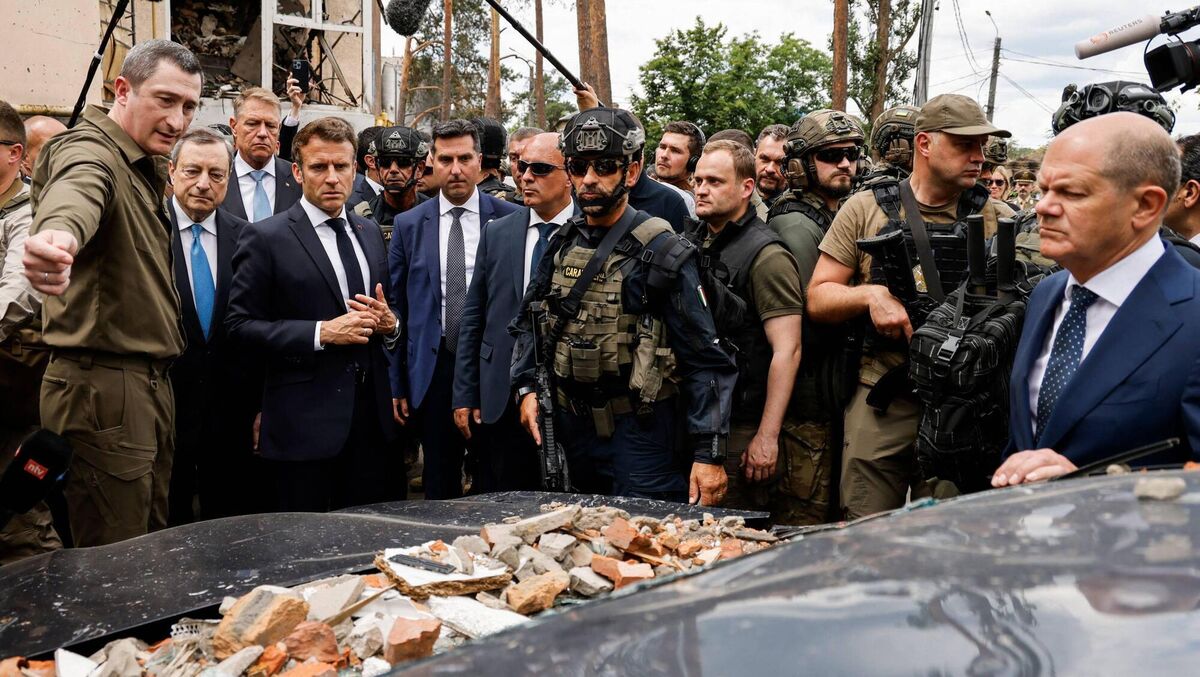
Do not mistake me here: I do not question the friendship of French President Emmanuel Macron and German Chancellor Olaf Scholz for Ukraine or the sincerity of their desire to see Ukraine continue to stand proudly as an independent member of the international community, and I am grateful beyond words for their efforts to grant Ukraine candidate status for membership in the European Union.
But I believe that they have not considered the full implications of their call for Ukraine to issue a public statement of our willingness to surrender part of our territory as a prelude to peace talks. Any hint at a willingness to compromise our sovereignty will shatter our unity and will only open the door for Russia to continue to ravage our country.
Our unity, and the murderous brutality of those who would occupy our land, is also behind the birth of a wider resistance that is now forming in those Ukrainian cities and oblasts now occupied by Russia’s army and its criminal lackeys from Chechnya and Syria. This emerging partisan army, however, has a head start on the amateur underground forces described by Kochanski.
For ever since 2015, US special forces and those of other Nato nations have been providing Ukrainians with expert training, including the creation of a home guard company skilled in resistance tactics. Kochanski’s description of the Ukrainian resistance during the Second World War should give Russia’s leaders pause about forcing Ukrainians once again to fight a partisan war of national survival.
In speaking of the Ukrains’ka Povstans’ka Armiia (the Ukrainian Insurgent Army), Kochanski is nuanced and disciplined. She understands the dreadful dilemma that Ukraine’s resistance leaders found themselves in, trapped as they were between the Nazi Wehrmacht and Stalin’s Red Army.
Today, of course, Ukraine’s emerging partisan movement is not trapped in anything like the Nazi/Soviet vice. Instead, our partisan forces are in a position more like the armed underground armies of Western Europe during the Second World War, forces equipped and supported by the democracies of the West.
That they can impose grievous costs on the invader was demonstrated clearly when a partisan group struck a Russian air base deep in occupied Crimea, destroying fighter jets and bombers, and also weapons dumps. Moreover, collaborators should have no doubt as to the grim fate that awaits them.
Resistance concludes with nothing like the elation that everyone would expect victory over Nazism and fascism to have delivered. Instead, Kochanski reveals how confusion, disappointment, and bitterness reigned as the partisan armies began to confront an uncertain future and their failures during the war.
Kochanski quotes one:
The Nazis had lost, but for half of Europe a new and hideous occupation – by Stalin’s Red Army – had begun.
Ukraine’s liberation, when it comes, as it must, will not bring with it such disillusion. Yes, we will be numbed for a time by the sheer scale of the task of reconstruction looming before us. But we will also find in our country a continuing unity on the great goals that we are defending in this war: sovereignty, democracy, and Europe.
We will end this war with the foremost hope of our national existence since 1991 – the promise of EU membership – within our grasp. Securing our membership in the Union will, of course, demand a tenacity, resilience, and unity of purpose, akin to what our people are demonstrating today.
But just as the occupied nations of Western Europe built vibrant democracies on the ruins of Nazi rule, and the ex-communist EU members in Central and Eastern Europe have built ever freer and more prosperous societies since throwing off the Soviet yoke in 1989, we in Ukraine, remembering the horrors of our struggle today, will see the hard reforms needed to join Europe as a much lower price than what we are now paying for our freedom.
- Yuliya Tymoshenko is a former prime minister of Ukraine.

CONNECT WITH US TODAY



Be the first to know the latest news and updates