Are you hosting a Ukrainian refugee? Here's how you can provide practical support
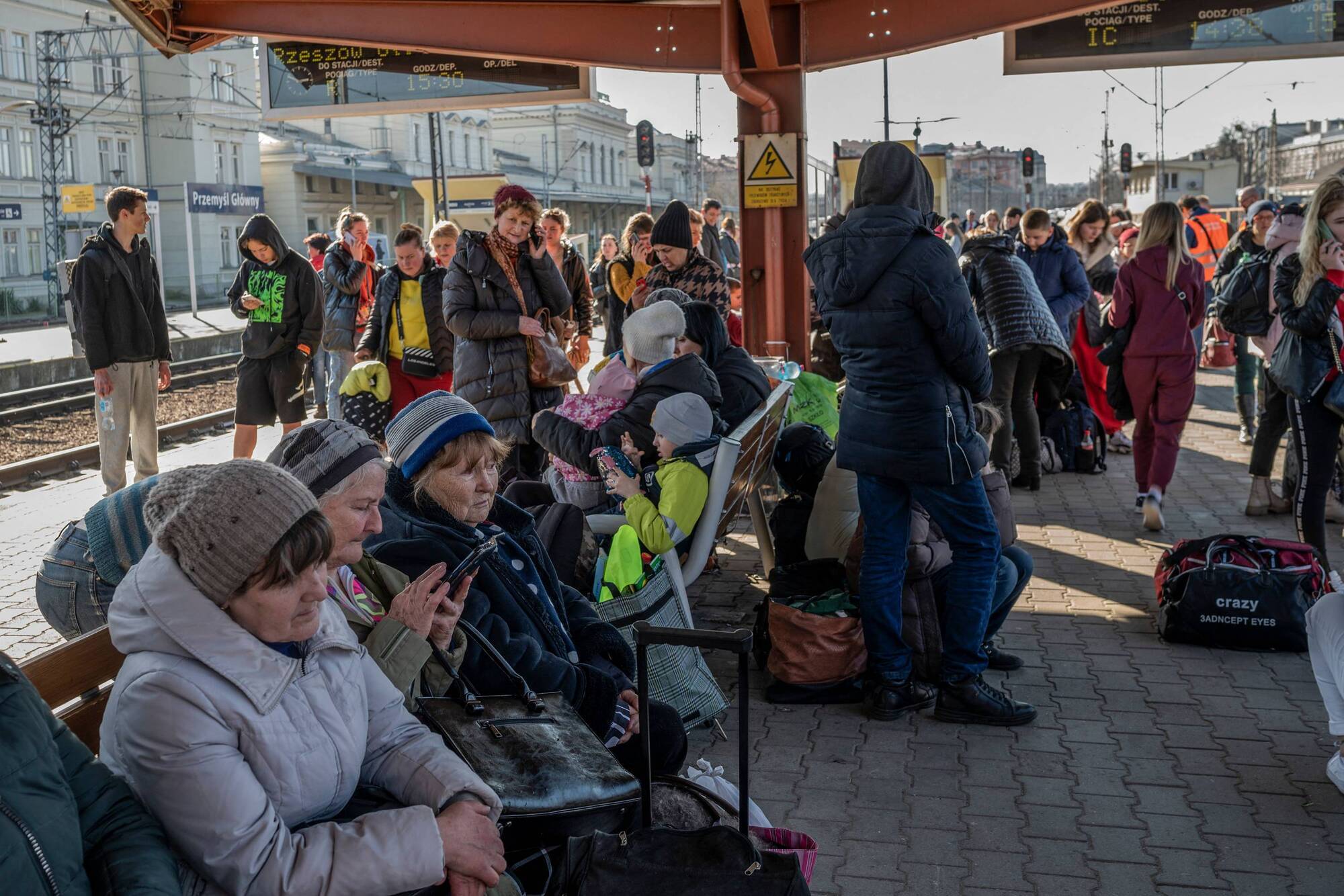
Ukrainian evacuees wait to board a train en route to Warsaw at the rail station in Przemysl, near the Polish-Ukrainian border last month.
There is an urgent need for government guidance and training to support members of the public who have so generously stepped forward to offer support to Ukrainian refugees. The provision of support in this context can be complex and emotionally challenging, given the multiple losses and trauma experienced by refugees, as well as the structural challenges and racism and discrimination they face. It is not surprising that difficulties will arise.
For example, there are already reports that some hosting arrangements have broken down. In my experience as a social worker supporting people of a refugee background, these are the key principles to consider.
Be open to listening but comfortable with silence.
If the time you will be spending with the person will be longer (for example, if they will be living in your home), it might be helpful to let the person know that you are willing to listen (if you are), but without putting pressure on them. For example, you might say: “I know that you have probably been through a lot. I’m here if you ever need to talk but there is no pressure. Please just do whatever is right for you”. Remember too that listening to traumatic stories is not easy. So if you offer to listen, you need to be prepared to really hear whatever emerges. You need to also ensure that you have supports in place for yourself.
Adopt an individualised approach, which respects the person’s privacy. Keep in mind that no matter how much experience you have or how many people of a refugee background you have encountered, the person you are supporting is a unique individual, with distinct experiences, whose identity goes far beyond their status as a “refugee”: they are also successful professionals, members of families, members of friendship groups etc. Thinking of people only as refugees can result in paternalistic treatment, arising from feelings of pity. Be mindful too of the individual’s privacy.If someone you are supporting confides in you, you have a responsibility to keep that information confidential, so you will need to set firm boundaries with others. This applies to social media too, of course.
Consider the power dynamics: It is likely that, particularly at the beginning, there is a significant power imbalance between you and the person you are supporting.
For example, as a ‘host’, you may have virtually all the power. While we might say to the ‘guest’ that he or she should make themselves at home, there is likely to be an unspoken expectation that the ‘guest’ abides by your household norms and rules. As outlined in my colleague Dr. Karen Smith’s recent Irish Examiner opinion piece, there can be an expectation that refugees should be ‘grateful’, when in fact a rights-based approach is needed. The person you are supporting may be to a great extent dependent on your goodwill, having perhaps few other supports available. The power you hold might mean that someone will feel obligated to answer questions you ask, to say it's okay for their photos to be shared, or to say ‘yes’ when invited to a social event. To help mitigate against this, try to always give a meaningful choice: ‘Would you like to come to dinner in my friend’s house or would you prefer to spend time by yourself this evening?’.
Consider your own knowledge and understanding: You are likely to have relevant knowledge and skills from other life experiences. It is likely too, though, that there will be gaps. Utilise training opportunities provided by reputable organisations. Reflect on what you learn. Even with this new knowledge, it is important to continue to utilise a ‘not-knowing’, ‘non-expert’ stance, as no training is going to give you all the necessary understanding. For me, I consider my learning in this area to be a long-term process, involving continuous reflection. Don’t be afraid to acknowledge when you don’t know what to do: reach out and seek advice.
Adopt an anti-racist and culturally conscious approach: Many refugees will experience racism and discrimination. Be aware of your own biases and the possibility that you have internalised racist attitudes. Be respectful of cultural and religious preferences, but avoid stereotyping or labelling on the basis of presumed difference. Again, seek training and support, engage in honest reflection and, crucially, be open to learning about yourself.
CONNECT WITH US TODAY



Be the first to know the latest news and updates