It really is now or never but toxic debate is not going to help us win climate battle
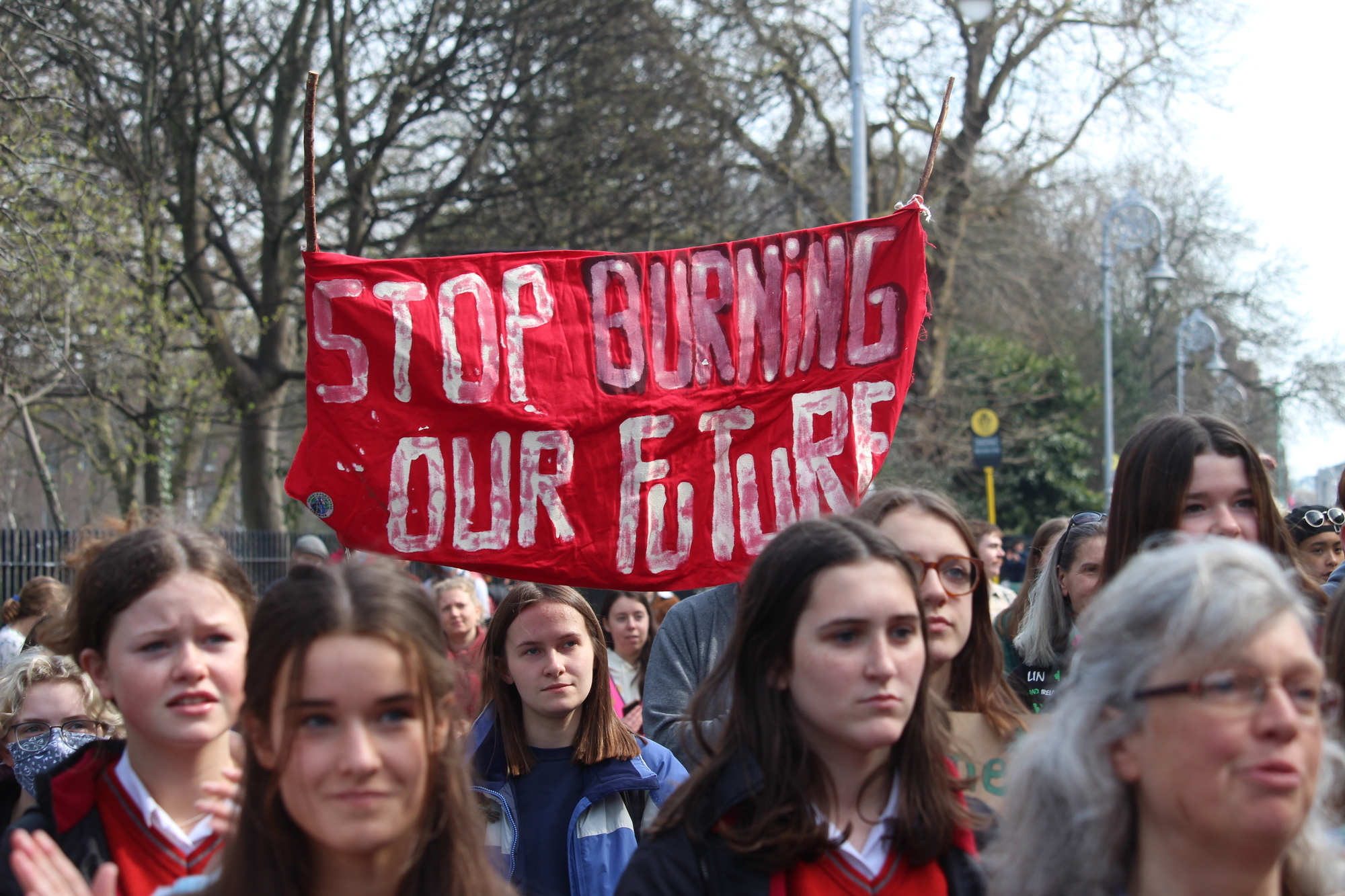
Hundreds of young people gathered in Merrion Square in Dublin city centre recently as part of a global climate strike.
When the world's leading scientists are categorically stating the world is at a tipping point in tackling the climate crisis, Irish forums, social media, and comments sections are apoplectic at the thought of driving slower or spending less time in the shower.
The challenge ahead to decarbonise society to reduce the inevitable destruction caused by human-induced global warming has been laid bare. It really is now or never, some of the world's brightest minds have told us.
That means deep sacrifices in the next decade, especially in the next three years, according to the Intergovernmental Panel on Climate Change (IPCC). It can't be any other way. We can't go on consuming or emitting in a collective gorge anymore.
How can we possibly achieve this if tiny-in-the-greater-scheme-of-things-but-it-all-adds-up measures like consuming fewer pork chops or taking fewer car journeys is proving so divisive?
Environment minister Eamon Ryan's two-birds-with-one-stone suggestions to tackling spiraling energy costs and also emissions by reducing journeys and being mindful of shower times may have come across as condescending and lifted from a Green Schools Programme pamphlet, but that doesn't mean they weren't accurate.
Yet if the abuse he's taken in recent days over these suggestions (similar ideas were laid out by the International Energy Agency) is indicative of what lies ahead, what hope do we have?
Lest I be accused of being holier-than-thou, I include myself in the conversation. My automatic response to giving up daily meat or walking a few days instead of driving is to become defensive. I, like most others, point the finger at billionaires, big corporations, and intransigent and inert governments.
The truth is we are all going to have to take our licks if this collective effort is to work. That means us ordinary citizens as well as the big emitters. If we do our share as the little guys and gals, then the big emitters can no longer greenwash or obfuscate or deny their wrongdoing.
We have been warned for decades that it was coming, but we all chose to long-finger it. Now we are in a situation akin to cramming the night before English Paper 2 of the Leaving Cert, desperately hoping our luck will be in and the only poet we studied will come up trumps.
It's not ideal, we're putting ourselves under enormous pressure and time stress, but that's the situation we've landed ourselves in. Cramming is something that most of us can handle, with deadlines focusing the minds. The deadline is approaching fast.
Ireland's IPCC lead scientist on the UN-backed process over recent months, Maynooth University's professor of physical geography (climate change), Peter Thorne, struck a sombre but hopeful note.
It can be done, he told the
"The good news that the report makes clear is that many of the options already exist. We can reduce by at least half emissions from all sectors by 2030. But this requires sustained and substantial effort. This is things like investment in renewable energy and storage options, electrification of everything, instigation of viable public transport options and reimagining our relationship with the land," he said.
However, we must start immediately, and next few years are critical, according to Prof Thorne.
"Collectively, the reports make clear the scale of the changes in climate and that we are responsible, that climate change is a threat to human wellbeing and planetary health, and that we have very many of the tools that we need to address the challenge.
"The science can tell us this. What we do about it is collectively up to all of us. Climate change is the story of our lifetimes whether we like it or not. The good news is the ending is not yet written. Our choices matter. Choose wisely," said Prof Thorne.
CLIMATE & SUSTAINABILITY HUB