Energy costs were rising before the war: Why wasn't the Government better prepared?
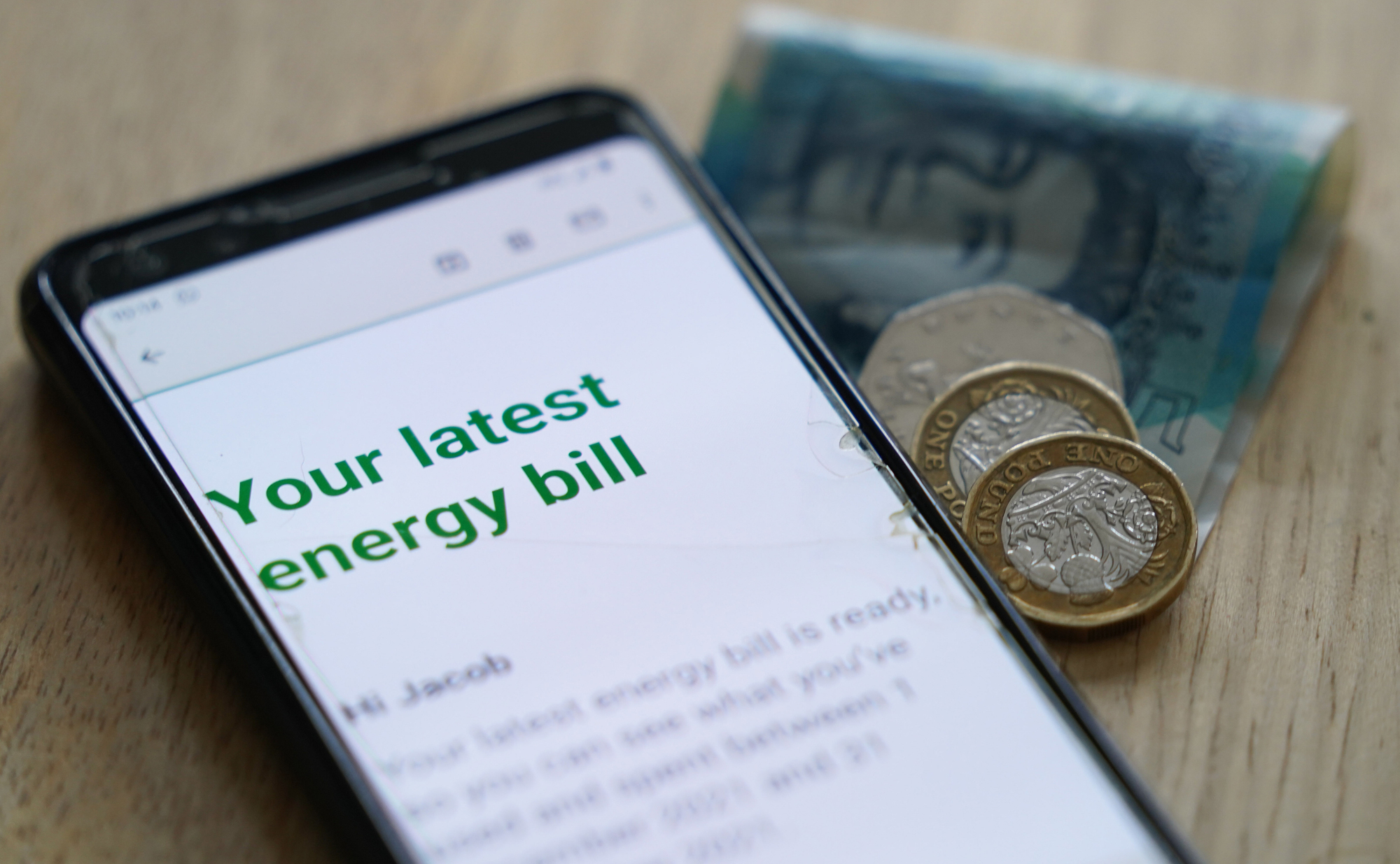
As the biggest jump in domestic energy bills in living memory has come into effect as charities warn that 2.5 million more households are set to fall into "fuel stress" and supplier websites remained unresponsive to customers.
A constant feature of Irish life in the past two years has been the Government preparing us for bad news.
We had it before every Covid announcement, where whatever pain was coming in the form of stricter restrictions was flagged well in advance. And, when those decisions were made, the voices we heard were usually from the sectors affected and the impact it would have there.
Indeed, throughout the pandemic, the public has been at the whim of factors largely outside their control as the virus raged.
Since the Russian invasion of Ukraine, the Government has been at it again.
But this time, it’s been on energy prices. It’s another factor the public has no control over whatsoever but must deal with its consequences, nonetheless.
The message on this from Government is a mixture of “this is awful, we’ll help” and “but there’s only so far we can go”.
When Russia invaded Ukraine on February 24, Tánaiste Leo Varadkar told the Dáil: “The price of energy is going to rise and that will have a knock-on effect on the price of food and the price of other things.
“The Government has intervened to help and will continue to intervene to help, but we need to be realistic too.” When Bord Gáis hiked their prices with the average electricity and gas bill rising 27% and 39%, respectively, Minister Eamon Ryan said “we were aware of that coming” and that it would cause “real difficulties”.
And, last week, the Taoiseach admitted that higher energy prices are here for the “longer haul” but said the Government couldn’t “react on a weekly basis” to the cost-of-living crisis after Electric Ireland hiked the price of gas and electricity by almost a quarter.
And then SSE Airtricity hiked its prices, meaning an extra €670 per year for dual fuel customers.
What it all means is that, whilst more pain is certainly on the way, the Government is scrambling to offer further supports to the millions of us facing much higher energy costs this year.
But unlike Covid, the difference is that the writing has been on the wall in terms of energy costs for some time.
Analysis from Bonkers.ie highlights 35 separate price hikes from energy providers in 2021. Since energy prices began to skyrocket in October 2020, so have our bills. And the price hikes in recent weeks are not the final chapter. There will be further rises before the year ends.
As Daragh Cassidy, head of communications at Bonkers.ie, pointed out after SSE Airtricity hike on Friday: “The small comfort is that the increase doesn’t come into effect until May when hopefully it’ll be far warmer. But households will just be faced with astronomical bills next winter.”
Meanwhile, the number of requests to the Society of St Vincent De Paul for help with fuel was up almost 500% in February on the same month in 2021.
SVP’s Mary Waide said: “In my 20 years as a volunteer with SVP I have not before witnessed the depth of poverty that such a diverse range of people are currently experiencing.”
The €200 electricity credit we’re all set to get in the coming weeks will be obliterated by the price hikes
It’s a full-blown crisis. And there seems to be little the Commission for Regulation of Utilities (CRU) can do to stop these hikes.
CRU says on its website that its “key focus” is the “effective monitoring and the development of policies and processes that will provide a high level of protection to customers and promote competition in both wholesale and retail markets”.
When Bord Gáis Energy announced its hikes, for example, CRU said that vulnerable customers are entitled to additional protections and suppliers are required to have a vulnerable customer register in place and actively engage with customers who they think may be eligible to inclusion.
And the advice from CRU, from the charities and from the companies themselves is for people in difficulty to engage with their supplier. Under the regulations, suppliers should not disconnect a customer who is engaging with them and must offer a range of payment options for customers in arrears.
The Government is being urged to compel energy providers to provide the cheapest possible tariff to customers. Minister Eamon Ryan is to discuss it with CRU and said “we are best off seeking their precise advice about any unintended consequences”.
The CRU told the that any measures must be “carefully designed” to avoid damaging competition in the market. They also pointed to the benefits of switching which is frequently cited by CRU and the Government as a means of saving money on bills.
And, even if it’s mostly bad news outside of our control, informing people what they can do to help reduce their bills or can expect in terms of support would give them at least some kind of hope to cling to, according to Dermott Jewell from the Consumers Association of Ireland.
Mr Jewell says that one size doesn’t fit all, but a large-scale communications campaign from the Government or CRU on what customers facing high bills can do now would be of benefit.
“If it’s on citizens information [website], fine. If it’s in post offices, fine. Banks, newspapers, social media. It needs to go through every possible media. We need to start considering that now.
“It’s about getting that information to the consumer. Right now, we’re being told there’s a focus being put on smart meters. I’d ask for a show of hands on how many average consumers who own one actually know how to use it.”
“That communication has to happen,” Mr Jewell added. “People are either struggling already or realising that they’re going to struggle. This is something that isn’t going away.”
CONNECT WITH US TODAY



Be the first to know the latest news and updates