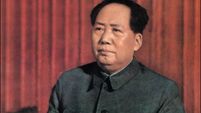
Outdated idea of masculinity the key to Putin's war
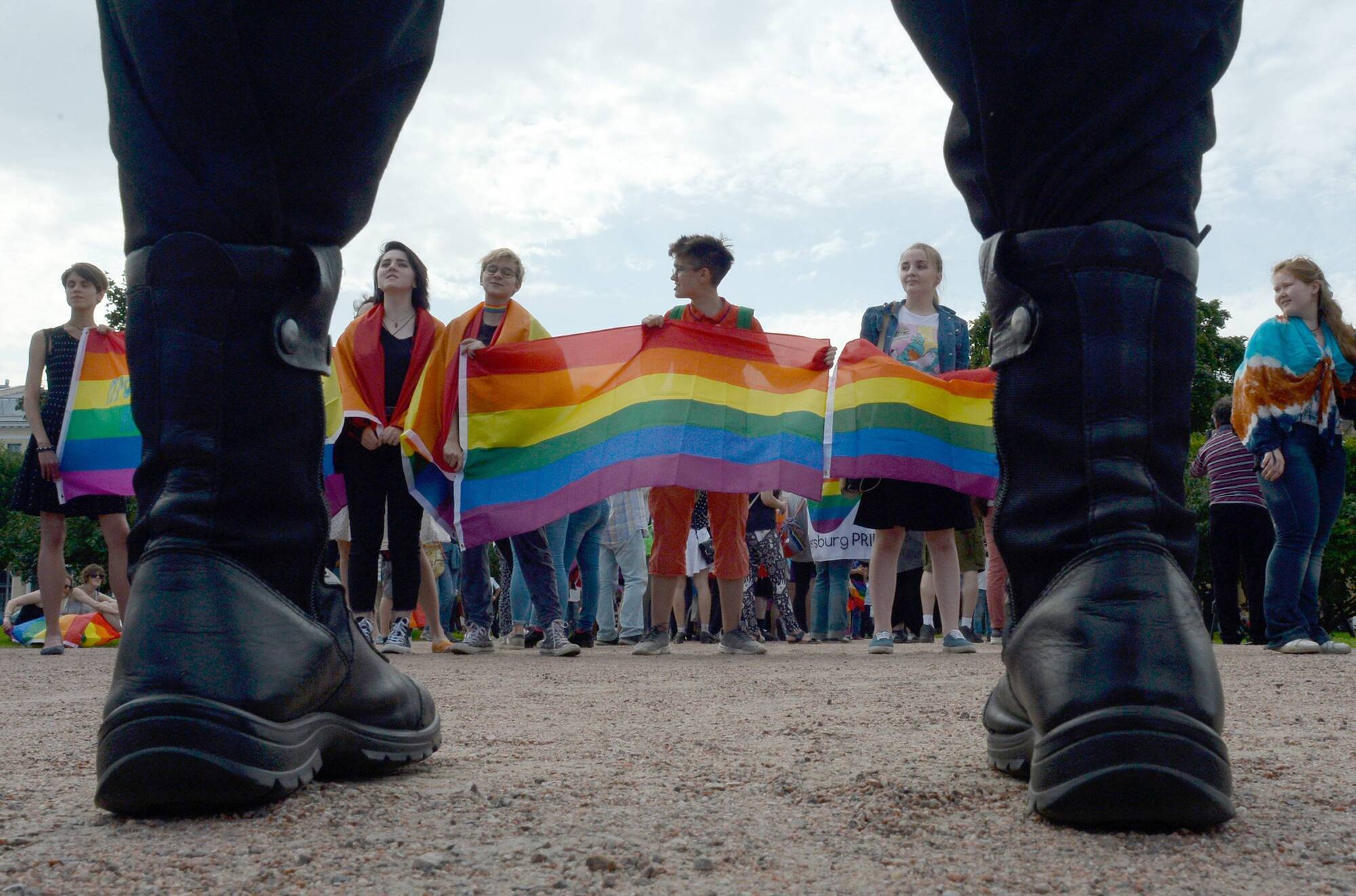
People wave gay rights' movement rainbow flags during a gay pride rally in Saint Petersburg in 2017; it took over a decade for Putin to start oppressing the LGBT community — mainly to contradict values in the West. Picture: Olga Maltseva/AFP via Getty Images
Assistant professor at the School of Sociology at UCD, Alexander Kondakov, has been researching law and sexuality in Russia for a number of years, he says Russian president Vladimir Putin represents an outdated kind of masculinity.
"It is something I hope we are leaving behind,” says the researcher.
“Remember, last year, James Bond died. For me, it marked the end of a certain type of masculinity.
"It’s the same with Putin and Putinism. It’s his last song. It’s a cruel song with a lot of bloodshed. But that’s it.”
Whether this sort of violent masculinity and the war as the ultimate manifestation of it is widely supported in Russia, is another question.
“Opinion polls in Russia are conducted basically at a gunpoint.”
The Kremlin claims that the war in Ukraine is supported by over 71% of the population.
Nevertheless, conveying a certain image of masculinity has been an important pillar of Putin’s policies.
“Putinism is based on revanchism. It is based on an image of a strong powerful man with outdated ideas about relationships between people, including gender relationships.
"In that model, you can act violently. You can achieve your goals by forcing people to do something.”
It is especially appealing to those who need a revanche for the losses they’ve experienced during the fall of the Soviet Union and the 1990s.
Vladimir Putin has been articulating those losses himself: the loss of the USSR as a country in general, followed by the necessity to adjust to the market economy in the '90s.
“The pillars on which the Soviet masculinity rested were lost as well. Among them, the employment at industrial plants.
"Many of those plants turned out to be redundant and were shut down, diminishing the Soviet working-class masculinity.”
Men lost their jobs, their wages, and their prestige.
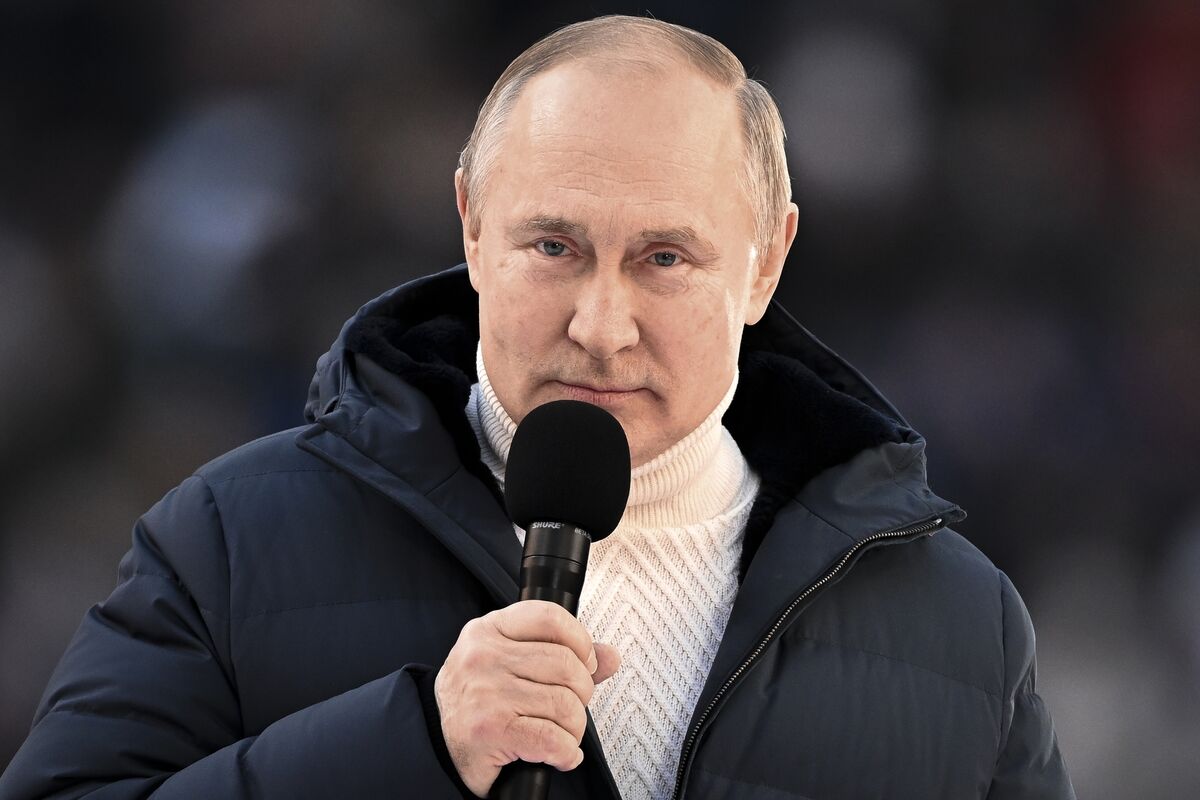
For over two decades, the Kremlin, led by Putin, has been exploiting those feelings of grief, revenge, and desire to take back control.
This model of masculinity — of a man who is powerless but wants to reclaim respect — can be seen in Putin’s war strategy, says Mr Kondakov.
“A domestic abuser after being humiliated at work, underpaid, pushed around in a pub, comes back home and beats up his children and wife. That gives him some satisfaction.
"That’s Putin’s strategy in this war.”
In that world of masculinity, there’s no space for non-heterosexuality. Yet, it’s more than a question of personal freedoms for Putin.
Opposing the West in its support for LGBT rights with Russia’s ‘family values’ became a cornerstone of his politics pictured as a civilisational watershed.
LGBT wasn’t an issue for Putin at the beginning of his presidency in 2000.
The interest in regulating sexuality started in the 2010s and took a legal shape in 2013, becoming the 'gay propaganda' law, Mr Kondakov explains.
According to the Kremlin, the law was designed to protect children from materials that can cause “minors to form non-traditional sexual predispositions”.
There are two reasons why it took over a decade for Putin to start oppressing the LGBT community, Mr Kondakov explains.
First, internally LBTQ rights and “being queer” wasn’t problematic in the early days of democracy in post-Soviet Russia.
“It was relatively clear in the 1990s that there were freedom and human rights in Russia, and this is what the country was thriving for.”
Secondly, there wasn’t much pressure to protect LGBT rights internationally.
“The decriminalisation of homosexuality in Ireland took place in 1993. Exactly the same year as in the Russian Federation. Homosexuality was criminalised in some states in the US until the beginning of the 2000s.”
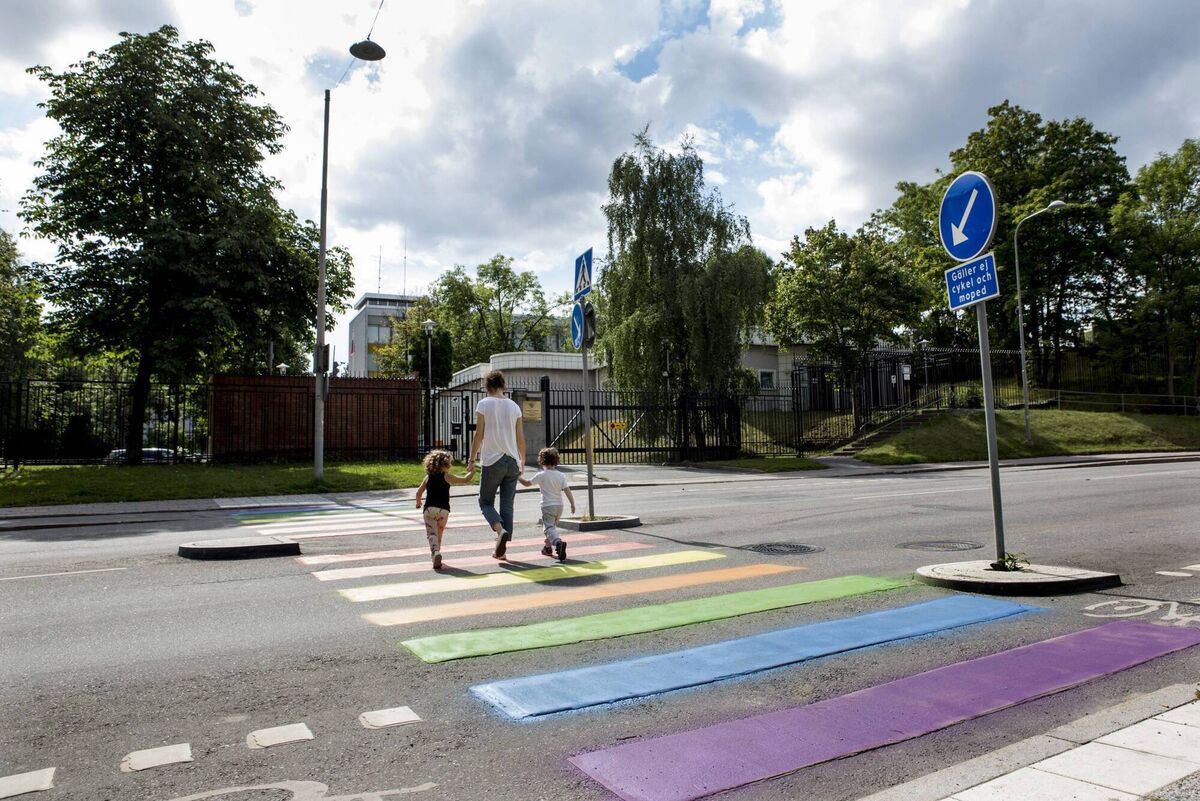
In the 2010s, when countries across the world started to make progress in protecting LGBT citizens from different types of rights infringements, including in the area of family legislation by adopting same-sex marriages, the narrative of the Kremlin changed as well.
“That was a very good chance for a country like Russia which wants to contradict the West to show the exact opposite stance to them.”
Mr Kondakov says that it fitted perfectly with the idea of a revanche. Putin promised his people that he can “undo” the tragic events of the late 20th century and “make Russia great again”.
He could, the researcher says, compete with the West by offering his citizens the best in the world healthcare, education, and overall happiness.
“This, however, requires investment, money, planning, and actual growth of welfare. Which is not the case in Russia.
"So you do the comparison on a symbolic level: just contradict everything they say in the West. They say LGBT rights are human rights? You say: they aren’t.”
The urge to contradict the West is such that if we imagine that the EU was supporting “traditional values”, Putin would contradict that too by showing support to the LGBT community.
“I don’t think he’s very ideological and truly cares about either family values or LGBT rights. It’s a means to an end to him. He’s a cynical guy,” the researcher believes.
Amid the war and growing repression against any dissent, Mr Kondakov can’t give any optimistic forecast about the future of the LGBT in Russia.
He points out that since the start of the war, Putin and those close to him have once again repeated several times that gender and sexual freedoms are seen as the main threat to Russia.
The speech of the Russian Orthodox Church leader, Patriarch Kirill, is one of the most telling examples.
In his sermon from March 6 in the Cathedral of Christ the Saviour, he says: "There’s a test today. A very simple one, and a horrifying one at the same time. It’s a gay parade. The demand to conduct a gay parade is a test of loyalty to that powerful world.”
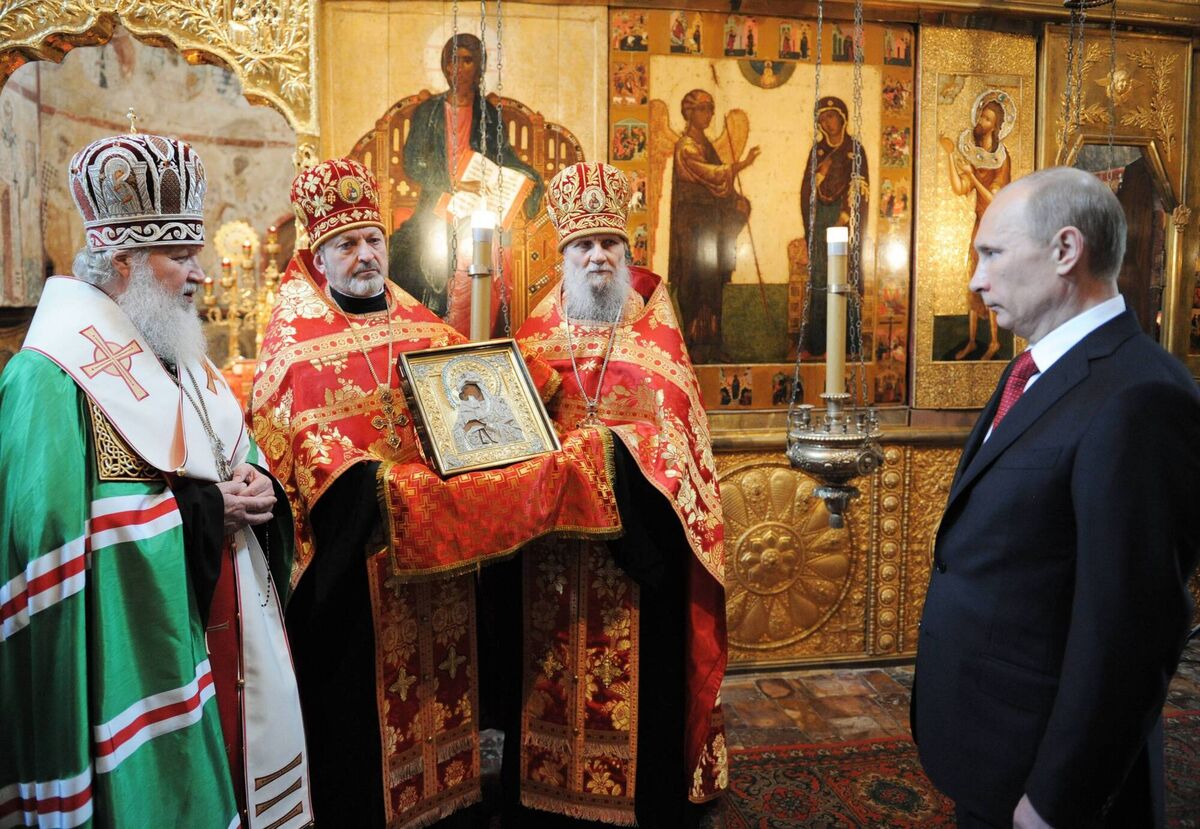
"So, there’s a war now to stop a gay parade from happening in Donbas. A crazy idea but it sends a signal to the public from the government. Be not mistaken, the Patriarch acts together with the Russian government in all issues considered.”
Mr Kondakov also reminds us of Putin’s own recent addresses, in which he spoke about the “fifth column” and “national traitors” who “can’t do without foie gras, oysters, or the so-called gender freedoms”.
According to Vladimir Putin, identifying those people is “a natural and necessary self-purification of society.”
"If someone in the LGBT community still had doubts [whether or not they’re safe in Russia], this is it. The worst is happening,” warns Mr Kondakov.
He adds there’s a lot of truth to what "these mad people” in the Kremlin are saying: “I’m sure that many of those who like gender freedoms also like oysters. And that’s OK.
"You cannot distinguish people and kill them simply because they like oysters. Or gender freedoms. That’s an idea that Putin can’t understand.”

CONNECT WITH US TODAY



Be the first to know the latest news and updates