Ailish Drake: Thoughtful design of public spaces can make a difference to women's safety
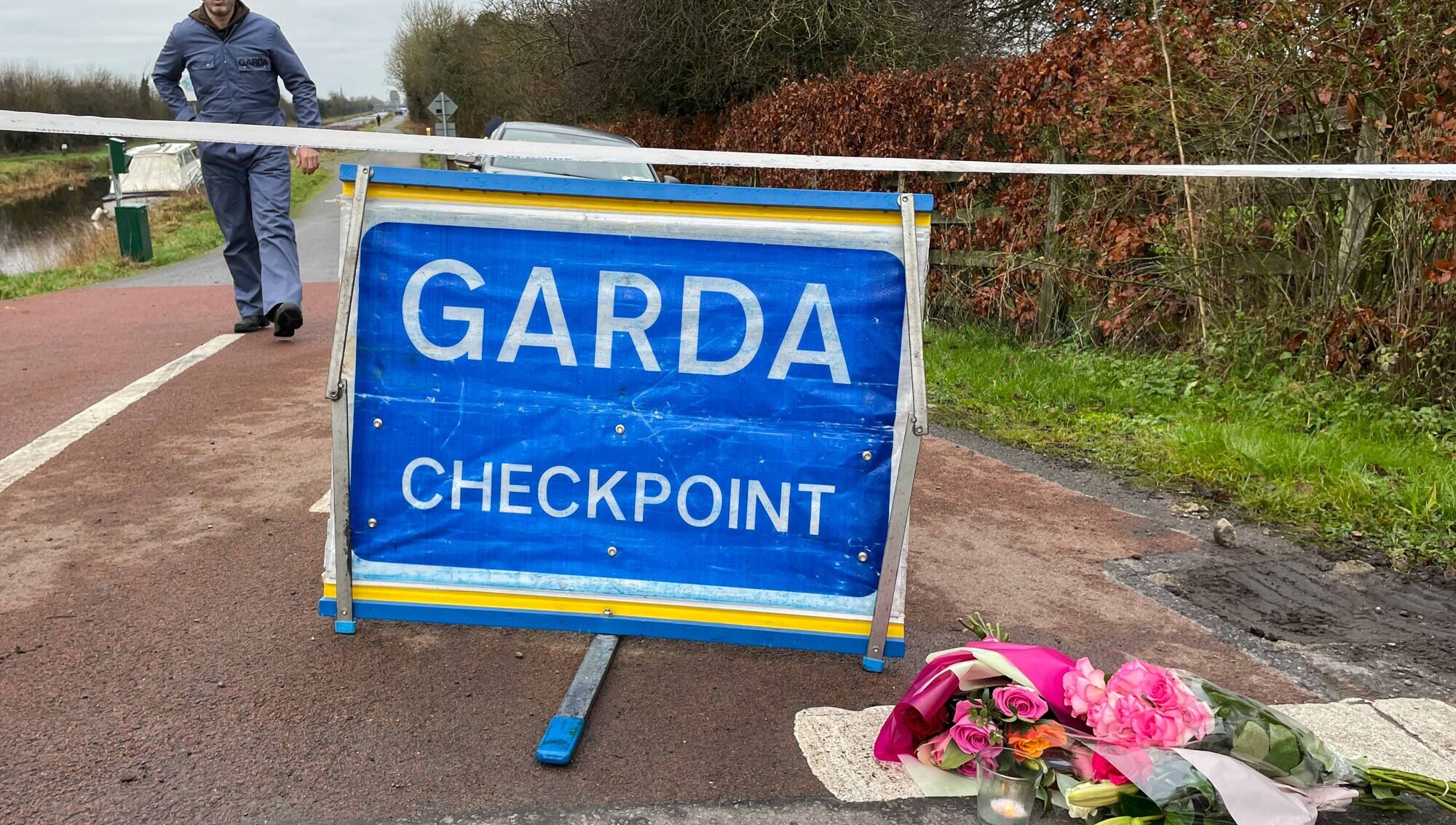
A Garda checkpoint at the Grand Canal Towpath, Capancur, Offaly, near the scene of the fatal assault on Ashling Murphy. Picture: Eamonn Farrell/RollingNews.ie
That Ashling Murphy was out for a run in the middle of the day when she was attacked and murdered is both disturbing and heartbreaking. It makes us question how something like this can happen and what we can do to ensure something will not happen in the future.Â
An article by Dr Niamh NicGhabhann, ‘Public space design needs to address safety concerns’, in last Thursday's analysed the complex issue of violence against women. Examining the role of designers, architects, councillors, and planners, she wonders if design solutions for public spaces won't solve the problem of violence against women. Can they make a difference?
Only when gender-inclusive design is a key component of planning for public space. Public space takes many forms. The space that we use for getting around, exercise, and recreation is widely varied, including riverside walks, canal banks, mountain trails, public squares, parks, streets, and lanes. Many of these spaces are not 'designed' or 'planned' per se, as they already exist. New developments, where spaces can be 'designed', make up a small proportion of the public space used by women daily. The real opportunity lies in understanding how existing public space can be made safer through design interventions.
The responsibility for designing and maintaining most public space in Ireland falls to engineers in local authorities, who see these places primarily as spaces people need to move through as quickly and efficiently as possible. Architects have for years been highlighting the need for public realm and urban design upgrade projects to be design-led and people-focused, rather than a small part of a traffic-management plan. Much of this public-realm work is still carried out by civil, structural, mechanical, and electrical engineering teams, with very little focus on people-first design, let alone gender-inclusive design.
What guidelines or supports exist to ensure women are safe in our public spaces? The Design Manual for Urban Streets and Roads (DMURS) includes a number of design audits, road safety, pedestrian and cycling audits, mobility and visually impaired, visual quality and community audits, but has yet to include an audit around gender-inclusivity or women's safety.Â
The NTA have made a gesture towards safety by including a checklist on 'personal safety and feeling of safe in surroundings’ in their recently published 'Universal Design - Walkability Audit Tool for Roads and Streets'. Transport Infrastructure Ireland (TII), in 2020, published a more detailed study, 'Travelling in a Woman’s Shoes', which set about understanding and addressing the differing needs of women and men using public transport and active travel. The RIAI Town and Village toolkit references safety and inclusiveness through passive surveillance. We are beginning to understand the need, but we are way behind on addressing it.Â
Anne Cronin, in her article of March 30, 2021, called for local authorities to ensure that a gender-equality strategist be included in the new active travel teams across local authorities, saying, 'We must consider how these hostile environments feed into a firmly held view that the streets in many of our towns and cities are unsafe.' She argues that a gender-inclusive approach benefits many excluded groups: Persons with a disability, children, older people, under-served communities, and ethnic minority groups.
We need to take the issue of violence against women in the public domain much more seriously. As designers, we can make public space safer for women, but there must be mechanisms to allow us to do it. The Government needs to invest time, resources, and funding into research. As Dr NicGabhann says, 'Listen to people, even when their stories are uncomfortable and difficult to hear, and take that learning into the design of our public spaces.' In order to design and renew public space and make it safe for women, gender-inclusive planning must be a key component of auditing, consultation, and the design process. This requires new roles in local authority teams and requirements written into the procurement of design teams. Guidelines, informed by evidence-based research, should be developed and safety audits of existing public space should be carried out.
It is clear to us all, given the events of recent days, that public space design cannot, in isolation, fully protect women from violence. Who could have thought that a well populated recreation route in Tullamore could be an unsafe environment in the middle of the day? However, it would be both cruel and irresponsible to shirk our duty to try. As a woman and an architect, I am calling on other women, men, architects, planners, engineers, elected representatives, and policy makers to advocate for gender-inclusive design to create a safer place for women.
Rest in peace Ashling Murphy.