Rory Hearne: What will 2022 bring for the housing crisis?
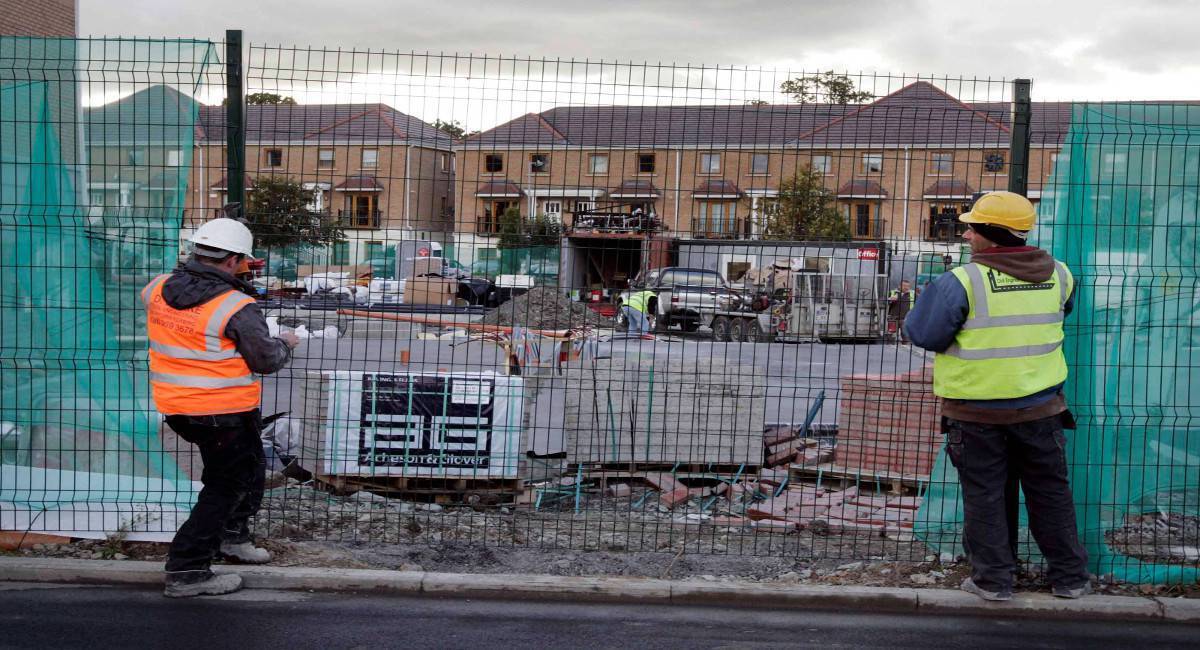
Housing For All was launched, but too many proposals are not due to be implemented for years to come.
What will 2022 bring for the housing crisis? Are there any signs of hope and what should the Government do?
Rents and house prices had stabilised in 2020 due to the Covid rent freeze and eviction bans, but returned explosively in 2021.
Rents reached all time highs and house price increases in double digits, with supply at an all-time low in many areas.
When Covid subsided in May, the human impact of the housing crisis started to get the coverage it deserves.
Pensioners spoke of being unable to afford the rent and facing eviction into homelessness.
Younger couples told heartbreaking stories of delaying having children because they were stuck in unstable private rental housing, and their life dreams being lost because of housing policy failure.
Millennials living at home in their parent’s box room spoke of the impact on their mental health and plans to emigrate.
The had important coverage of hidden homelessness, the ‘crisis within a crisis’ for disabled people, the scandal of vacancy and dereliction, and the recent horrific story of landlords advertising properties at reduced or no rent in return for sex.
On a positive note, the cause of the crisis was seen, not in millennials spending too much on avocado toast, but in bad Government housing policy that stopped building social and affordable homes and rolled out the red carpet to real estate investor funds.
The public also spoke up and Generation Rent took action protesting evictions and vacant derelict properties.
In May, the investor fund purchase of homes in Maynooth, facilitated by Government policy, enraged a generation locked out.
Unfortunately, 2021 was another year Government failed to take systemic and radical action on housing.
Housing For All was launched, but too many proposals are not due to be implemented for years to come.
It is politically significant that this year, 2022, is the last year of a Fianna Fáil Taoiseach in Government.
Micheál Martin said housing will be his number one priority after Covid, but will he take the required action?
Here are 12 key housing issues we’re likely to see in 2022, and what Government could do to tackle them.
- Housing supply will be inadequate with too much of the wrong supply — unaffordable small rental units. House prices will rise further, reaching Celtic Tiger prices. Just 26,000 homes will be built, far from meeting housing need. Most new homes will be unaffordable to buy or rent for average earners. A quarter of all new built homes in 2022 will be bought by global investor funds to rent. In Dublin, it will be even higher. In 2021, 56% of new built homes in Dublin were apartments, mostly bought up to rent by corporate landlords. New homes are not being built in smaller cities and towns. The delivery of new homes fell by 26.4% in the south-west in the third quarter of 2021. The Government should take active measures to stop house prices rising further. Price inflation from bidding wars for homes and estate agents’ role need to be looked at. Tax measures to stop investor fund purchase of existing and new homes are required, as is a high vacant homes tax.
- The Government will miss its affordable housing delivery targets. The direct supply of affordable homes (social, cost rental and affordable purchase) by the State is critical to solving the crisis. Most Housing For All affordable purchase homes are to come from the market, further pushing up prices. Government should fast-track delivery of new-build homes via local authorities, Nama, and the Land Development Agency. Instead, it is taking supply away from the market via leasing and social housing purchase.
- The shortage of skilled construction workers and rising costs will be a barrier to housing delivery. The Government should create a national state home building and retrofit company to build affordable homes on public land.
- Rents will rise further with a tsunami of evictions of tenants, for no reason other than the landlords wants to sell their property or try get higher-paying tenants. A one-year temporary ban on evictions, and the removal of the ability of a landlord to evict a tenant to sell the property, is needed. Landlords can sell, but the tenant must be left in their home. A real rent freeze and measures to actively reduce rents are also needed.
- Homelessness will increase. 2,513 children and their families are now homeless. The eviction ban is a key measure to stop homelessness along with priority for homeless families in social housing allocation.
- Emigration will return, and for the first time in Ireland’s history, not due to a lack of employment but the lack of affordable homes. Employers will find it increasingly hard to source workers who can’t access housing. Generation Rent and Stuck at Home need hope and the prospect of affordable secure homes.
- Covid and remote working will continue to impact, with relocations out of Dublin and back to towns and smaller cities. A regional home delivery plan should extend the Ó Cualann affordable housing model across the country.
- Calls for a referendum to put the right to housing in the Constitution will grow. This is recognised as an important step to ensuring the housing system provides a secure, affordable, decent standard home for all. The referendum would help change attitudes to housing, treating it as home, not just property, similar to how the marriage equality referendum brought about positive changes.
- Insecure, unsafe, and uninhabitable conditions of Travellers will continue. Traveller children in Cork described their living conditions as ‘hell’ on their halting site. A comprehensive Government response based on treating Travellers as equal human beings is needed.
- Climate inequalities in housing will increase and retrofitting targets will not be met. Housing should play an important role in climate targets but current retrofit plans are based on individuals paying, leaving behind those unable to bear the cost. It’s another argument in favour of setting up a state building company to deliver retrofitting for all.
- Inaction on vacancy and dereliction will rightfully lead to public frustration. There will be no vacant homes tax in 2022 despite its potential supply of homes. Local authorities need funding to purchase derelict property on a major scale and enforce the Derelict Sites Act.
- Finally, I do see hope in the societal shift in our cultural attitudes towards seeing housing as a home not just an asset. Millennials have reached boiling point and when Covid subsides, 2022 is likely to see the return of public outcry and protests on housing. There’s also hope in new affordable housing being built by O Cualann, housing associations and local authorities. They are the green shoots of a solution but need to be upscaled massively.

CLIMATE & SUSTAINABILITY HUB
CONNECT WITH US TODAY



Be the first to know the latest news and updates