Eamon Quinn: How Kingspan's PR fiasco reignited public anger over Grenfell
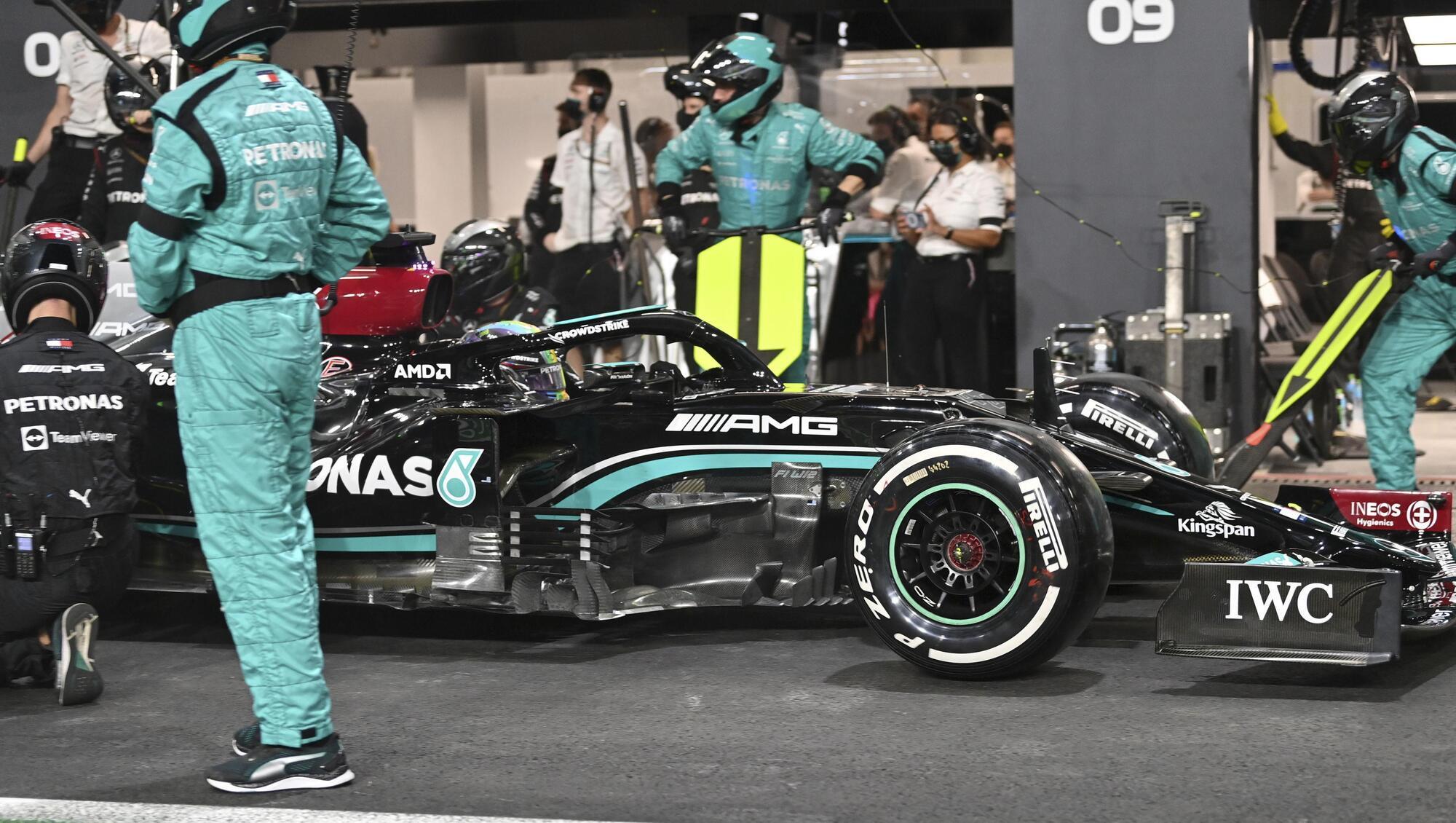
The 'Kingspan' logo on the car of Britain's Lewis Hamilton during the Formula 1 Saudi Arabian Grand Prix in Jiddah on December 5. It was the first and last time the Kingspan name appeared on the Mercedes cars. Picture: Andrej Isakovic, Pool Photo via AP
Every year or so, the media trade papers compile their lists of public relations disasters involving large companies that invariably lead to questions and head-scratching over how PR and marketing advisers can get it so badly wrong.
In Britain, the case of career-self-immolation by jewellery shops boss Gerald Ratner is much storied, while former BP chief Tony Hayward all but trashed the reputation of the British oil giant in the US over his crisis management of the deadly oil spill that refused to stop leaking from its underwater Deepwater Horizon facility more than 10 years ago.
Much more recently, AstraZeneca, the British-headquartered vaccine maker, was caught in the headlights late last year over its tardiness to supply data to regulators in the US, at a time when the world was waiting for news about the efficacy of the Covid jabs in fighting the coronavirus. Rival vaccine makers BioNTech-Pfizer and Moderna, with their mRNA technology, arguably never looked back.
Such corporate reputational disasters are studied at MBA management schools to drill down to their individual causes, but many are simply rooted in a bewildering mis-location of common sense by their public relations and marketing advisers.
Unfortunately, an Irish company, Kingspan, may make the cut to be included in the PR fiascos for study by management students in the future.
Kingspan is best-known for its insulation panel boards and for other building products used in offices and homes worldwide. It is a hugely successful manufacturer with its base still deeply embedded in Ireland at its Co Cavan head office home.
It is also one of the few Irish-founded companies to make it to the world stage and has grown into a multinational that the stock market values at €18bn.
By way of comparison, Ryanair’s market worth is slightly less at €17.8bn; Kerry Group at €20bn is slightly higher; while CRH is much bigger again with a valuation of €35.5bn. But by any measure, Kingspan is a big deal.
However, over a year ago, Kingspan started to give evidence to the inquiry that was set up to explore the causes and learn the lessons from the fire that killed 72 people in their homes at the Grenfell Tower in London, in June 2017.
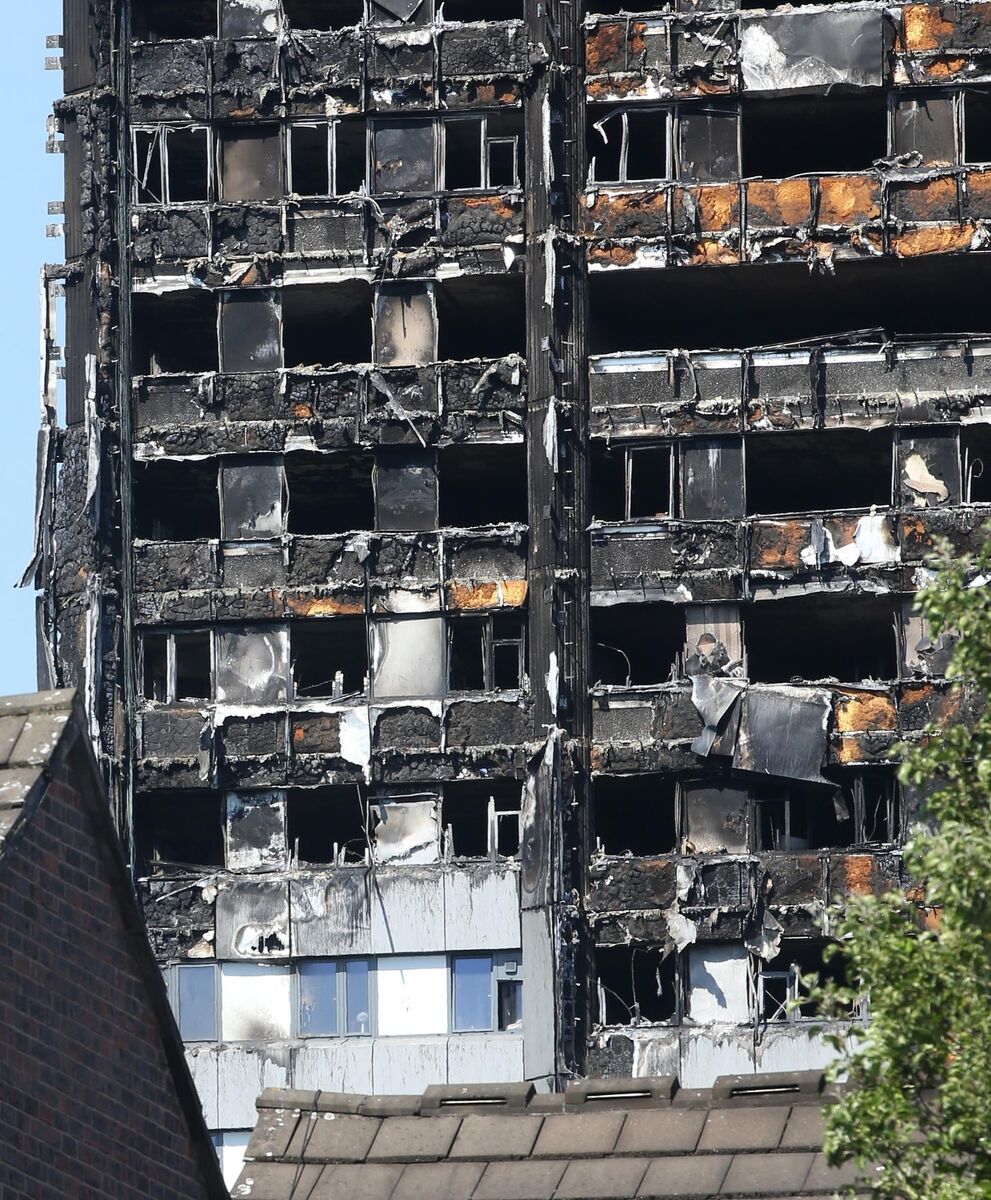
For a while, the charred Grenfell residential tower block became a symbol for the gaping inequalities in the rich world: How could it be that the lives of 72 people living in public housing in one of the richest districts in the world, the Royal Borough of Kensington and Chelsea, located in one of the richest cities in the world, be so readily consumed by fire?
Former British prime minister Theresa May subsequently criticised her own political response, not least in failing to meet initially with the Grenfell survivors.
The origin of the Irish company’s involvement in the official inquiry goes back to the small amount of its so-called K15 product that was used as an insulator in the residential building.
Kingspan has repeatedly said it had no part in the exterior cladding and that only a small amount of K15 was supplied and "substituted without our knowledge".
It has also condemned "unacceptable historical conduct and emails" which emerged during the inquiry between employees at its Kingspan Insulation UK business.
Other firms and the conduct of the emergency services and fire brigade in London have been under the spotlight in the inquiry that is still ongoing.
The Grenfell inquiry also heard that Kingspan worked with a public relations firm to lobby MPs weeks after the blaze and that Michael Gove was at the time among the politicians identified as a key decision maker.
Mr Gove – who is still in the British cabinet and whose wide ranging responsibilities include housing – was to play a role in the Kingspan story in recent weeks.
But by and large Kingspan gave its evidence and its shares — as far as such things can be ascertained during the Covid crisis — after an initial bumpy ride were little affected by its participation in the inquiry.
A year on, many people in Britain — an important market for Kingspan — would probably be hard-pressed to recall any link between the manufacturer and the Grenfell Inquiry.
Then, out of the blue, Kingspan announced this month that its logo would appear on the panels of the Formula 1 car driven by Lewis Hamilton and on the cars of other Mercedes-AMG Petronas drivers, as an official team partner. The Petronas part of the F1 team refers to the oil and gas giant.
The sponsorship deal included Kingspan’s involvement in a “sustainability” project, whereby it would work with Mercedes “to draw together expertise from diverse fields to contribute to the team’s objective of pioneering new approaches and technologies for emissions reduction in motorsport”.
“It is not a typical sponsorship deal because there is a lot of room for synergy and for technology overlap,” a London-based spokesman explained.
The spokesman for Kingspan in London at the time denied to the that the company was involved in an extreme case of corporate greenwashing, not least because an oil giant was also involved in the F1 team.
Within days, the row escalated.
Mr Gove, the British housing and communities minister, said the Grenfell families had “the right to be hurt and aggrieved” over the Mercedes sponsorship with Kingspan, and Grenfell survivors and the bereaved accused the F1 team of “sports wash sins” and called for a u-turn, the reported.
Then Lewis Hamilton distanced himself from the deal. The Saudi grand prix on December 5 was the first and last time the Kingspan name appeared on the Mercedes cars and the “sponsorship and sustainability” deal reportedly worth millions of pounds was at an end, a week after it was first publicly announced.
But the fallout for Kingspan, its sports sponsorship deals, and its links to the Grenfell Inquiry has continued.
Last week, it took another turn as the focus fell on Kingspan’s sponsorship deals in Ireland.
In his latest intervention, Mr Gove let it be known a few days before Christmas that he had written to Ulster Rugby "asking them to reconsider their relationship with insulation firm Kingspan" as the Grenfell inquiry has yet to conclude.
He urged Ulster Rugby to reconsider its longstanding sponsorship, a deal that includes the naming rights by Kingspan of the Ravenhill stadium in Belfast.
The spotlight also fell elsewhere as journalists asked the company about its sponsorship with Cavan GAA and its naming rights over Kingspan Breffni Park.
Kingspan has so far not commented on the latest events and a spokesman for the IRFU late last week said it was too early to comment. A spokesman for the GAA said such sponsorship arrangements were struck at a local county level and a spokesman for Cavan GAA said last week it had no comment to make regarding Kingspan.
No matter the way it works out, it appears that Kingspan will be unable — for at least the time it takes for the Grenfell Inquiry to conclude and report its findings in full — to strike the huge sponsorship deals that it evidently seeks to drive further international growth.
It already marks one of the biggest public relations fiascos to be faced by a large Irish company in recent times.
How far the fiasco over a sponsorship deal that re-raised its link to the Grenfell Inquiry will hurt the manufacturer in its key markets of Ireland and Britain remains to be seen.
CONNECT WITH US TODAY



Be the first to know the latest news and updates