Cop26 diary: Women demanding to be empowered in climate fight
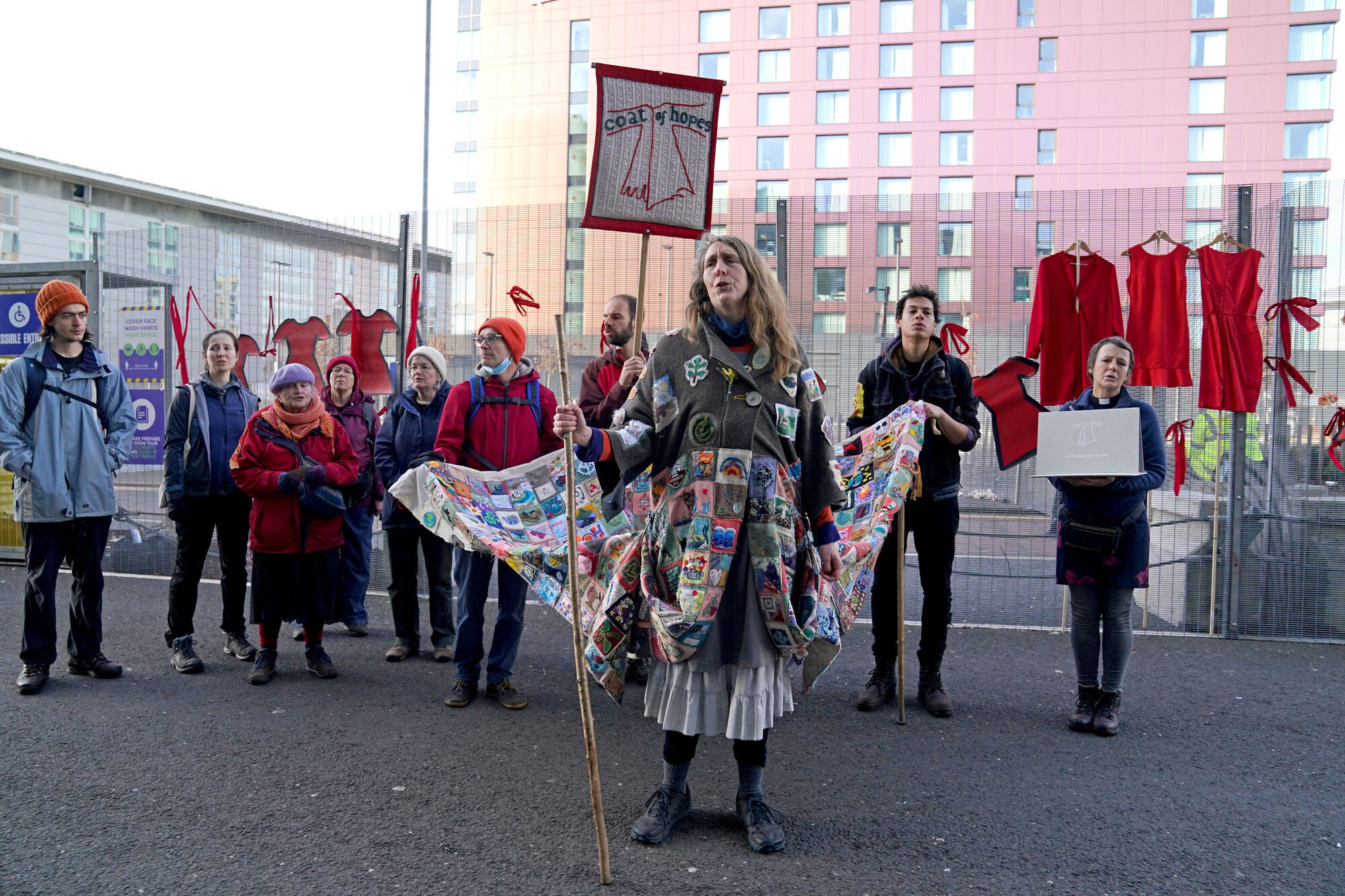
Protesters at the entrance to the Cop26 summit in Glasgow on Thursday. Picture: Andrew Milligan
Day 10 of Cop. It is a mild, sunny day in Glasgow and the queues to get into the Scottish Event Centre, locally christened the Armadillo, show no signs of slowing. The world leaders have left but the ministers are on site, negotiating the finer points of the promises made last week. This is where the work really gets done.
The mood has changed. Last week ended on an optimistic note. We were on target for a reduction in global warming of 1.8C by 2100 if all countries abided by the commitments made in the summit.
This week, after a more careful analysis of the promises, this has been re-estimated at a 2.4C increase to temperatures by 2100, far from the 2C reduction target, not to mention the aspirational 1.5C. Some of the promises were double-counted, already contained in national plans submitted to the UN.
The detail in the plans is also lacking. Cop26 president Alok Sharma gives a warning to delegates there is a lot of work to do before Friday, adding there is “still too far between us".
Laurence Tubiana, architect of the Paris Agreement, which lays down the targets we are now trying to meet, was unequivocal: “Greenwashing is the new climate denial. We need to be honest and truthful to make these commitments a reality.”

To add to the woes, the climate finance target is also predicted to be missed by several million.
Funding under this target can assist the implementation of mitigation measures (ways to reduce emissions) or assist adaptation (ways to cope with the impact of climate change).
The funding of mitigation measures is being favoured, instead of splitting the funding between the two areas.
There is also a growing tension around the position on ‘loss and damage'. This is a fund and a mechanism to cover damage caused by climate change, or as one minister from the Dominican Republic succinctly put it, “death and destruction”.
There is a fear that to contribute to this fund is an admission of liability. The nuances and conditions attached to the funding are frustrating developing nations and small island developing states. To highlight the very real threat to his home, the foreign minister of Tuvalu, a Pacific Island nation, recorded a speech while standing knee-deep in water. “We are sinking,” he said. "So is everyone else.”
Against the backdrop of negotiations and tensions, the broader conference continues. Themes including gender and science have been discussed, with the focus on gender, a topic that has long been neglected in climate matters. Talks, workshops, and plenaries are held throughout the venue, queues forming for some of the more popular events up to an hour before they begin. UN police politely tell attendees that there is no more space and to move along.
To raise awareness of the disproportionate impact of climate change on women and girls around the world, a 3.5m puppet of a young Syrian refugee named Little Amal arrived at Cop26 after walking 8,000km from the Syrian border. She shook hands with attendees and took centre stage alongside politicians and campaigners.
Climate change is not gender neutral and its impacts amplify existing inequality. Women are often tasked with household and caring duties and in developing nations it is the women who work the land in order to support the family.
Extreme weather events caused by climate change disproportionately affect their lives. Failing crops and the burden of household duties means there is less time and money for girls to attend school, excluding them at an early stage from the education system. Armed conflict and farmer herder conflict (conflict over contested land use) are both exacerbated by climate change. Figures from a UN report indicate that 80% of people displaced by climate change are women.
With a focus was on liberating women to play more of a role in the economy, Nancy Pelosi, speaker of the US House of Representatives, rechristened the Build Back Better Bill currently being deliberated in Congress as the Build Back Better with Women Bill.
She reaffirmed the US’ commitment to climate change and the need to recognise the centrality of women in the climate fight, finishing her speech with “when women succeed the world succeeds".
Nicola Sturgeon, the Scottish first minister, opened her speech by stating that climate change must be seen as a feminist issue, but it was Tarcila Rivera Xea, a Quechua activist and advocate for indigenous rights, who cut through the sweeping soundbites and captured true sentiment, by stating: “Women are not pleading to be supported, they are demanding to be empowered.”
- Rhoda Jennings is a PhD scholar in the faculty of law at UCC researching how science and scientific evidence feeds into European environmental legislation.
CLIMATE & SUSTAINABILITY HUB