Failure to connect: How has the National Broadband Plan crashed so badly?
Just 27,000 premises have been rendered in a position to join the NBP network to date. For context, the previously-stated target figure for the end of 2021 was 115,000. File picture
You can’t digest the latest twist in the seemingly never-ending saga that is the National Broadband Plan effectively without first considering the inept series of circumstances which made up how it came to be in the first place.
Prior to the Department of Communications appearing before the Public Accounts Committee to discuss the plan on Thursday, it had emerged that just 27,000 premises have been rendered in a position to join the NBP network to date. For context, the previously-stated target figure for the end of 2021 was 115,000.
We’re less than two years into the new plan and the rollout is already at least six months behind schedule.
When the catch-all fall guy that is the virus was rebuffed as an excuse by the committee members, the department's secretary general, Mark Griffin, instead listed off a flood of other reasons for the system having ground to a halt before it had even begun, including supply chain and other logistics problems, delays in recruiting staff, travel restrictions across Europe, and even a lack of accommodation for workers.
However, one reason stood out: the fact that one of the three originally planned-for subcontractors – the UK-based Kelly Group, which National Broadband Ireland (NBI) had commissioned to lay the 140,000km of fibre cable required by the plan, had never gone to work at all.
Instead, it had “postponed” the opening of an Irish office and had never even begun work on its proposed side of the contract.
All of this added up to a situation which saw just 4,000 properties connected as of May of this year.
That figure has now grown to the aforementioned 27,000. Bear in mind the easiest properties are supposed to be the ones connected first. The really difficult, remote ones are still to come.
Addressing the PAC by letter in early August Mr Griffin said “momentum is building on the project”. But can we believe that, given all that has gone before with this most-maligned of projects?
The NBP has been in development for more than nine years at this stage, having been first announced by Labour’s then minister for communications Pat Rabbitte in August 2012, with a proposed delivery date of a minimum 30MB speed broadband across the country by 2020.
The contract itself wasn’t even awarded until November 2019, following a process that could only be described as calamitous.
The €3bn deal for the delivery of high-speed internet to 544,000 rural homes and businesses was eventually awarded to the Granahan McCourt consortium, backed by American businessman David McCourt, which had been the sole bidder after other interested parties such as Eir, Siro and SSE had all backed out.
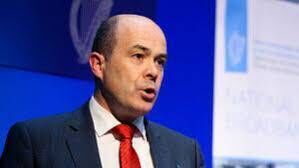
A €3bn public deal with only one bidder is not a good sign. Nor is the fact that then communications minister and independent TD Denis Naughten had been forced to resign in October 2018 after it emerged he had attended a series of previously-undisclosed dinners with Mr McCourt earlier that year.
From the award of the contract though, the least the taxpayer could have expected is that the plan itself would be delivered in stellar fashion, something that precious few in the political sphere thought was possible back in 2019.
In the initial months, the signs were positive enough – NBI hit the ground running, putting in place seven key subcontracts before the end of that year (including the aforementioned Kelly Group deal).
NBI has hit all its targets to date, Fergal Mulligan, the head of the NBP delivery unit within the Department of Communications told the PAC on Thursday (via a truly dreadful broadband connection in Co Wicklow, an irony which wasn’t lost on anyone present) amid exasperation among committee members that no penalties are to be applied for the plan having dropped so far behind schedule.
Those penalties will start to be delivered from February of next year, but there is, as yet, no clarity as to what format they will take, or how they will be calculated.
Similarly, there is to date no transparency as to how the NBP’s redrawn target of 60,000 connections by end 2021 (down from 115,000) was arrived at in agreement with its supervisory department.
Funny to imagine that the Government had envisioned in January as part of its remote working strategy that the NBP’s rollout might be accelerated to be delivered within five years, not seven. As Sinn Féin’s Brian Stanley remarked at PAC, we’ll be doing well to have the plan delivered by the end of the decade at the rate we’re going.
At the committee meeting on Thursday, a letter was cited from April 2019 from then secretary general of the Department of Public Expenditure and Reform Robert Watt to the Department of Communications, in which he described the NBP as then envisaged as being “a major leap of faith” and one which he could not see as being “in the best interests of the taxpayer”.
Mr Griffin’s response to that letter being raised once more was a simple one: “The key point is that the government approved it.”
And why did the government of the day approve it? The only logical reason, given its own spending watchdog was against the plan, is that it considered the political consequences of abandoning the idea after seven years would have been simply too egregious.
Which leaves us with a plan on which €132m has been spent to date, which will eventually cost €3bn (most of it payable before 2026), and which risks being so tardy that the separate infrastructure being put in place by commercial operators, some of whom had dropped out of the NBP bidding process itself, may end up superseding it. And at the end of the 25-year contract in place, the State won’t even own the network it has paid for.
That would sound like a calamitous use of resources to most rational people. If we’re to learn anything from cash-abyss projects like the NBP and the National Children’s Hospital, maybe it should be this: in Ireland, rationality doesn’t come into it.

CONNECT WITH US TODAY



Be the first to know the latest news and updates