Declan Jordan: Framing plan as a win for one party or another won't help fight climate change
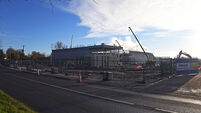
The M20/N20 between Cork and Limerick is a good example of the tension between the old approach to capital investment and the new reality that we need to wean ourselves off our car dependency.
There is much to praise in the National Development Plan launched this week in Cork. The commitments to public transport, water infrastructure, and active commuting are very welcome.
There is little new in the range of projects included in the plan. However, that the government is planning such a large capital investment in the aftermath of the pandemic shows we have learned from past austerity.
The most worrying element of the new plan is what it reveals about the nature of politics in Ireland and the paralysing effect that continues to have on necessary moves towards decarbonising our society. In this plan, the need to compromise overwhelms any sort of vision.
In an economy growing strongly with constraints on resources, such as labour, we should at least expect to see this government set out its priorities in this plan. As he fielded media questions, Eamon Ryan must have believed he is Minister for Roads, and not Minister for Environment, Climate, and Communications, and Transport.
It is clear that the focus by opposition parties and the media on roads, and which road will or will not go ahead, is an attempt to find a wedge between the parties in government. There are many regional TDs that have staked a lot of political capital on various road upgrades in their constituencies.
The M20/N20 between Cork and Limerick is a good example of the tension between the old approach to capital investment and the new reality that we need to wean ourselves off our car dependency.
As a Limerick man living in Cork, I know this road well. The road needs to be made more safe. The towns along the way are choked with large trucks and car traffic. Fixing these problems does not require a new motorway.
Galway does not need a ring road to deal with its obvious traffic problems. Our experience, and the experience across the world, is that providing more road space simply results in more cars to take up that space.
The plan states that new road investment is intended to drive economic connectivity and growth in the regions. There is no evidence that motorways bring increased economic activity between the places serviced by them.
The effect they have is to draw economic activity out of smaller urban areas towards the larger cities, as commuting is made easier. As we have seen time and time again in other locations, how long after the opening of the M20 will we see houses in Charleville advertised as just half an hour drive from Cork and Limerick.
The effect of motorways is sprawl and we are already suffering in Ireland from the economic, social, and environmental burden of sprawl.
Our world and our lives are different than they were when the previous plan was launched in 2018. Covid has upended many of our certainties, climate action has become even more urgent, and we have seen the importance of community and place in all our lives.
The government has stressed the importance of working from home for sustaining smaller towns and villages, and many suburbs of our cities. If they really believe we are in a new era of remote working, why do we need so many roads to bring us into traffic on the outskirts of our cities?
The commitment to a 2:1 ratio of public transport investment to roads investment is firmly baked in to the plan and this is good news. The focus on investment in public transport, through Bus Connects, in our cities and greater rail connectivity has to be part of decarbonisation.
I have doubts about all of the parties’ commitment to this. Jim O’Callaghan, the Fianna Fáil TD, referred to the public transport commitment in the plan as a “win for the Greens”.
There have to be question marks about whether the traditional government parties, Fianna Fáil and Fine Gael, really get what is involved in meeting our climate action goals. This is not about compromise and negotiation.
We cannot negotiate our way out of the implications of a 1.5 or 2 degree rise in average temperatures. The political approach of giving a little here and taking a little there won’t cut it anymore. We should commit to a quarter of the spend on roads that is this plan and to put these investments at the bottom of the list of priorities.
With scarce construction resources we need to prioritise new homes and new public transport investments.
This plan shows how political game-playing persists and billions of euros, glossy reports, and fancy launches are meaningless if vision and leadership is lacking.
Leadership means we need to prioritise our efforts. Otherwise we end up with something for everyone and more of the same.
- Dr Declan Jordan is a Senior Lecturer in Economics at Cork University Business School
CLIMATE & SUSTAINABILITY HUB