Whistleblower law is silent on areas crying out for reform
'This isn’t a left versus right issue. It’s a contest between those who believe democracy needs dissent, and those who are dissenting from a very democratic principle,' writes Mairéad Farrell 
Whistleblower law is silent on areas crying out for reform

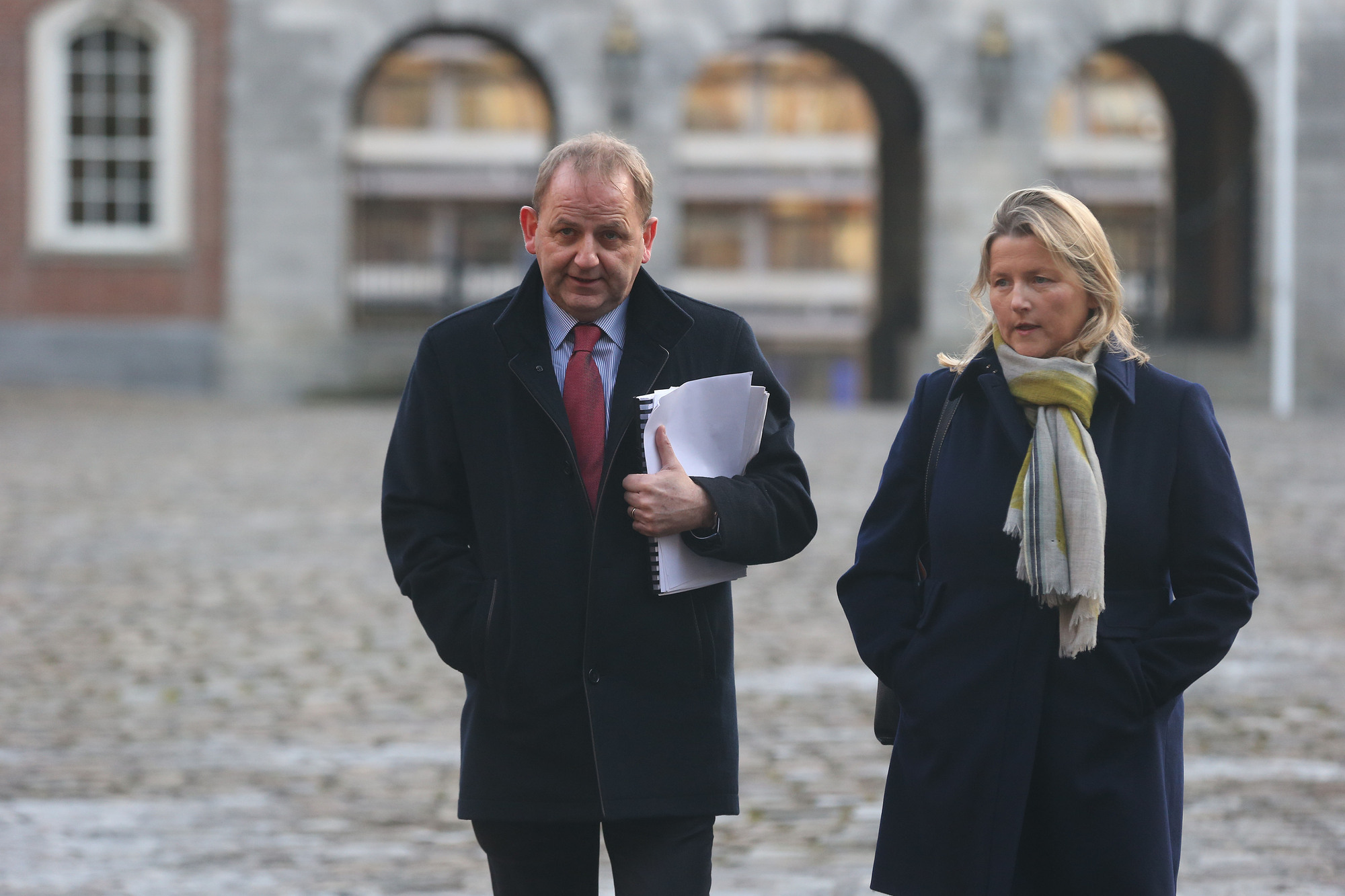
Maurice McCabe with his wife Lorriane at the Disclosures Tribunal at Dublin Castle in 2018. Picture: Stephen Collins/Collins Photos

For most of its history, this State has had a fraught relationship with the ideals of transparency and accountability, terms that are regularly invoked, but rarely made reality.

Political scientists John Coakley and Michael Gallagher described a "presumption of secrecy" underpinning government, while historian Tom Garvin noted a certain tendency towards "censorship in the name of keeping public order".

The Censorship of Film Act (1923), Censorship of Publications Act (1929), Section 31 of the Broadcasting Act (1960) the Irish Official Secrets Act (1963), are just a few noteworthy examples.

Some would argue all this is in the past, ancient history so to speak. But let us not forget the recent attempt to lock away the birth records of the mother and baby home adoptees.

So, it seems ancient history continues to live on in contemporary policy.

That’s why our whistleblowing legislation — the Protected Disclosures Act (2014) — was rightly heralded as a great leap forward. Transparency International defines whistleblowing as "as the disclosure of information related to corrupt, illegal, fraudulent, or hazardous activities" by individuals, to the relevant parties who can remedy this wrongdoing.

Whistleblowers embody the ethical spirit within an organisation. Generally, an individual, at great cost to their own mental, physical and financial well-being, decides that they cannot abide by whatever wrongdoing they have witnessed and raises the alarm.

The act recognised for the first time in legislation the importance whistleblowing plays in our democracy.

And make no mistake, there can be no democracy without dissent.

The act was by no means perfect. The definition of "whistleblower" was too restrictive, there was no provision for free legal aid/psychological services, it was silent on certain kinds of penalisation, there were caps on financial compensation, and numerous other shortcomings.

That’s precisely why I looked forward to the Government’s transposition of the EU’s own whistleblowing directive, as it was an opportunity to transform our legislation from acceptable to exceptional.

However, having now seen the outline of the new bill, there are concerns that it will be unworkable. When Minister Michael McGrath published the outline of his amendment bill designed to satisfy this transposition of EU law, it was silent on those areas crying out for reform.

Instead, it appears to be an attempt to kibosh many sound existing provisions, introduce new retrograde ones, and silence future whistleblowing. 

When an EU state transposes EU law it cannot be used as an opportunity to lower existing standards. Article 25.2 of the directive makes this explicit. And yet that appears to be the direction of travel, being carried out at breakneck speed with as little scrutiny as a possible.

Areas of concern

There are many sections of concern in the outline of the new bill. Spatial constraints mean I will have to confine myself to dealing with just three.

Firstly, there’s the attempt to remove the right, under Section 8 of the Principal Act, for public sector workers to make a protected disclosure to the responsible minister, and the corresponding protections that the worker gets.

This is regressive and appears to fly in the face of Article 25.2. It’s also the kind of naked opportunism which should be obvious to even the least seasoned of political observers. 

Why? Because it gets a minister off the hook for failing to redress wrongdoing. 

It’s an amendment which will allow the minister to essentially "see no evil, hear no evil, speak no evil".

Secondly, there’s a clause whereby a disclosure, characterised as arising from an "interpersonal grievance", can be dismissed. It should be clear that this would have the power to reject disclosures where circumstances such as bullying, unfair/discriminatory treatment or dangerous working conditions arise.

When someone attempts to reveal wrongdoing there is often a reflexive reaction on the part of those occupying positions of power, to circle wagons and cast dubious aspersions on the motivations of the whistleblower. Would this provision not offer an easy means to dismiss concerns?

Thirdly, it will create a new stepped procedure for reporting, whereby public service workers revealing perceived wrongdoing must first exhaust all the internal channels before they can report externally.

Protracted investigations

Think about this for a second; how easy would it be for an organisation that doesn’t want internal wrongdoing revealed to stymie such efforts. To engage in a long protracted investigation, a highly stage-managed process designed to elicit a forgone conclusion, one exonerating the organisation while dismissing concerns.

Constructive dissent is a hallmark of any well-functioning democracy and whistleblowing is in many ways the last refuge of the dissenter. Examples abound: Maurice McCabe (An Garda Síochána), Shane Corr (Department of Health), Anthony O’Brien (Armed Forces), Jonathan Sugarman (Unicredit), and many others who all shared one defining characteristic.

They all sought to reveal wrongdoing in the public interest, regardless of the personal cost. 

Some of these names still resound, while others have begun to fade. In the wake of the Charleton Tribunal we heard phrases like "never again" and yet seven years on a government comprised of many TDs present at that time, is attempting to drag us backwards.

I will be bringing forward my own private members' bill which if enacted, would set a gold standard in terms of international best practice. I will of course be seeking other opposition TDs support for this.

In the meantime, I am appealing to those government TDs of good conscience, and there are a few, to oppose this. This isn’t a left versus right issue. It’s a contest between those who believe democracy needs dissent, and those who are dissenting from a very democratic principle.

Mairéad Farrell is Sinn Féin’s spokesperson on Public Expenditure & Reform

x

More in this section

Revoiced

Newsletter

Sign up to the best reads of the week from irishexaminer.com selected just for you.

Cookie Policy Privacy Policy Brand Safety FAQ Help Contact Us Terms and Conditions

© Examiner Echo Group Limited