Michael Clifford: Commissioner's opposition could damage attempts to reform Gardaí
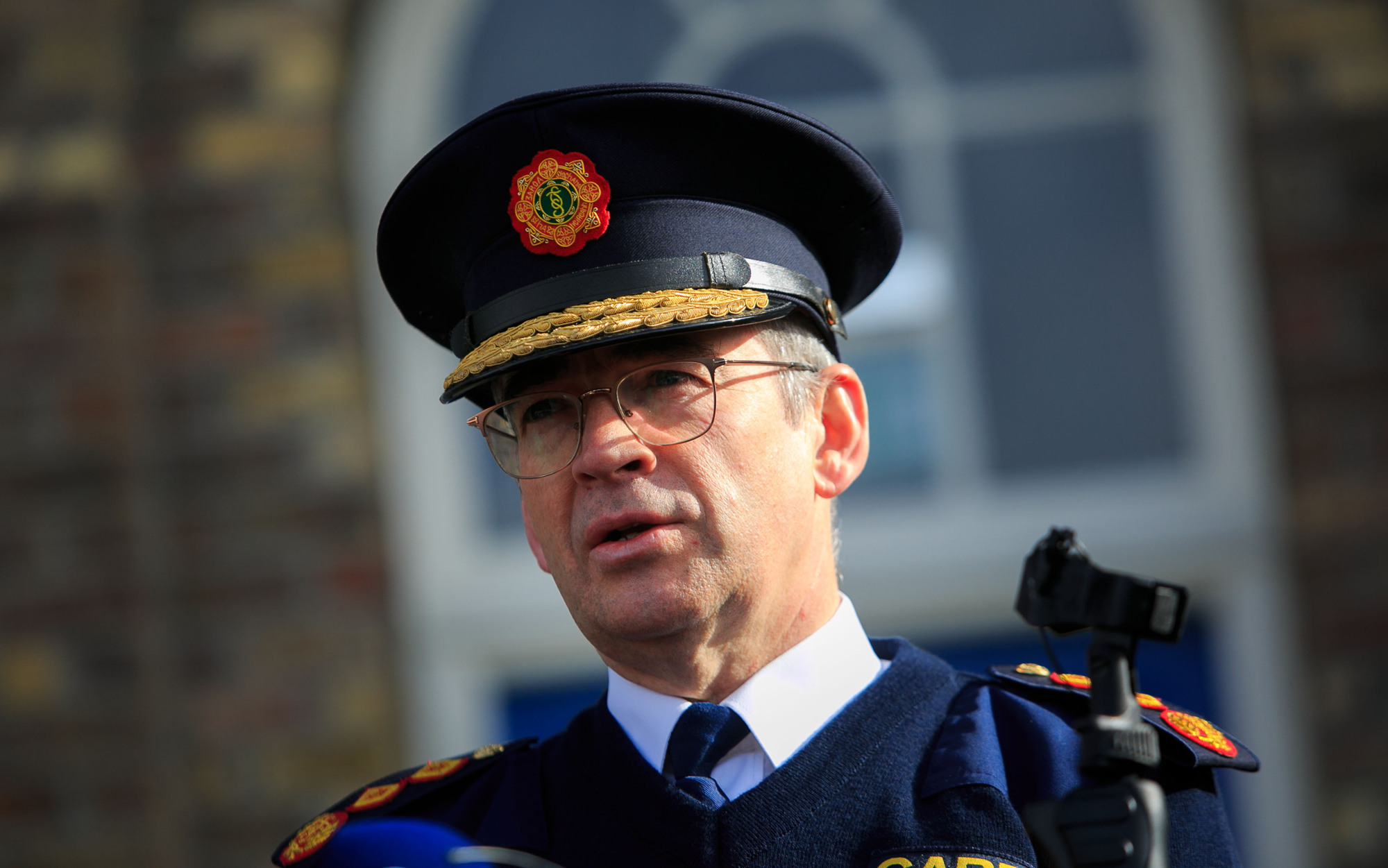
Garda Commissioner Drew Harris has said he has "serious concerns" about new legislation drafted to provide for changes to the force. Photo: Gareth Chaney/Collins
Drew Harris is not a happy camper.
The garda commissioner believes that the legislature is in danger of making a dog’s dinner of garda reform. He has written to the Oireachtas justice committee to outline his concerns on new proposed laws to oversee the functioning of An Garda Síochána.
His criticisms have come as a surprise, not least because one of the main planks of his brief, when appointed, was to implement the recommendations of the Commission on the Future of Policing, on which the new legislation is based. The apparent resistance to some reforms from the man selected to drive reform gives rise to a basic question as to whether the will exists in the force to really change.
Commissioner Harris has a range of concerns but two biggies are the nature of a new board to oversee An Garda Síochána and the extent of new powers to be handed to the garda ombudsman. The chair of the Oireachtas committee, Fianna Fáil’s James Lawless, says that he takes the concerns of the commissioner very seriously.
Read More
“The commissioner is in a leadership position and is responsible for managing and upholding the values of the organisation,” Mr Lawless told the .
“We will take his views on board and, after reviewing the legislation for due process and compliance with EU law and so forth, we will move onto the views of stakeholders and where concerns are expressed we will see if any issues arise.”
The proposed reforms are designed to finally bring the force into the twenty-first century. The first attempt to do so, in the wake of tribunals in garda malpractice in the late 1990s and early 2000s, resulted in the Garda Síochána Act 2005.
Subsequent scandals highlighted further shortcomings. So in 2017, in the wake of the Maurice McCabe affair, in particular, the commission was set up to present a new dawn.
It reported a year later to much fanfare but also some dissent. Two members, Dr Vicky Conway, an associate professor in law in DCU, and management consultant Eddie Molloy, issued a minority report which deviated from that of their colleagues.
One issue the two dissenters had was the recommendation to install a non-executive board – akin to that which exists in most corporate entities – to oversee the organisation. As it turns out, Commissioner Harris also has a problem with the proposed board, although he does appear to agree with it in principle.
“Whilst it is clearly intended that the board would have no role in relation to operational policing matters, as currently drafted, the absence of clarity and significant overlap between the respective roles of the board and the new Policing and Community Safety Authority taken together significantly risk encroaching on the operational independence of the Garda Commissioner,” he wrote to the Oireachtas committee.
(The authority is designed to take over the functions of both the Garda Inspectorate and the Policing Authority).
The commissioner’s concerns may well have substance in this respect. Vicky Conway says notwithstanding her own concerns about the concept of a board, she says there are problems with how it is constituted in the proposed legislation.
“I agree with his criticisms. The legislation is really poor and unclear. It has contradictory statements around accountability and oversight. Personally, I disagree with the idea of that kind of board anyway as it brings too much decision-making back into the guards but the problems I’m pointing out are about the way it has been worded in legislation, particularly around accountability and governance.”
(A number of other members of the commission declined to comment on the commissioner’s letter).
Dr Conway, however, does not agree with Commissioner Harris’s reservations about the extent of the powers of a new police ombudsman. The Commissioner wrote to the committee that the new powers for the ombudsman could impinge on gardaí’s constitutional rights and they “fail to lay out a framework to conduct investigations in a timely and effective manner, and most significantly of all fail to offer a process which safeguards due process and fair procedures for all concerned.”
Dr Conway says that she doesn’t see the basis for saying that the proposal transgresses fairness.
“It’s a human rights issue that it (the ombudsman) be independent and I don’t think there is any constitutional difficulty with how it is proposed,” she says.
The proposed reforms are heralded as being the most significant in a generation, but without the support of the commissioner there could be major trouble ahead. From the outside, it does look quite possible that issues around the structure of the proposed board could be dealt with through redrafting legislation in a manner that brings clarity to the functions of the separate entities concerned.
Issues around the powers of the ombudsman could be a problem of a very different order. The restraints on the current ombudsman, GSOC, have long been the subject of debate and any attempt to water down new powers are likely to face stiff resistance.
CONNECT WITH US TODAY



Be the first to know the latest news and updates