Shauna Bowers: Why can't hospital overcrowding be cured?
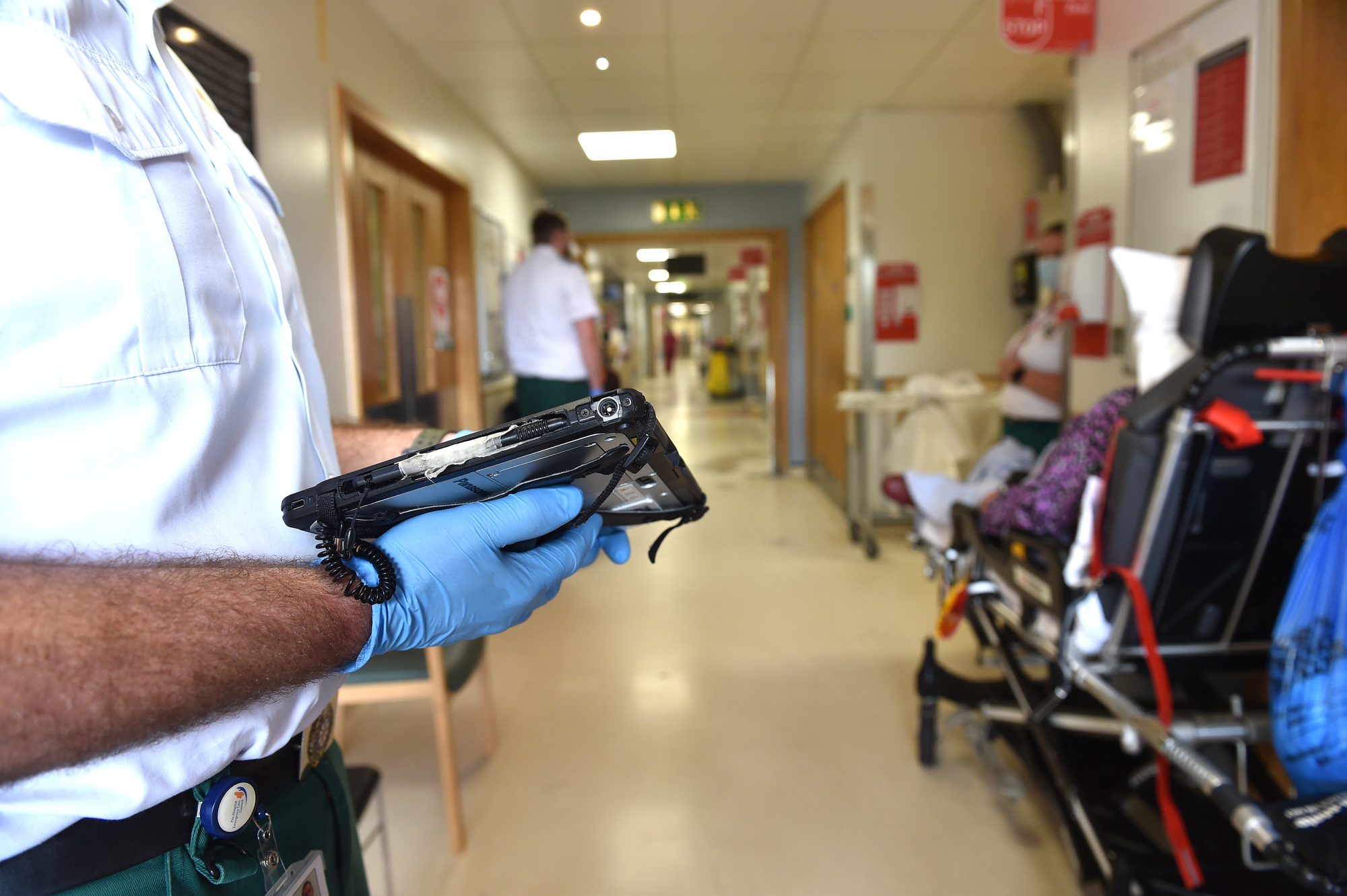
Figures from the HSE show there were 23,792 ED attendances for the week ending July 25, up 20% on the same period last year, and up 11% when compared to the same period in 2019. Photo: Dan Linehan
Prior to the Covid-19 pandemic, there was another crisis that caused havoc on our health system: emergency department (ED) overcrowding.
Attention was diverted away from the problem over the past 18 months, but now that we are beginning to exit the emergency, trolley numbers are rising once again, illustrating that the issue was merely overshadowed - not resolved.
The winter of 2019 was seen as a “crisis point” for overcrowding by many within the health service, with a record 118,367 patients waiting on trolleys during the year, according to figures from the Irish Nurses and Midwives Organisation.
Figures in 2020 were considerably lower, but fluctuated significantly depending on the epidemiological situation; when the community presence of the virus was low, presentations and admissions to EDs rose.
While the HSE opened additional beds during winter 2020, it would appear the primary driver behind the decreased use of trolleys was people deciding not to attend EDs out of fear of contracting Covid-19.
Figures obtained by the Irish Patients’ Association showed that in the 12 months to February 2021, attendances were down 200,000, while admissions were down by over 30,000.
However, with increased public confidence in the vaccination programme, many sites around the country are now under significant pressure, with some experiencing record attendances at EDs in recent weeks.
Figures from the HSE show there were 23,792 ED attendances for the week ending July 25, up 20% on the same period last year, and up 11% when compared to the same period in 2019.
Hospital admissions, meanwhile, have not risen as significantly, up only 2.6% on last year. This is a good sign, as trolley numbers are those who have been admitted to hospital, but who do not have a bed available to them.
The 3,279 over-75s who presented to EDs in that same week was 18% higher than during the same period last year and 15% higher than the same week in 2019.
This sharp rise in older patients attending hospitals, in particular, is a concern for the HSE, as they have a higher rate of admission and require longer hospital stays.
Consultant in emergency medicine at Sligo University Hospital Dr Mick Sweeney, said recently that the overcrowding at his hospital was at an unprecedented level.
Overcrowding has resulted in people being “completely unable to maintain social distancing in our waiting rooms and corridors so we are doing our best by keeping masks on everyone and handwashing but it is at a critical situation at the moment”, he told Ocean FM.
But what’s causing all of this? It would appear to be the first sign of the consequences of the pandemic restrictions on non-Covid health services.
It has widely been acknowledged that there would be health repercussions from the measures taken during the pandemic and cyber attack, with reduced screening and care likely to result in delayed diagnoses and treatment.
The Irish Association of Emergency Medicine said the rise has been driven by four different categories of patients: delayed presentations, injuries and falls, older people who have been unable to get through to a GP, and a rise in the number of genuinely sick people.

Many older people with chronic conditions went without their supports and services during the most stringent restrictions and are now at crisis point, requiring acute clinical care.
The older people are also quite frail, according to the HSE, which is likely a consequence of cocooning for the most part of a year.
The lingering effects of the cyber attack also slow down efficiency in EDs, with a lot of computers not working properly.
And, as the only 24/7 health service that operates year-round, EDs are the locations people attend when in crisis.
This means individuals with mental health issues and/or who experienced domestic violence - both of which increased during the pandemic - attend.
It is no wonder, then, that the HSE is concerned about the rising number of Covid patients in hospital, each of whom has a significant, disproportionate impact on the health service.
All of this begs the question: if hospitals are already under pressure during what is traditionally a quieter time for the health service, then what will happen during the winter period - when influenza and the respiratory syncytial virus typically cause hospitals to buckle?
Overcrowding is not a new issue. In fact, in 2006, the then health minister Mary Harney declared it a “national emergency”.
Politicians, healthcare staff and unions have recognised the significant risk ED overcrowding poses to the clinical health of patients.
The Health Information and Quality Authority (Hiqa) said ED overcrowding in acute public hospitals is putting patients at risk of harm and “breaches their human rights”.
Hiqa’s report is not surprising and the watchdog is certainly not alone in its concerns.
The issue is caused by a multitude of reasons: the shortage of beds; excessive number of delayed discharges; severe and worsening lack of consultants; the fact that there are too many emergency departments around the country and people attending EDs when it is not the most appropriate location to treat them.
But if we know the reasons behind it, then why has it continued to be a problem for close to 15 years?
The @IrishPatients has been calling @DonnellyStephen @paulreiddublin @INMO_IRL @MichealMartinTD @LeoVaradkar
— Irish Patients Assoc (@IrishPatients) August 3, 2021
for the recall of the ED task force which has not met since Jan 2020. #Noncovid patients and future patients are being adversely affected. #carecantwait @StephenAMcMahon https://t.co/rzwjMc7hQS
Steps have been taken to mitigate the crisis. A record €20.6bn was allocated to the HSE in the most recent budget, which will mean, among other things, an additional 1,146 acute hospital beds will be provided by the end of the year, as well as 66 more critical care beds.
Sláintecare, the health plan which seeks to increase community services and reduce reliance on acute hospital care, is also believed to help decongest the area, though this will be several more years before the plan is fully implemented.
But despite the money being funnelled into the service, and the plans in place, there appears to be a lack of urgency to tackle it head-on.
The ED task force, which was established to reduce overcrowding, has not met since January 2020 and in the year before that, it met only three times.
The bottom line is that now that the Covid emergency is nearing its end, the issues that previously plagued our health service have resumed, this time with the added impact of the pandemic’s aftermath.
If things are this bad now, a winter surge is almost inevitable; steps must be taken to ensure patient care is not compromised any further as a result.