Boris Johnson may pay political price for not sacking Matt Hancock
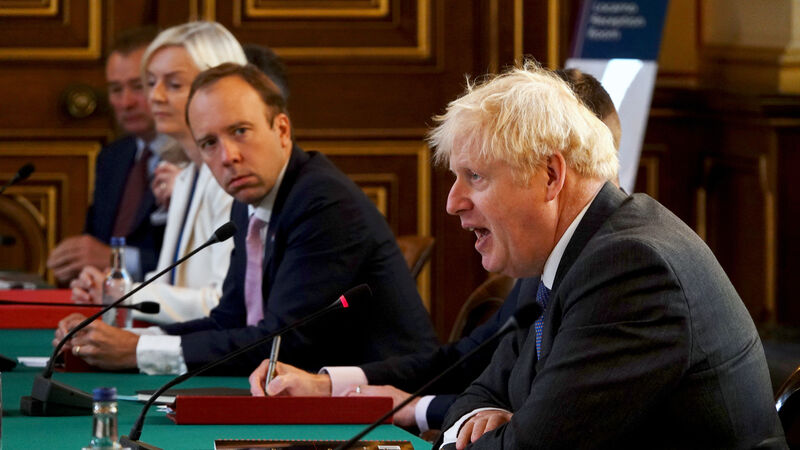
The question now troubling senior Tories, is why didnât Prime Minister Boris Johnson sack Matt Hancock.
Former UK health secretary Matt Hancock was always going to have to resign, after those already-notorious pictures of him embracing a colleague on taxpayersâ time emerged on Friday morning.
The question now troubling senior Tories, is why didnât Prime Minister Boris Johnson sack him.

Johnson had weathered several previous scandals by sending his spokesman out to say, âthe prime minister considers the matter closedâ, including Priti Patelâs alleged bullying and Robert Jenrickâs relations with a Tory-supporting property developer.
Yet this time was always going to be different: not only had Hancock had been pictured breaking the very rules he had been urging the public to comply with; he was the governmentâs key communicator of public health messages.
Next time he appeared at the podium in the ÂŁ2.6m Downing Street briefing room, he would have been peppered with questions about his own breach of lockdown guidance â and about other murkier matters such as how and when Gina Coladangelo had been brought into his department.
And worst of all for the government, the scandal combined two messages the opposition parties have been trying to make stick for months â that this government is âsleazyâ and that its principals the rules they are urging the public to follow donât apply to them.
Hancockâs position was clearly untenable on Friday morning â yet Johnson chose to try to protect him.
Keir Starmerâs response to Hancockâs resignation â âMatt Hancock is right to resign. But Boris Johnson should have sacked himâ â shows Labour now hopes to make the prime minister pay a political price for his failure to act more decisively.
Even Johnsonâs defenders say he tends to skirt confrontation and struggles to deliver difficult messages.

The former Vote Leave director Chris Montgomery wrote in the Critic magazine about Johnson struggling to dismiss a member of staff at the Spectator.
âBoris wanted to remove someone. Boris couldnât do this himself. His stratagems over the course of months trying included wondering aloud to his would-be victim: âYouâll have a private income of course?â (âNo Boris,â the victim flatly replied, âI work because I need the moneyâ). The victim found that their desk was moved to ever more remote corners of Doughty Street.âÂ
Eventually, Montgomery recalled, Johnson brought his children into the office on the day appointed for the bad news to be delivered, and then âscarperedâ, leaving a colleague to deliver the bad news in the pub.
Dominic Cummings claimed that in cabinet meetings, âas soon as things get âa bit embarrassingâ [Johnson] does the whole âletâs take it offlineâ shtick before shouting âForward to victoryâ, doing a thumbs-up and pegging it out of the room before anybody can disagreeâ.
Others who have worked with Johnson corroborate the fact that he recoils from dismissing colleagues.
Johnson has barely touched the make-up of his cabinet, aside from last Februaryâs reshuffle, in which Sajid Javid was pushed out â something Cummings now claims he âtrickedâ Johnson into doing.
Another former colleague of Johnsonâs claimed he still smarted from being sacked by Michael Howard from the opposition frontbench in 2004, over claims about his private life, which Johnson had dismissed as âan inverted pyramid of piffleâ.
Perhaps in Hancockâs case, Johnson also felt it was unwise to appear to be making a judgment about a colleagueâs personal conduct, given his own well-known record on marital infidelity. And perhaps, too, he hoped Hancock could continue to act as a lightning rod for criticism of the governmentâs handling of the pandemic.

Yet the danger for No 10 in this weekendâs events is that Johnsonâs failure to sack Hancock revives the perception of the prime minister as someone who turns a blind eye to his matesâ misdemeanours that built up in the wake of the Cummings scandal (back when he and his then chief adviser still were mates).
And it may also underline a sense that in contrast to his gung-ho public persona, the prime minister is indecisive, even a âditherer,â a charge he likes to chuck at Starmer across the floor of the House of Commons.
One former cabinet minister, who campaigned across a string of marginal constituencies in the 2019 general election, said even in the red wall seats the Tories triumphantly gained, voters âdonât much love Borisâ â but they loathed Jeremy Corbyn and wanted a government that would enact Brexit.
And even before this weekend, defeat in Chesham and Amersham suggested some traditional Tory voters may already have come to the conclusion they disapprove of the way Johnson is running the country â campaigners said cronyism came up on the doorsteps.
Former Downing Street pollster James Johnson pointed out on Twitter this weekend that last November and December, before the vaccine bounce, perceptions about Johnson in focus groups were very poor â he was seen as âweak, run by his advisers, a messâ.
One âbig thingâ, he said, could bring those perceptions back to the surface, as the joy of the jab starts to fade.
It is unclear whether failing to sack the rule-breaking health secretary could be that thing â but the excruciating images that accompanied Hancockâs humiliation seem highly likely to help it stick in votersâ minds.