Elaine Loughlin: Mother and baby home survivors deserve answers from commission

Elaine Loughlin: The events of the past week have left mother and baby home survivors angered, aghast and searching for answers.
The events of the past week will go down as another GUBU moment which has left mother and baby home survivors angered, aghast and searching for answers.
After digesting the astounding revelations made by commission member Professor Mary Daly with an almost offensive casualness at an academic seminar, this journalist had another bizarre experience the following day.
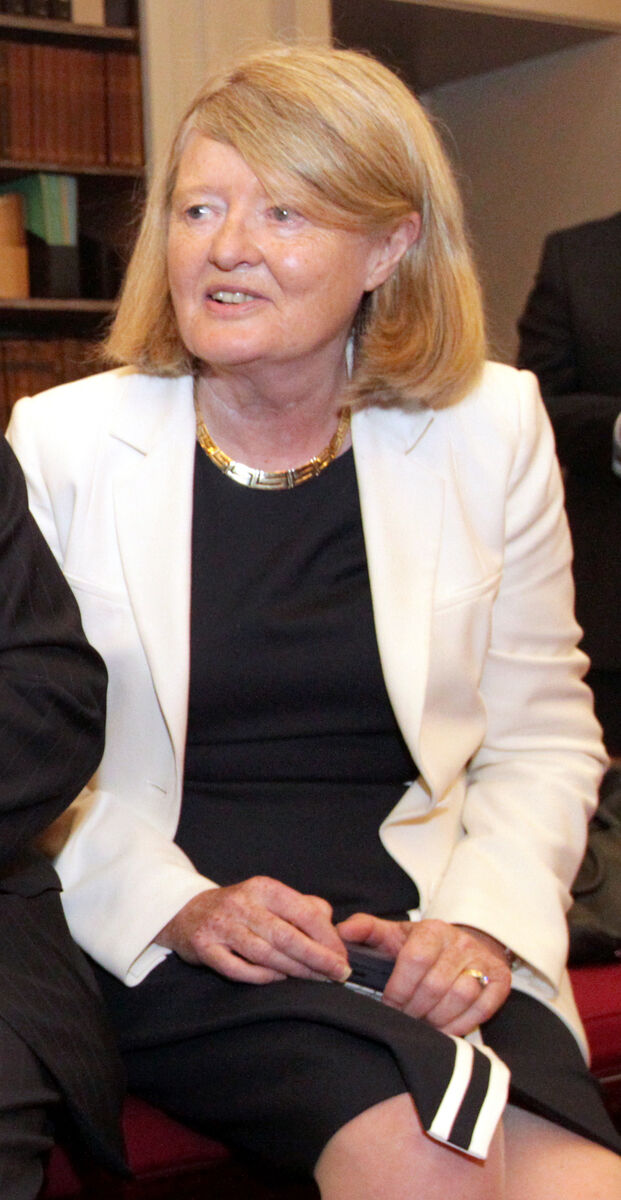
The timing of a pre-organised interview with Children's Minister Roderic O'Gorman was completely coincidental, but it turned out to be perfect.
However, after walking into Mr O'Gorman's office in Miesian Plaza, I found myself coming under polite interrogation as the minister seemed more interested in what I had to say.
Neither Mr O'Gorman nor his officials had tuned into the now infamous Oxford University seminar during which Prof Daly revealed that the testimony provided by 550 people to the confidential committee was discounted as it did not "meet robust legal standards of evidence" needed to be included in the main report.
These were merely "stories", as Prof Daly put it several times during the discussion.
Prof Daly went further in stating it would have taken "hundreds of hours" to interrogate and cross-reference the testimony given to allow this primary source to be included in the main report.
And anyway, she thought the confidential committee had been an "unwise" idea to start off with and the commission had always augured that it should not have been run in tandem with the work on the main inquiry.
Prof Daly repeatedly suggested the terms of reference also precluded the commission. But the commission’s terms of reference required it to establish a confidential committee to provide a forum for former residents and those who worked in these homes "to provide accounts of their experience in these institutions in writing or orally as informally as is possible in the circumstances".
To say Prof Daly's comments left survivors, campaigners and academics stunned, would be an understatement.
Dr Laura McAtackney summed up the mood with her tweet: "Just off the 'in discussion' seminar with Prof Mary Daly hosted by Oxford and it is not often I am lost for words but I am just dumbfounded by some of the responses, language used, obvious dismissal of survivors' testimonies as lesser forms of evidence. I don't think I've ever left a seminar feeling so aghast at what I heard."
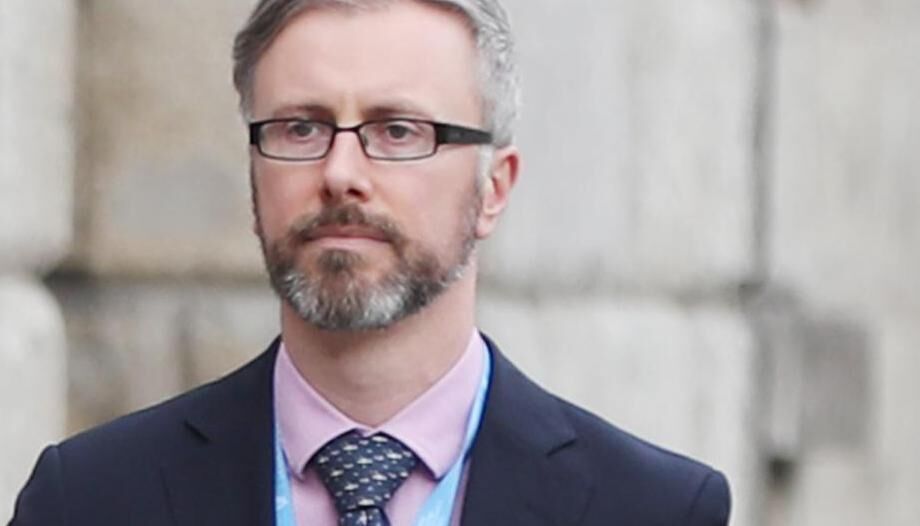
In turning up to the Oxford University academic event, it is clear Prof Daly felt she was among her own peers – even if there were a few stragglers like myself in attendance too – and she was free to let rip.
In doing so, she revealed what many had already suspected – the words of some were deemed to be worth less than others as far as the commission was concerned.
These were words uttered by survivors, some of whom had never opened up before. When they came before the confidential committee they did it because they wanted their voices to be heard as part of a commission of investigation.
They did not want a counselling session or to be part of a box-ticking exercise.
In examining these institutions, far more weight was put on official records from the time, even if these dusty ledgers arrived to the commission in what Prof Daly described as rag order.
Having missed out on the seminar, the minister wanted to get as much information as possible out of this journalist who had attended the online event.
"We didn't think we could get access," was the explanation given by Mr O'Gorman when the questions were finally turned on the minister.
It is understood Mr O'Gorman's office had made inquiries to Oxford University in a bid to get a recording of the seminar afterwards, but was told none had been made.
It was also later clarified that a person working in the research section of the department had logged on, but this was independent of the minister and his key officials.
The galling thing is, these snippets of second-hand information could be the only detail the minister manages to get from any members of the commission as there is absolutely no obligation on them to speak publicly on their much criticised report.
Speaking to the , Mr O'Gorman extended a plea to the three members of the commission to "act in a compassionate way" and to come before the Oireachtas Children's Committee to publicly answer questions on their report.
Compassion is not a word that is often used when speaking of this horrendous chapter in Irish history, which continues to impact the lives of many today.
Judge Yvonne Murphy, Prof Daly and Dr William Duncan have already refused an invitation from this committee, extended to them earlier this year when they were still employed as commissioners. Why on earth would they appear now that the inquiry has been wound up?
"It would be seen as death by firing squad," said one Oireachtas source.
Prof Daly provided another striking answer when she was queried on whether employing a trauma and memory expert was considered by the commission.
"I think, basically, we've done a job and I think, let it stand," she said before adding: "Nobody ever suggested this was going to be the last word on it."
On that Prof Daly is right, an academic forum should never have been the first place that a member of the commission spoke and it shouldn't be the last.
All three members of the now wound-up mother and baby homes commission must accept the invitation of the Children's Committee.
Mother and baby home survivors, who have been denied compassion for far too long, deserve that.
Emmett Dalton, one of Michael Collins' most trusted men and who was with him at Beal na Bláth, went on to be the first clerk of the Seanad. But his life took a further turn when he went into the film industry and founded Ardmore Studios in 1958.
In an interview with Cathal O’Shannon for RTÉ many years after the Cork ambush, Mr Dalton said: “My love of Collins – I use no other word – hasn’t altered one iota in the passage of time."
“He was a man whom I didn’t know all that long, but who I knew terribly well in a very short time. And whereas I don’t think he showed me any special favours, he was always very kind and very understanding."
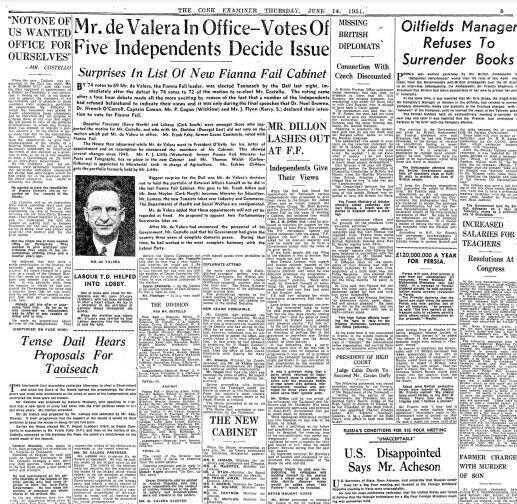
Éamon de Valera was elected Taoiseach by 74 votes to 69. The reported that "the voting came after four hours of debate made all the more exciting by reason of the fact that a number of the Independents had refused beforehand to indicate their views" and it was only during the final speeches that the five TDs declared their intention to vote for Fianna Fáil."
Emergency legislation making striking and picketing by employees of the EBS illegal and "punishable by heavy penalties" was approved by 111 votes to 19 in the Dáil. The move came as the country faced the second power crisis in a month with the rejection of Labour Court proposals by ESB mechanical fitters who had been on strike.
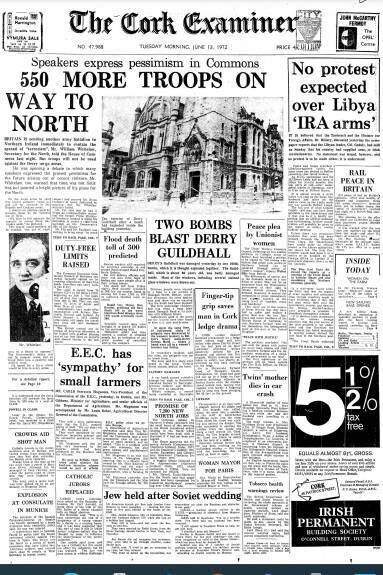
As the violence escalated, Northern Ireland secretary William Whitelaw announced that 550 more troops would be immediately sent to the province. However, he told parliament the troops would not be deployed to so-called no-go areas of Derry as he said "the government's desire was not to conquer areas, but to bring them into a peaceful and orderly state".
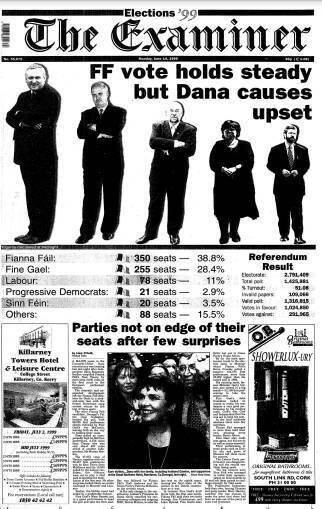
Dana Rosemary Scallon caused major upset in the Connacht-Ulster constituency by winning a seat in the European Parliament. "It's like a miracle. it's really really hard to explain," the 'All Kinds of Everything' singer said at the time.
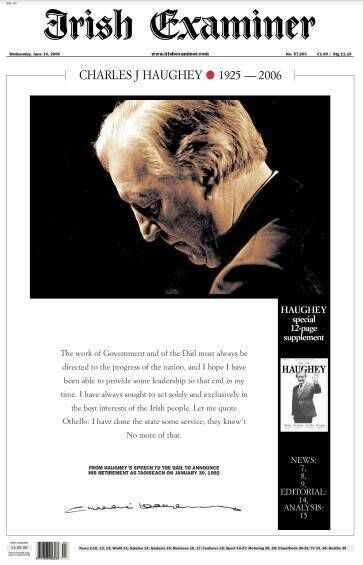
Following a lengthy battle with prostate cancer and a heart condition, former taoiseach Charles Haughey died at his home in Kinsealy at the age of 80.
TDs and senators may have a week away from Dáil business, but our MEPs will be in Leinster House to discuss the Northern Ireland protocol and the challenges of Brexit. The Seanad Special Select Committee on the Withdrawal of the United Kingdom from the European Union will hear from Barry Andrews, Ciaran Cuffe, Maria Walsh and Colm Markey.
The Oireachtas Education Committee has already heard some concerning evidence on bullying of school children and the impact this is having on their mental health. This week, they will hear international evidence and best practice when experts from Canada, Malta and Ireland come before the committee.
With the Dáil on recess, ministers have postponed their weekly meeting by a day. Considering the massive impact it would have on Ireland, the G7 decision to set corporation tax at a minimum 15% is likely to be raised.
A lot of us have really got to know our postman since the pandemic, but serious concerns have been repeatedly raised about the future of our post offices. The Transport and Communications Committee will hear from An Post CEO David Redmond on this issue.
The Health Committee will meet on Wednesday afternoon to get an update on the rollout of the Sláintecare plan from Laura Magahy, executive director of Sláintecare.
The Housing Committee will continue its consideration of the Land Development Agency Bill with Minister of State at the Department of Housing, Malcolm Noonan.
Friday
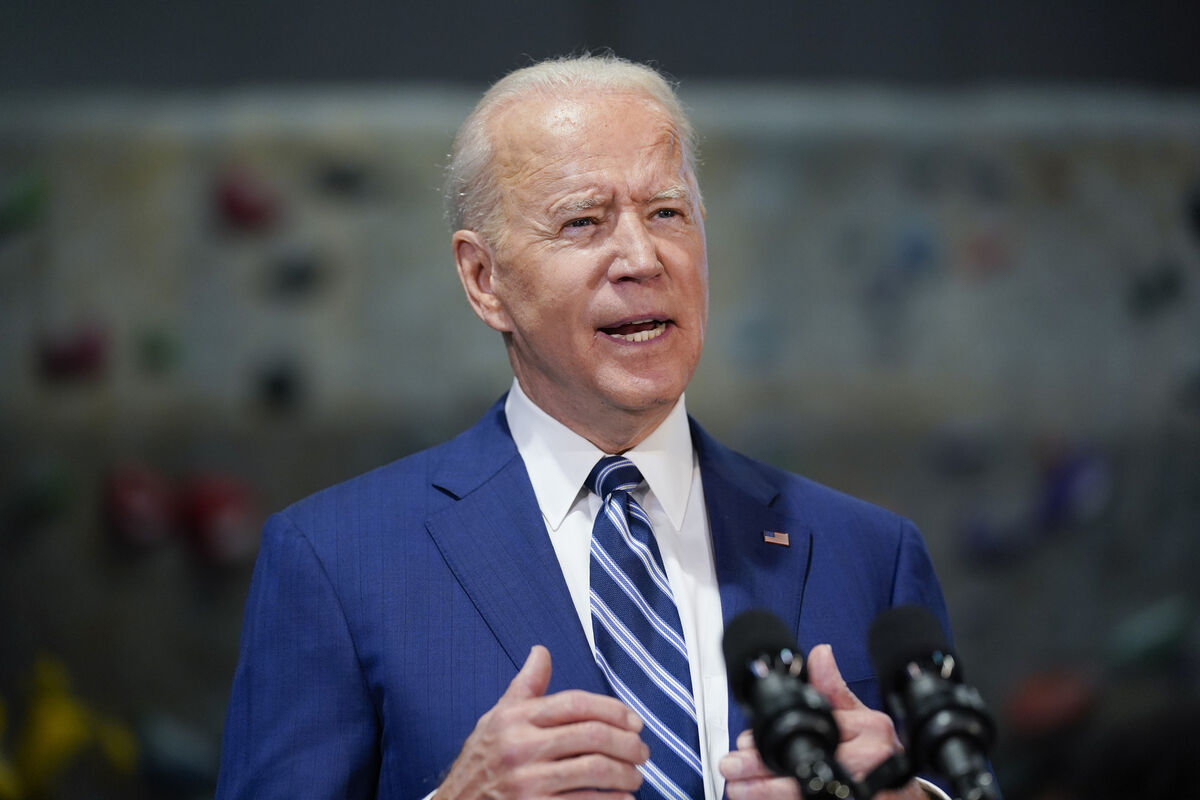
The G7 meeting of world leaders in Cornwall will be a mixture of firsts and lasts. It will be the first time Joe Biden has attended the G7 as US president, however, it will be the final meeting Angela Merkel takes part in as German chancellor.
CONNECT WITH US TODAY



Be the first to know the latest news and updates