'We feel like rubbish’: Traveller children failed again
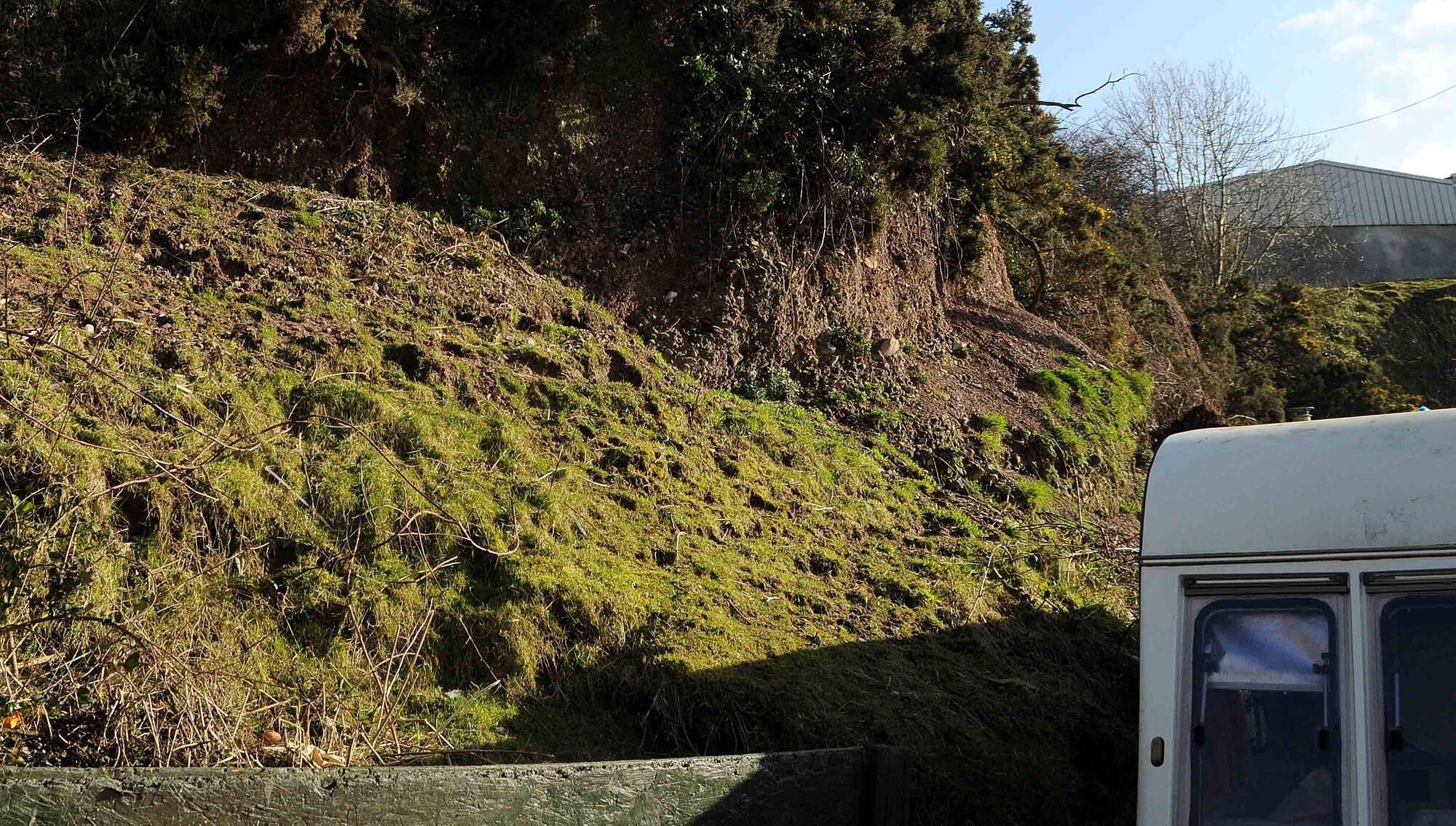
A dangerous embankment overlooking the home of a Traveller family at the Halting Site in Spring Lane, Ballyvolane, 2015. Picture: David Keane.
2021 has seen escalating international crises of social injustice and human rights violations.
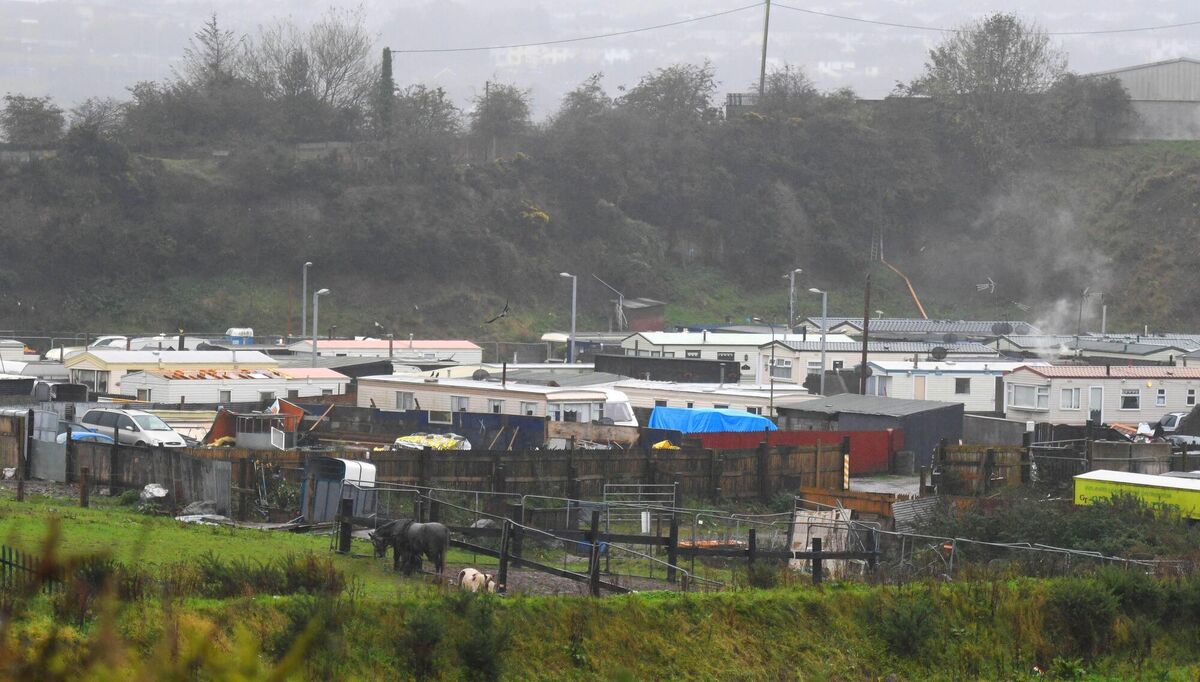
At home, Traveller children in Cork describe their living conditions as ‘hell’ and say they ‘feel like garbage’ because of conditions on their halting site. The publication of the 'No End in Site' report by the Ombudsman for Children is sombre reading.
The report exposes the severe violations of children's human rights due to insecure, unsafe and uninhabitable accommodation. Rat infestation, damp conditions, lack of sanitary facilities and heating were among many of the health and safety concerns detailed in the report.
Experiences in early childhood shape the brain's development. Negative experiences often lead to poor mental health and hinder social, cognitive, physical and emotional development.
The 1963 Report on the Commission on Itinerancy marked the beginning of a long history of the assimilation of Travellers. Sixty years later, local authorities continue to disregard Traveller culture and identity with respect to living conditions. The report recommends local authorities liaise with residents on accommodation needs.
While the local authority accepts this recommendation they have asserted that their ability to deliver on expectations is dependent on housing stock, waiting lists and the "willingness of the residents to be flexible regarding the type and location of support they are willing to accept to meet their housing needs".
For the settled population and local authorities, a house may be the perfect antidote, but this solution seethes with remnants of the 1963 report, which treated Travellers as a group to be absorbed into society.
Traveller sites represent much more than a place to live. In the words of social activist, bell hooks, they are essential ‘sites of resistance’ which signify cultural survival for Travellers.
Sites have important psychological, social, economic and cultural purposes in Travellers' lives. As a recognised ethnic group, Travellers have a right to culturally appropriate housing.
There should be no expectation of 'flexibility' regarding the 'type' of accommodation provided. These assumptions disregard the core aspects of Traveller life and resort back to treating Travellers as a group to be assimilated into society.
To shift the marginalised position of Travellers in Ireland we must address the impoverishing factors facing the community: culturally inappropriate and substandard accommodation.
It’s widely recognised that precarious accommodation affects opportunities to secure employment, access education and sustain health.
Despite an overabundance of Traveller policy frameworks developed, implementation continues to be weak. The National Traveller and Roma Inclusion Strategy (NTRIS) 2017-2021 is deemed to have made no tangible differences for Travellers in Ireland. The Roma Civil Monitor, found Travellers’ accommodation situation had worsened. Education had regressed, and employment initiatives were not targeted.
Having a secure home is one central element for human dignity, health, and overall quality of life. The Housing Traveller Accommodation Act 1998 obliges local authorities to implement accommodation programmes to provide culturally appropriate accommodation. However, local authorities are falling far short of the mark in these obligations.
Data published in 2019 by the Department of Housing, Planning and Local Government shows that fourteen local authorities drew down zero funding from the Department of Housing, Planning and Local Government.
Across all local authorities, 2018 saw a 48% underspend on Traveller accommodation.
A robust monitoring and evaluation framework must be devised to guarantee total disbursement of ring-fenced funds. This framework must remain cognisant of the recommendations of the Traveller Accommodation Expert Review.
If this is not implemented, appropriate sanctions should be bestowed on the Local Authority. If local authorities can’t fulfil their duties, funding should be allocated to an independent body.
The publication of the report has been broadly welcomed. But, how many more reports must be published before change is made? Lack of political will and local planning objections to the building of sites has led to the crisis now being faced by residents in Spring Lane. Words on paper don’t make warm beds. They don’t clean clothes or keep the electricity on, or create safe play areas.
Seeing Travellers as equal human beings, accepting the importance of their culture and traditions would be a good place to start. A cohesive approach must be implemented by government and local authorities to ensure that funding is spent.
Traveller children are born into a world that discriminates against them before their first smile, first step, first word. By providing safe and well equipped sites, Traveller children have a fighting chance of surviving the racism and stigmatisation they face. Our children are the voices of tomorrow.
The better the beginnings we give them, the better their futures. Until such a time that their basic human rights are realised, Traveller children continue to live in a self-described ‘hell’.
- Sian Abraham Long is a human rights activist and an MSc Human Rights student at UCD School of Politics and International Relations. David Friel is an Irish Traveller and human rights activist. He is a Social Care Leader and an MSc graduate in Social Care and Social Justice at The Institute of Technology Sligo
CONNECT WITH US TODAY



Be the first to know the latest news and updates