Don't let evil triumph: We must act to stamp out male violence
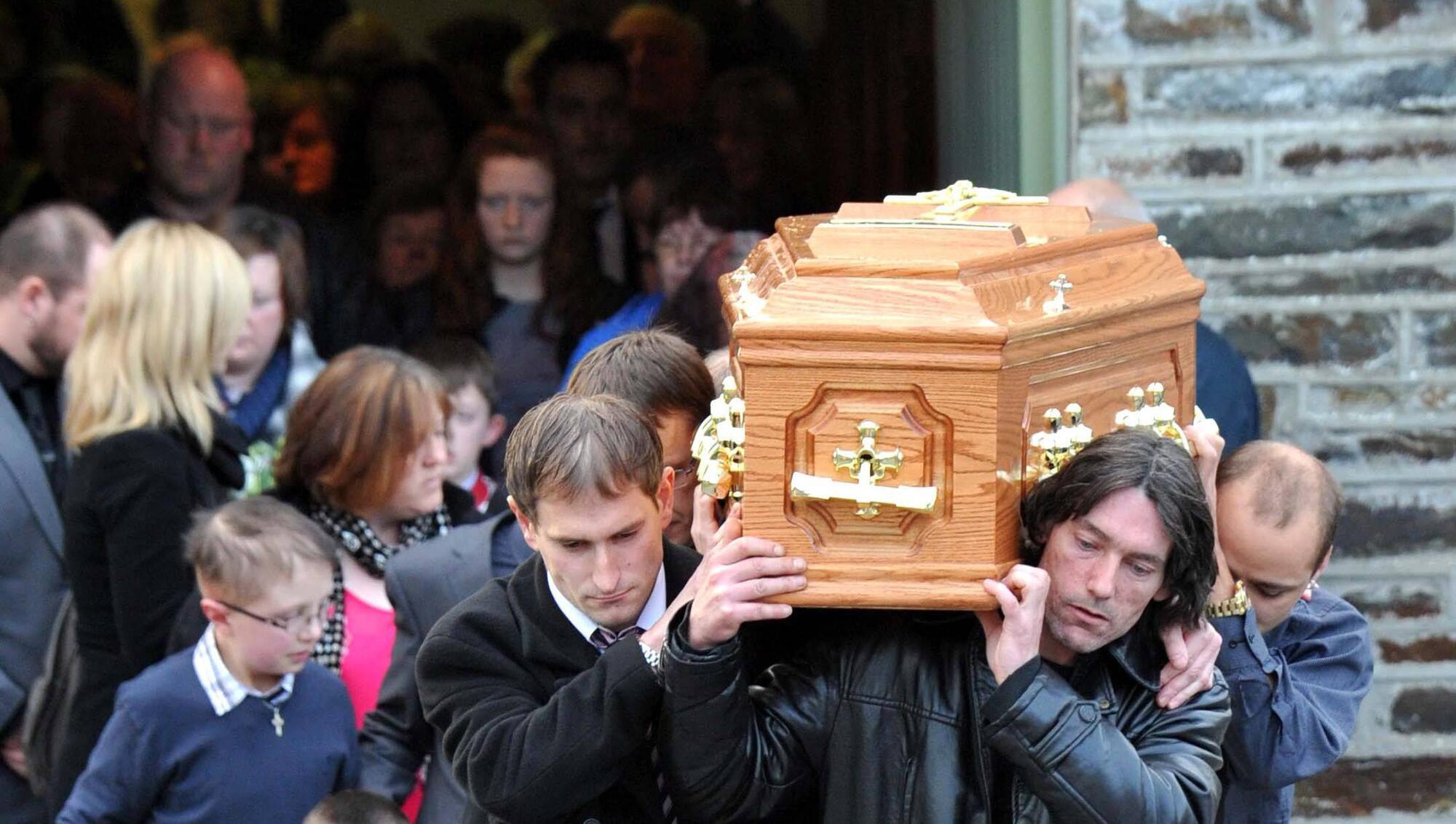
The funeral of Alicia Brough at St Peter's Church, Rockchapel, Co Cork, in November 2010. Picture: Dan Linehan
I still remember the moment I found out.Â
âSarahâs dead. Sheâs been murderedâ. Five words, from my mother, that I immediately dismissed as nonsense.
âSarah canât be dead. Why on earth would anyone murder Sarah?â I thought.
Sarah Hines was kind and caring.
She had been mine, and my brotherâs favourite babysitter growing up. She knew how to make ravioli the exact way we liked it. She made us laugh with jokes and games, and as we got older, she became an older sister figure to us both. Someone we looked up to.
Another beautiful soul was taken that day, Alicia Brough, who was only 20. I never got to meet Alicia, sadly, but Iâve grown close to her family and they are the salt of the earth.
I had known violence before that, even at the age of 15. My youth had its share of it.
But I had never known violence like this.
It seemed inhuman, incomprehensible, that a man could murder two innocent women, and two children, one of whom was his own flesh and blood.
But despite my disbelief, it was real. There was no reason for them to die, but they were dead all the same. All because of one man, not a monster, but a man, and his violence.
That day changed my mindset forever. I started seeing men as a threat, not to me, but to my friends, my mom and my family.
It wasn't that I saw every man as a monster. But I saw the potential for danger.
To this day I still think, âwhat if I had noticed something before the factâ â âI could have saved them.â People tell me there is nothing I could have done, but they are wrong.
I knew Geary. I saw him regularly, and I failed to see what he was really capable of. But the signs were there. The things he said, the way he acted. There was a reason to be afraid.
One moment that perhaps sums it up the most for me came years after.

The topic of Sarahâs murder came up in conversation in the smoking area of a small rural Limerick bar.
A âlad,â who I didnât know, chimed in with some ill-gained âlocal knowledgeâ he had apparently picked up.
âBut she wasnât a saint,â he said as if it were fact. âShe drove him to it.â This young man did not know Sarah, he didnât know Alicia, nor did he know either family of the victim, or even Geary.
But this tone of blame had been passed through the parish and he had accepted it, without question, and repeated it.
He did so because he believed it. Because there is a culture that led him to believe that there must be some reason, some justification, that made Geary murder my friends.
There was, of course, none.
Later, he sheepishly approached me and apologised. He explained he was just talking nonsense.
But words carry weight. And I have carried that weight with me to this day.
And like a mould grows in a damp room, violence grows from words and jokes, if left untreated.
So men, when women tell you they are afraid, donât diminish it.
Because it might not be âall menâ but there are some.
They look just like you and I. They donât have horns, or claws, or glowing red eyes.
What we can do instead is move to stamp out all aspects of male violence. Call out your friends. Call out strangers. Call out yourself.
Evil triumphs when good men do nothing.