Niamh Griffin: What's happening with vaccine rollout?
Some 21,600 doses of AstraZeneca vaccine expected to be received this weekend, though questions linger on how it protects older people
Niamh Griffin: What's happening with vaccine rollout?

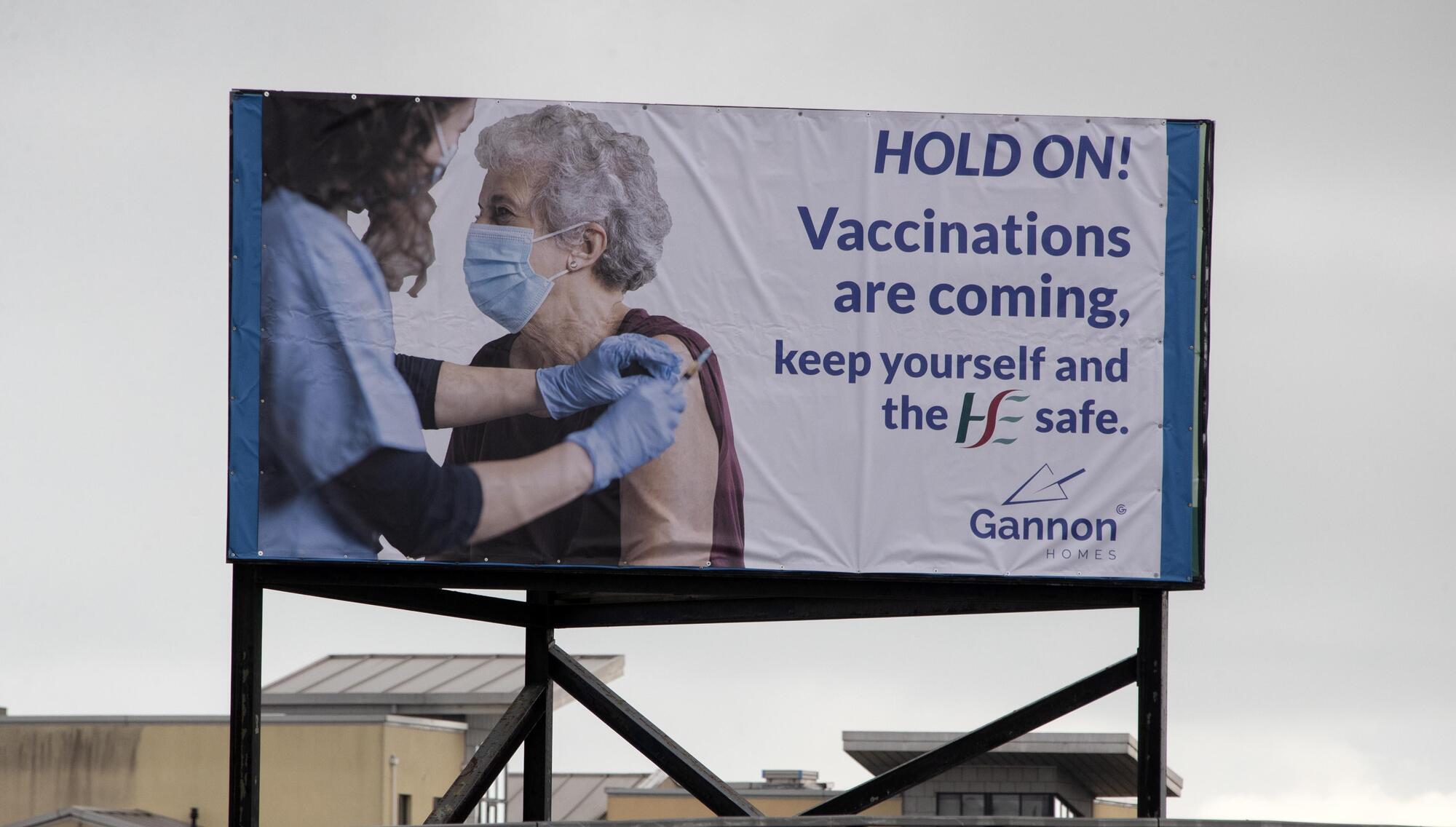
A sign supporting the HSE and vaccinations in Baldoyle, Dublin. Picture: Colin Keegan

Everyone in Ireland is watching the vaccine rollout with bated breath, so how do changes this week affect your place on the priority list?

The good news is we now have access to three vaccines approved as safe and effective. These are the Pfizer/BioNTech, Moderna, and Oxford/AstraZeneca vaccines.Ā 

Irish health authorities, among other EU countries, want to know more about how the Oxford/AstraZeneca vaccine protects older people.

So the two mRNA-type vaccines — the Pfizer and Moderna shots — should be used for this age group, for now.

This decision has changed the plans for February and March, as the AstraZeneca ā€œgame-changerā€ vaccine is easier to transport and store than the others.Ā 

AstraZeneca was planned as the mainstay of a programme for 480,000 over-70s starting from February 15 in GP practices.

There is some difference between how the HSE and Health Minister Stephen Donnelly see this switch playing out.

The head of the HSE, Paul Reid, described it on Thursday as posing a significant challenge to the health system.

But yesterday, Mr Donnelly moved to reassure older people, saying: ā€œThe rollout programme, from the patient’s perspective, they are really not going to see much difference.ā€Ā 

He said most GPs will give the mRNA vaccines in their practices, with about 400 facing special challenges.

Travel issues

This could mean older people in rural areas have to travel to a parish centre or a large GP practice instead of to their local doctor.

It is not yet clear if transport will be arranged, or whether frail patients can get the vaccine at home.

GP groups met with Mr Donnelly and the HSE yesterday to discuss those problems, storage of temperature-sensitive vaccines, and whether we have enough double doses to cover the over-70s by the end of March, as planned.

Both Mr Donnelly and the HSE insisted this week they are still determined to meet this target.

Ireland is only receiving about 10,000 doses weekly from Moderna, and 40,000 weekly doses from Pfizer for now.

Deliveries are due to increase later this month, but we do not yet know by how much.

Dr Fiona Moynihan injects Dr Louise Jackman, GP with Grand Canal Hanover Medical Practice, with the Moderna vaccine earlier this month. Picture: Sam Boal

Speed could be a challenge if GPs drive to different houses to deliver the shots.

This matters because while the Moderna vaccine can be stored for up to 30 days in a normal fridge and Pfizer for five, there is a window of just hours to use the vaccines once each vial is opened.

Hope that GPs and, later, pharmacists can deliver is based on their experience with the flu vaccine, and the successful nursing homes programme.

So far 86,200 Pfizer jabs have been given in nursing homes without high-tech solutions.

In fact, Excel spreadsheets were the main data-collection option, and this is why the promised daily vaccine update has not happened.

Reduction in supply

Despite a significant temporary reduction in supply, Ireland will still receive more AstraZeneca doses than the other two.

A dose of the Oxford/AstraZeneca coronavirus vaccine is prepared. File picture: Yui Mok

The revised plan for February is 190,000 doses, starting with 21,600 this weekend, Mr Donnelly said.Ā 

These will go to 15,000 frontliners who have not yet received their first shot and 5,000 GPs.Ā 

Other groups could also benefit, officials have indicated.

Next on the list — according to the ā€˜Rollout of Covid-19 vaccines in Ireland’ on the HSE website — are healthcare workers not in direct patient contact, and then anyone aged 65-69 with high-risk medical conditions.

Dr Lucy Jessop, director of the National Immunisation Office HSE, cautioned that healthcare workers will take up the bulk of this delivery.

We are still working down through the priority list; agile is the thing and we need to keep changing.

These challenges are not unique to Ireland. The Our World in Data organisation shows Ireland has vaccinated 4.4 people per 100,000 of population.

This is less than the UK which started over a month earlier, but compares well to Spain at 4.0, Germany at 3.6, and better than the Netherlands at 1.6.

x

More in this section

Revoiced

Newsletter

Sign up to the best reads of the week from irishexaminer.com selected just for you.

Cookie Policy Privacy Policy Brand Safety FAQ Help Contact Us Terms and Conditions

Ā© Examiner Echo Group Limited