Brexit chaos could add to commutes around ports as we battle with unknown unknowns
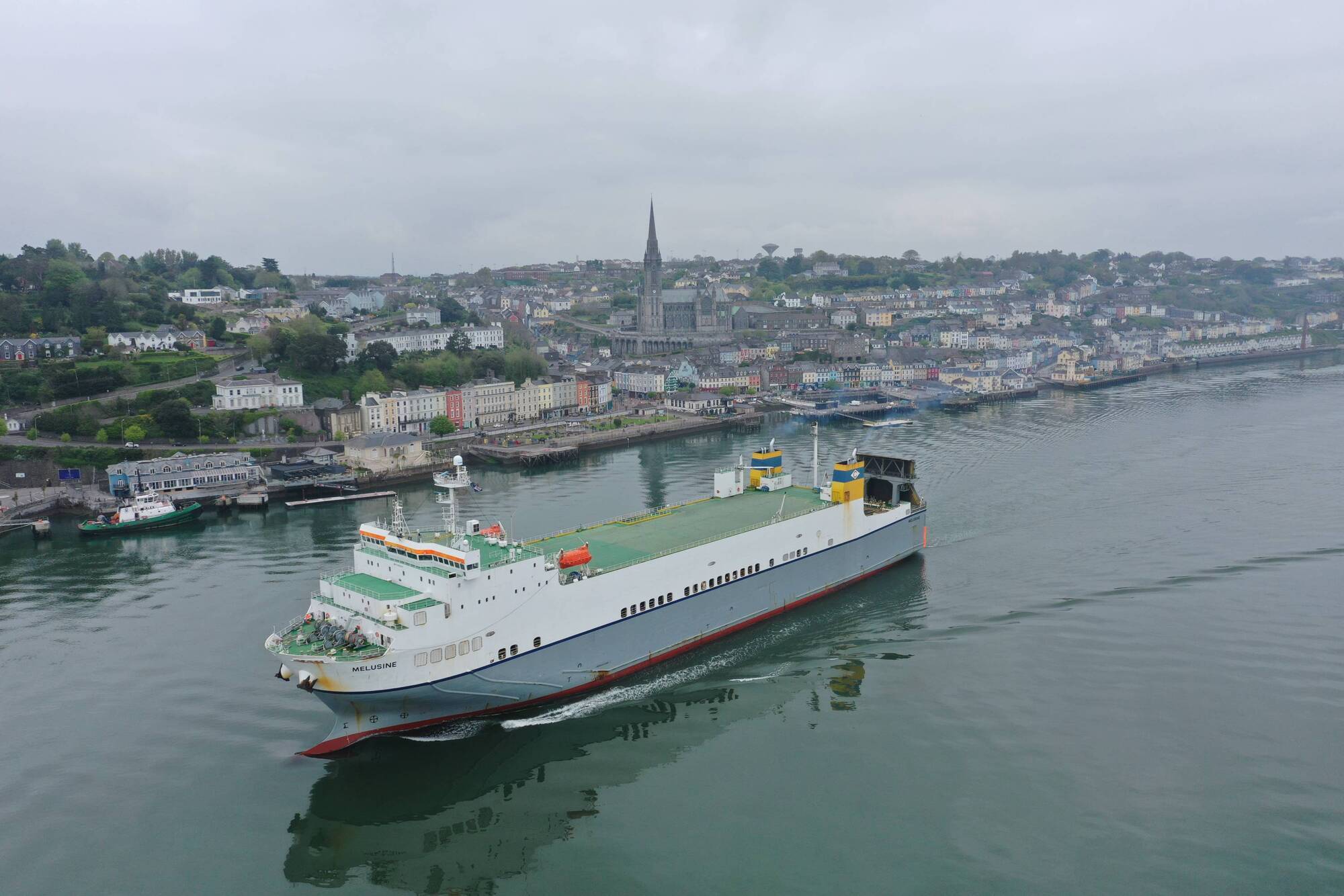
CLdN's Ro-Ro vessel MV Melusine arrives into the Port of Cork on the freight-only Ro-Ro service between Cork and Zeebrugge. The new route adds extra supply chain capacity during the Covid-19 crisis and post-Brexit and a second weekly call has been added. Picture: Port of Cork
It was former US Secretary of Defence, Donald Rumsfeld, who managed to befuddle and provide insight at the same time when he spoke of "known knowns, known unknowns, and unknown unknowns" in relation to the Iraqi weapons of mass destruction that never were.
The head-scratching words of the most notorious member of George W Bush's administration could just as easily apply to Brexit.
"There are known knowns; there are things we know we know. We also know there are known unknowns; that is to say we know there are some things we do not know. But there are also unknown unknowns — the ones we don't know we don't know. And if one looks throughout the history of our country and other free countries, it is the latter category that tends to be the difficult ones."
We know Brexit is going to bring seismic changes to the way we do business and live as a society, that is a known known. How it will actually play out in the weeks and months ahead is surely a known unknown, in Rumsfeld parlance.
What is deeply worrying for all concerned is the potential for chaos and disruption to business and society that we cannot foresee — the unknown things that we don't yet know.
Cork-based Brexit expert Mike McGrath is unequivocal. With even the best will in the world, the managing director of Arvo Procurement says, there will be a guarantee of disruption as paper trails and checks become a daily chore.
That will mean delays at ports, items we take for granted being scarce at times or more expensive, and traffic buildups resulting from a supply and logistics chain that has had its way of doing business snatched away by the Brexit vote.
People thinking Brexit will not directly affect them personally could have a rude awakening across the country as they get caught in jams at various hours of the day in all areas, he said.
With much of the focus on Dublin, it would be naive to think the potential traffic chaos will not affect all regions, said Mr McGrath.
"It is nailed on, deal or no deal," he said.
However, the freight and logistics industry are preparing as best they can for the Rumsfeld scenario.
General manager of Freight Transport Association (FTA) Ireland, Aidan Flynn, told the that the resilience shown during the Covid-19 pandemic will have given it a headstart.
"This has impacted all walks of life and we must ensure that this resilience transfers to how we deal with Brexit. There is no doubt that time is running out for preparations, but it is never too late to plan for the future.
"FTA Ireland members are participating in trials in Dublin Port and Rosslare Europort this week. These trials have been organised with Revenue in conjunction with industry, the results of which will provide all with good learnings in understanding how the new import and export process will work in 2021."
Ireland has invested in its main ports that deal with UK trade and the regulatory authorities have worked well with industry, he said, but the scale of change that will come in 2021 will require time and patience.
"The private sector keep the country fed and clothed and deliver essential items. There are rules that need to be abided by," he said.
Another issue looming is how prepared British ports are for dealing with Brexit, said both Mr McGrath and Mr Flynn, which is a worry.
"Holyhead has seen little investment and planning for change, the reality is delays incurred on the British side will see a knock-on impact in Dublin where ferries will be delayed, leading to a greater risk of traffic congestion in and around Dublin Port," said Mr Flynn.
Independent TD for Wexford and haulage industry veteran, Verona Murphy, said Dublin's "chaos" should lead to opportunities for Rosslare and Cork to expand their services and relieve some pressure on the bulging system around the capital.
"The monopolistic traffic in Dublin is now going to be a huge problem. Hopefully, Rosslare and Cork will benefit from that, with increased roll-on, roll-off services for the direct mainland route. But make no mistake about it, while we are streets ahead of the UK, there is still huge concerns."
Mr Flynn said the new direct service between Rosslare Europort and Dunkirk will provide some welcome relief for Dublin where over 100 trucks per day can now get to their destination.
The Port of Cork had a boost last month with bulk shipping firm CLdN’s decision to add a second weekly call from Cork to Zeebrugge to cope with the increasing demand.
Adding a second call will allow a quicker turnaround, as well as bypassing the UK land bridge and avoiding unnecessary border checks, ensuring cargo flows more effectively to and from Ireland direct to the continent, said the Port of Cork.
For their part, both Transport Infrastructure Ireland (TII) and Dublin Port Company (DPC) say they are as ready as they can be.
“We are all working together, so as issues arise they can be managed collectively,” said Seán O’Neill of TII.
“Traffic conditions in the port and the adjacent roads including the Port Tunnel will be actively monitored and communicated via the Ports Operation Centre, TII’s new combined motorway and tunnel control room and dedicated incident room, along with the DCC's [Dublin City Council] traffic control centre."
There will also be close monitoring of the Jack Lynch tunnel in Cork and on the country's main motorways.
That will provide the information necessary to trigger implementation of any phased traffic management response measures required, said Mr O'Neill.
These contingency plans will be in place from January 1 to mitigate the impact that Brexit-related traffic congestion may have on Dublin Port and the potential knock-on impacts on Dublin City, particularly the Port Tunnel and motorway system, said Mr O'Neill.
By mid-December, the port company said it will have completed major works to increase the capacity of the port’s road network.
It will launch information for hauliers and cargo owners next week to outline new traffic management measures that will be in place within the port estate before year end, it added.
DPC will manage the port’s road network based on an escalating status system: green to amber to red.
The additional challenge, said DPC, is border inspection services by customs and the Department of Agriculture, Food and Marine at eight new facilities within Dublin Port.
In the worst case, there could be congestion, and contingency plans have been prepared, it said.
The various knowns and unknowns are finally upon us.